

Update from Maya
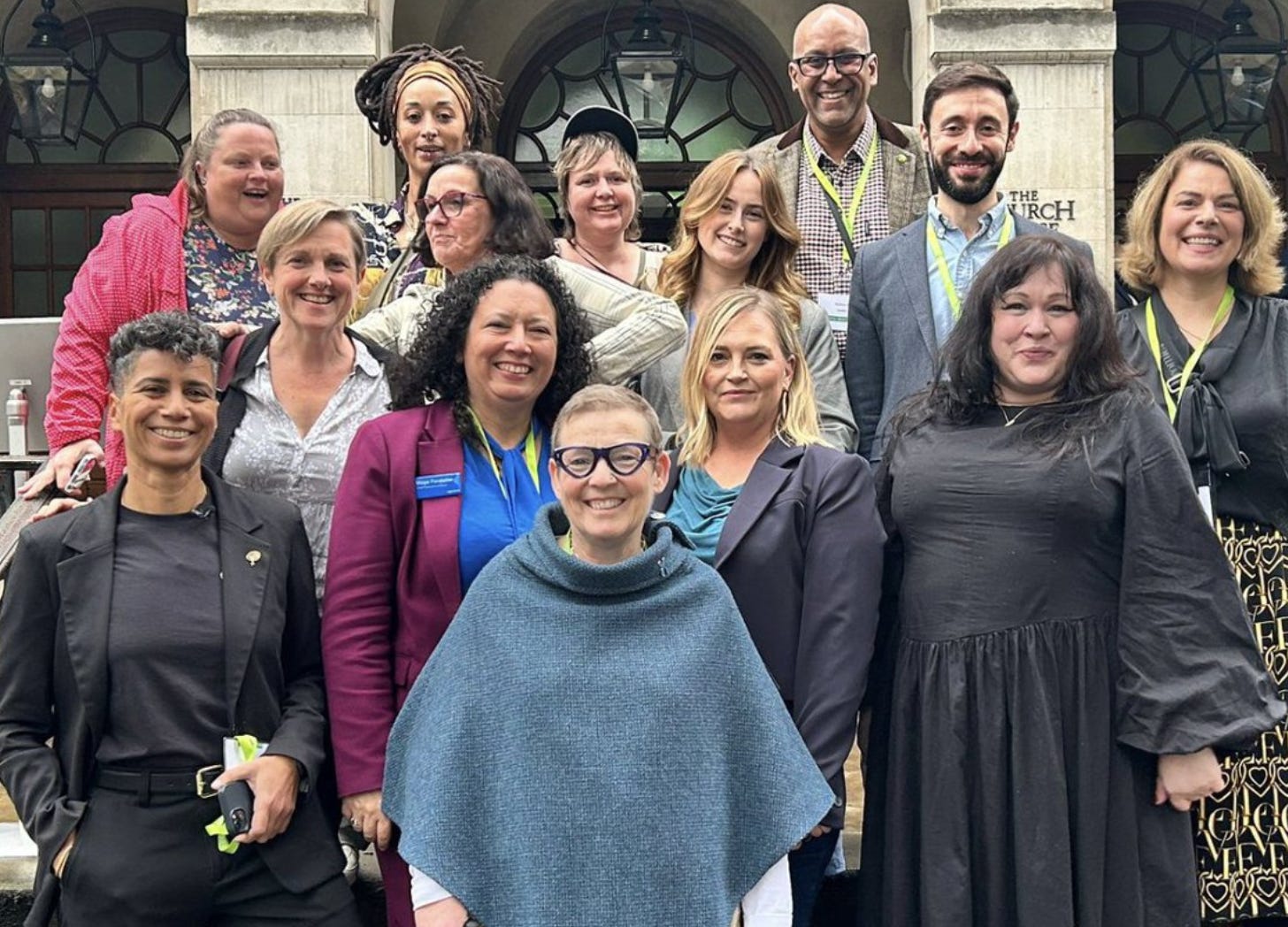
The Battle of Ideas last weekend felt like a class reunion of brave, fighty people who had used (or are using) the Forstater precedent. Among those I bumped into were Professor Jo Phoenix, Roz Adams, Denise Fahmy, James Esses, Sharar Ali, Sara Morrison, Maria Kelly and Linzi Smith (who had to run off to catch a train and missed the class photo). You can read about all their cases in our case briefings.
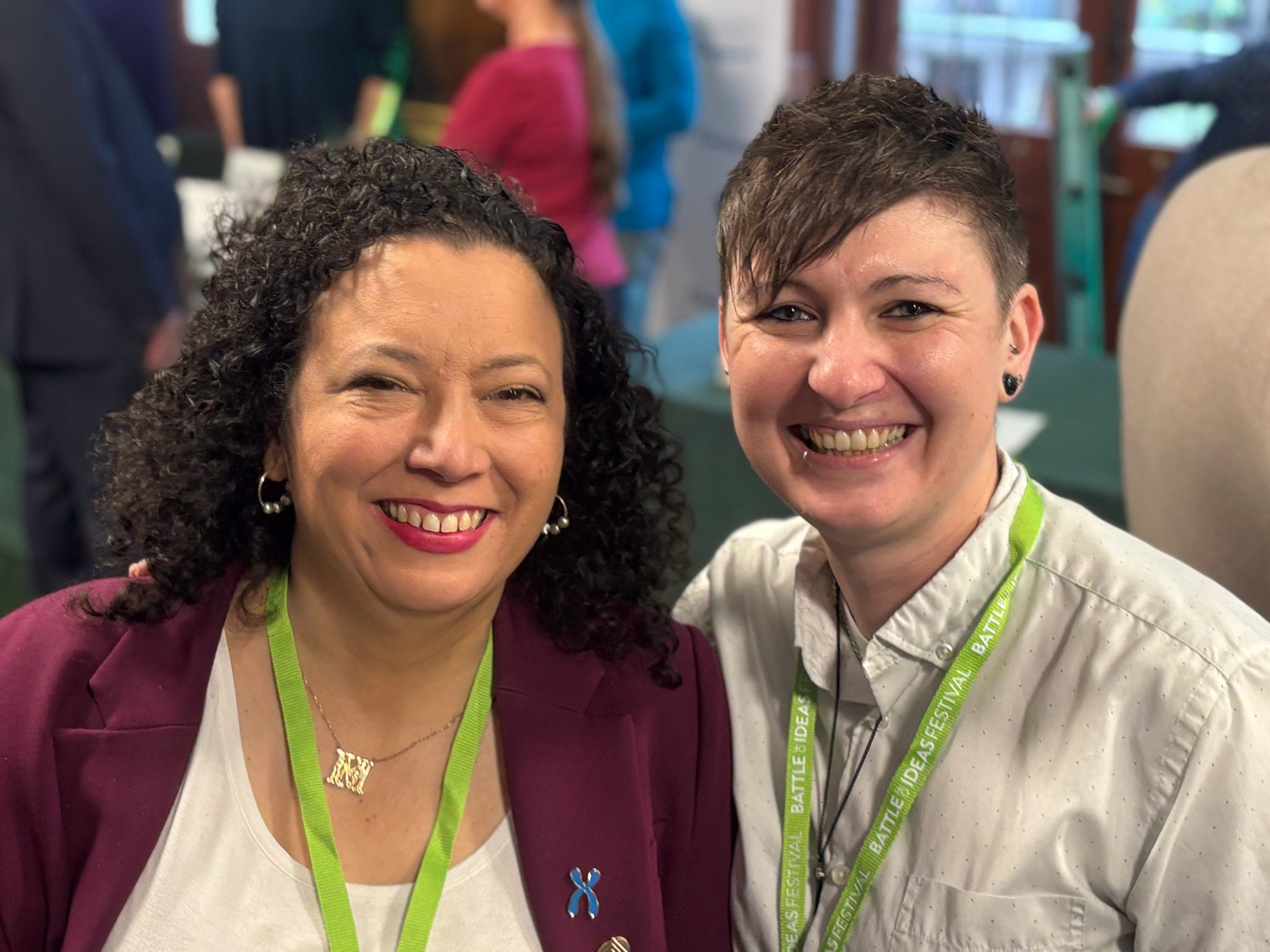
With Linzi Smith, whose case against Northumbria Police led to a judgment that should lead to all police forces stopping the rainbow flag waving and other political expressions inconsistent with police impartiality.
See our new case briefing.
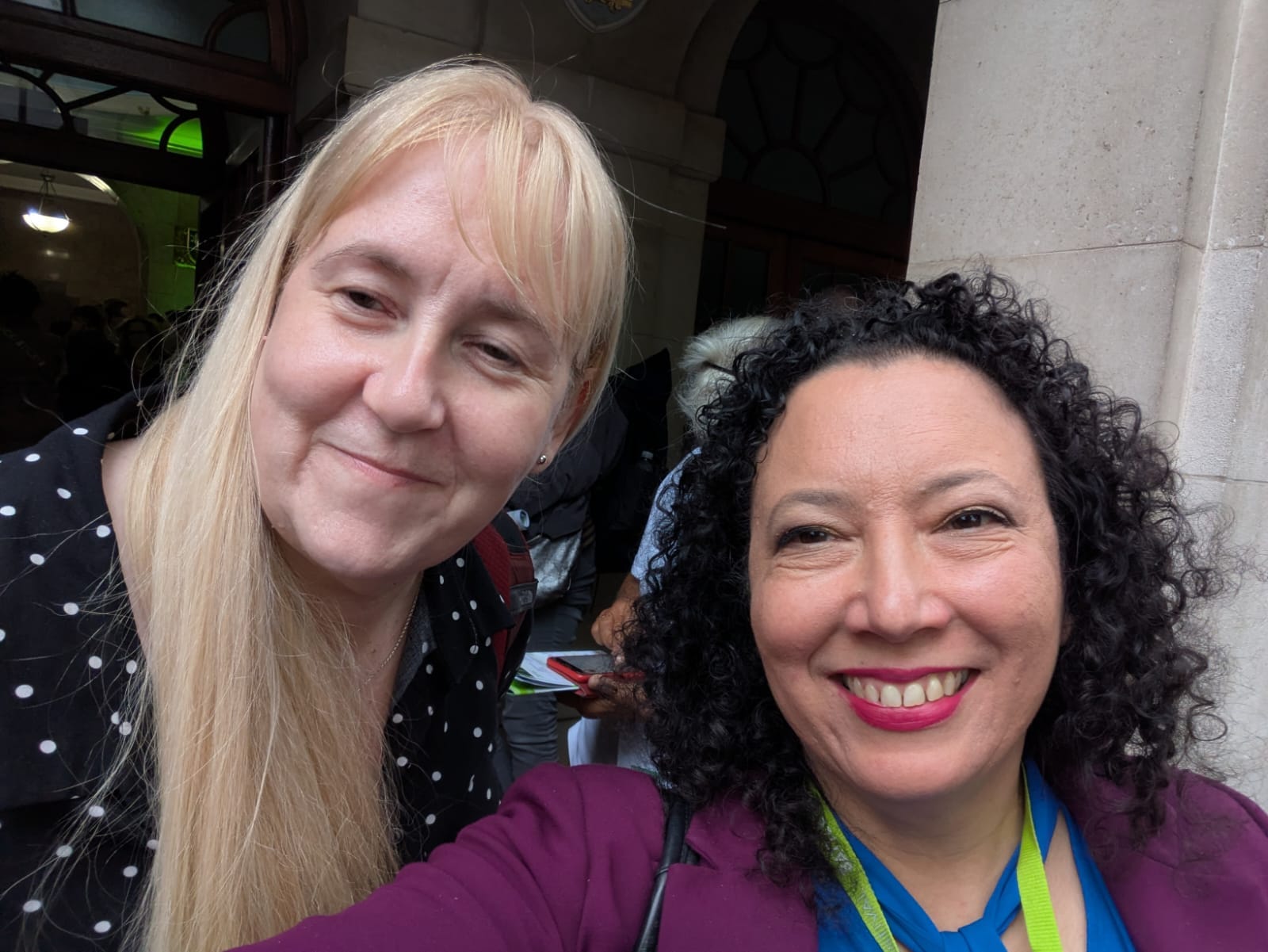
With Maria Kelly – this week closing submissions were heard in her case, in which she was represented by Naomi Cunningham.
See our case briefing.
Many, many more people stopped me in corridors and stairwells (it is a very confusing building and I spent most of the time wandering around lost) to tell me how the protection against gender-critical belief discrimination has stopped a grievance or complaint against them at work, and made them feel braver to speak up.
One of the conference organisers said to me: “You were just a nobody who stood up and said No!” Another put it more glowingly: “Saying ‘Forstater’ is like saying ‘Expelliarmus’!”
If you would like to use my name to make your dementors go away, you can use our new briefing on gender-critical belief discrimination to explain your rights.
This week there have been hearings in more important cases that show how we will win – not by adding legal victories one by one, but by multiplying their power.
Protection from belief discrimination opened up the ability to talk about single-sex spaces. Women such as Sandie Peggie, Maria Kelly and the Darlington nurses, facing employers who allowed male colleagues into their communal changing rooms, have been able to use my precedent to challenge these practical situations where their rights and dignity were breached. Their cases require that courts determine whether women have a right to expect that if there is a “female” sign on the door that means they won’t be expected to undress, shower, or use the toilet with male colleagues or strangers.
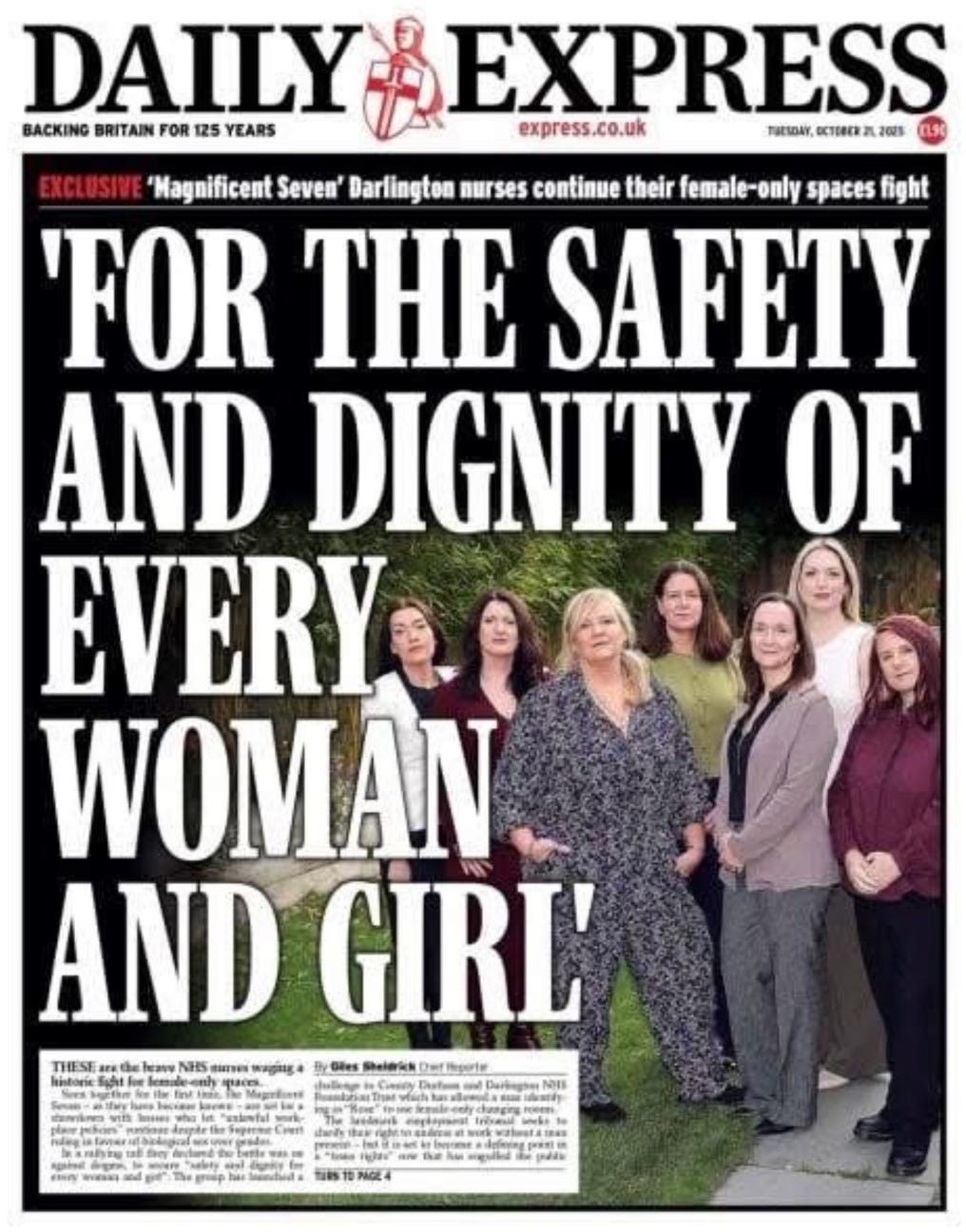
The case of the Darlington Nurses started in Newcastle Employment Tribunal, making the front page of the national papers. This case shows the power of standing up together. In Darlington, 26 nurses and other healthcare workers signed a letter to their employer complaining about the changing-room situation, and eight women are bringing the case together.
The other important case that was back in court this week was quieter. Allison Bailey v Stonewall is being heard by the Court of Appeal. I went along to support Allison and to see Ben Cooper KC make the case. The bare facts were already established by the Employment Tribunal back in 2022: Garden Court Chambers discriminated against Allison Bailey after receiving a complaint about her gender-critical tweets from Stonewall. The big legal question is whether Stonewall is liable for discrimination under section 111 of the Equality Act.
Section 111 may end up being the new Expelliarmus. It provides that an organisation such as a service provider, public authority, employer, association, trade union, or qualification body must not instruct, cause or induce another person or organisation that it has obligations towards under the Act, to unlawfully discriminate against or harass a third person.
Section 111 gives the victim a means to seek accountability up the chain. Another way of doing that is to bring “public law” cases: judicial reviews of policy decisions made by public bodies. This is where Sex Matters has been focusing most of our litigation efforts recently. We are waiting to hear whether we have permission in the Hampstead Ponds case, and we have several other strategic cases we are working on that focus on clarifying the balance of human rights.
Driving accountability up the chain means that fewer women and men will have to bring individual cases, putting their lives on hold and enduring the stress, expense, risk and public exposure it takes to do so.
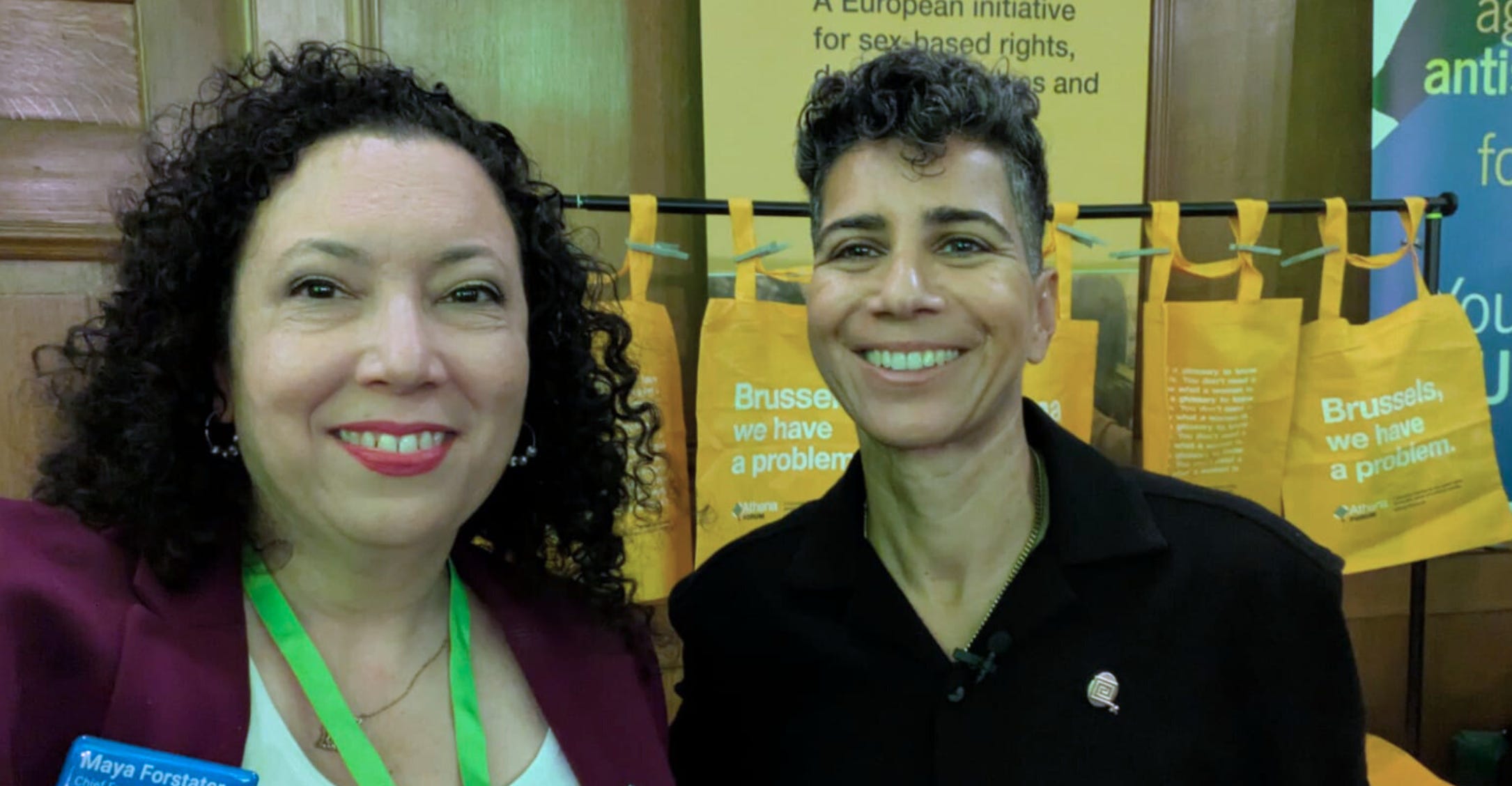
The other brilliant thing at Battle of Ideas was being able to congratulate Faika El-Nagashi in person on the launch of Athena Forum. The forces corrupting organisations don’t stop at national borders, as Athena Forum’s brilliant report Beneath the surface sets out. Faika is heading up a much-needed European gender-critical initiative.
Both Athena Forum and Sex Matters responded when the Council of Europe’s Human Rights Commissioner Michael O’Flaherty attacked the UK’s legal framework and the Supreme Court’s judgment. And then the Home Secretary Shabana Mahmood stepped up. She robustly defended the Supreme Court’s judgement and the UK’s rule of law against this international bureaucrat’s incursion into a space where he shouldn’t have been.
It is not just the nobodies saying “no” anymore!
Maya Forstater
Know your workplace rights
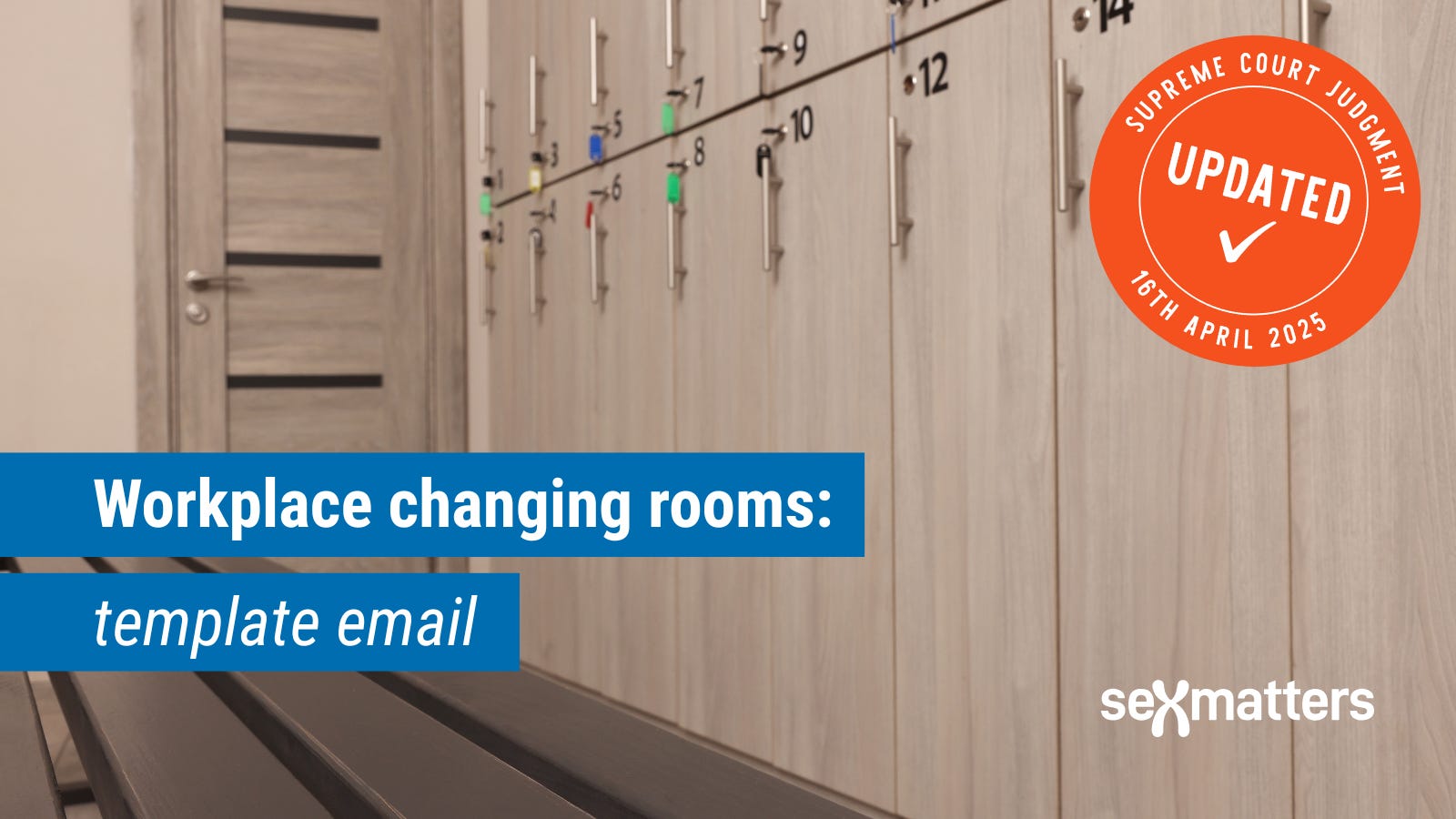
If you are inspired by Sandie Peggie, Maria Kelly and the Darlington nurses to speak up about your workplace changing facilities, our Take action section has information about your rights when it comes to toilets and changing rooms, whether these are in workplaces or more public.
With help from lawyers, we’ve produced a Workplace facilities factsheet listing all the relevant legislation, and drafted emails for you to send to organisations that are acting unlawfully. The most recent one is a letter to raise concerns about workplace changing rooms.
Legal update: anonymity and urgency granted on our Hampstead ponds case
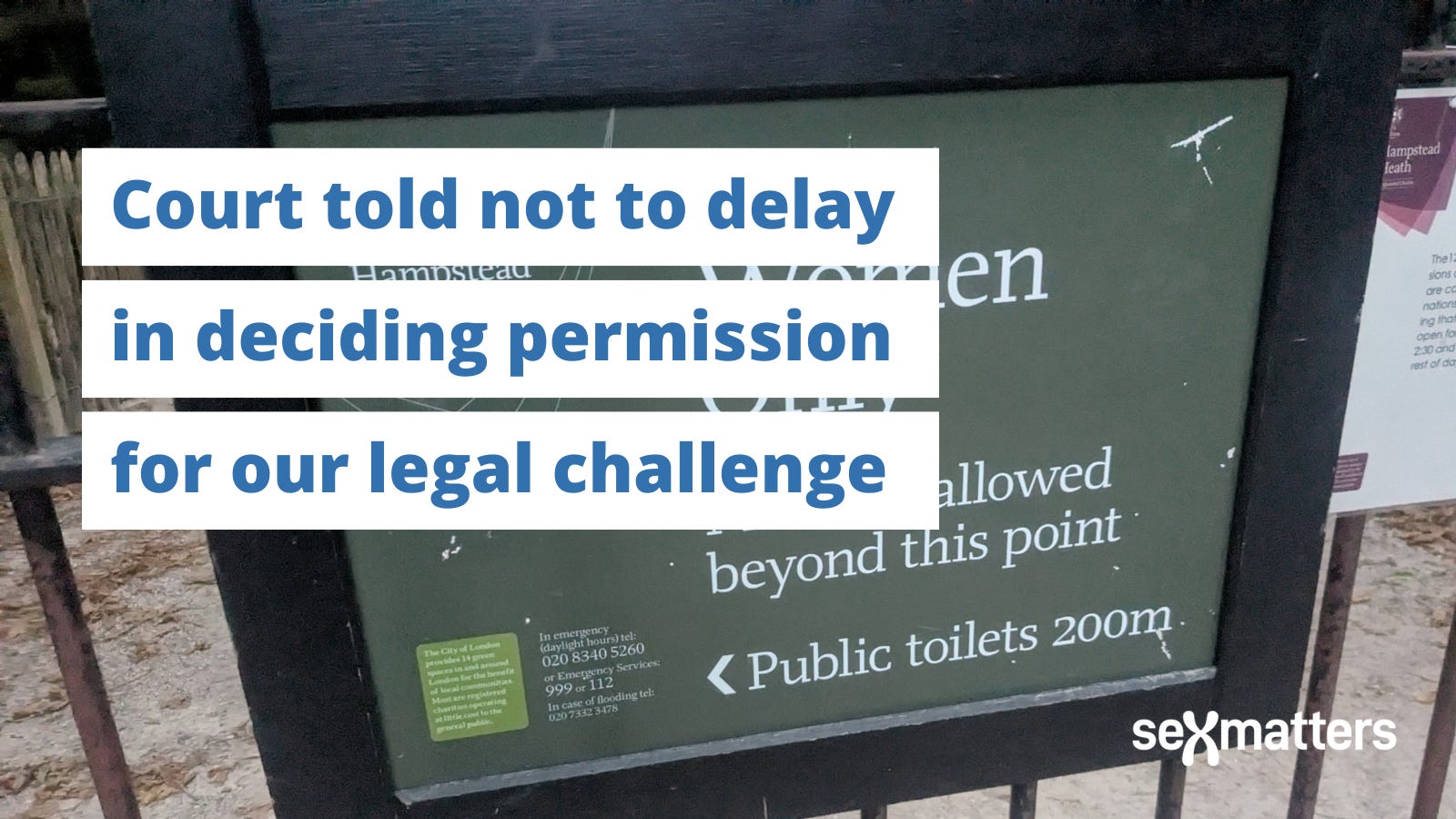
Can “women only” include men? The High Court has recognised that the Kenwood Ladies’ Pond case raises important questions and that the application for a full hearing should be dealt with promptly – we’d hoped to hear more this week. Another important step is that we have got anonymity granted for one of our witnesses.
Council of Europe Commissioner told to respect UK’s rule of law
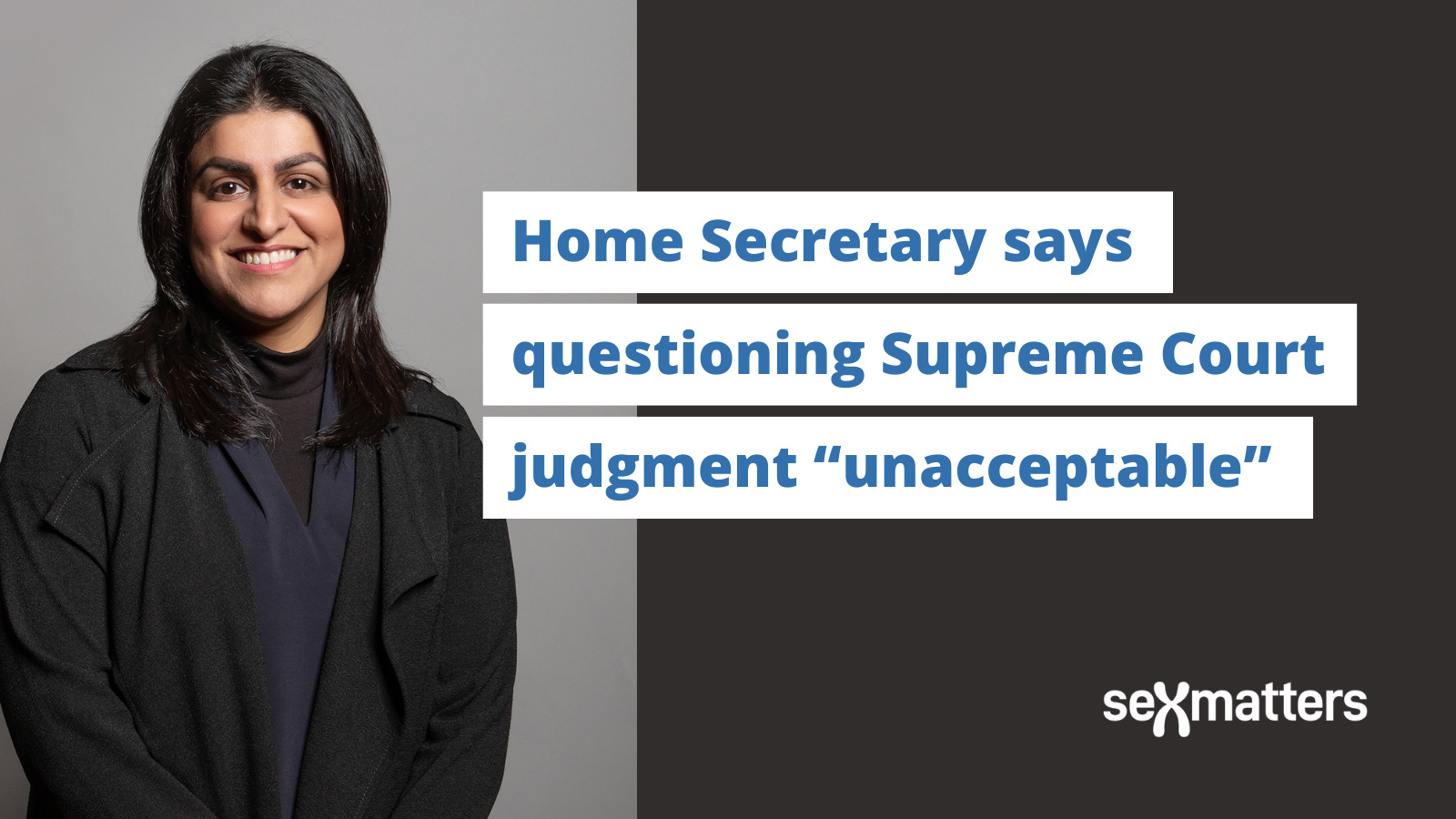
Home Secretary Shabana Mahmood strongly criticised Dr Michael O’Flaherty, the new Council of Europe Commissioner for Human Rights, when he tried to undermine confidence in the UK’s Equality Act and the Supreme Court’s interpretation of it.
Sex Matters wrote to the Parliamentary committees he intervened, in to explain the huge flaws in his reasoning.
In the news
This week’s news coverage began with Geraldine Scott for The Times breaking the story that a group of House of Lords peers have been strategising to delay the introduction of the Equality and Human Rights Commission (EHRC) guidance on single-sex services until its new chair is appointed. Maya Forstater said it was devastating to see a group of peers plotting to thwart the law.
The Sunday Telegraph revealed that HM Prison and Probation Service is telling prison officers and staff to supply trans-identifying prisoners with make-up and prosthetics. Fiona McAnena said that it’s no wonder that the prison service is still imprisoning women with cross-dressing men, since its policy is that those men should be supported to dress as women.
In a story that ran in Scotland’s Sunday Mail (print only), the Daily Mail (print only), and the Daily Record, Mary Wright and Jennifer Hyland covered Scottish Women’s Aid’s insistence that it needs to wait for EHRC guidance before implementing For Women Scotland’s Supreme Court ruling. Helen Joyce was quoted as saying that the law is clear and there is no excuse for the delay.
David Buck wrote for Conservative Home on concerns that warnings about the impact of social transitioning have been largely ignored across the education psychology profession. Concerns raised to regulators are being met with delay or silence, and David quoted Naomi Cunningham as saying that even regulators may be legally liable on their own account for belief-based discrimination.
Helen made headlines in Australia this week. Rachel Baxendale for The Australian reported on the City of Melbourne’s cancellation of her speaking event at the Docklands Library. Julie Bindel also wrote for The Australian on the cancellation and reflected on the fallout from one of her own events several years ago. Alex White for the Herald Sun quoted Helen as saying that Melbourne is one of the worst cities in the world when it comes to shutting down debate on issues of gender and sex, and that Victoria has some of the most authoritarian overreaching laws on the topic.