

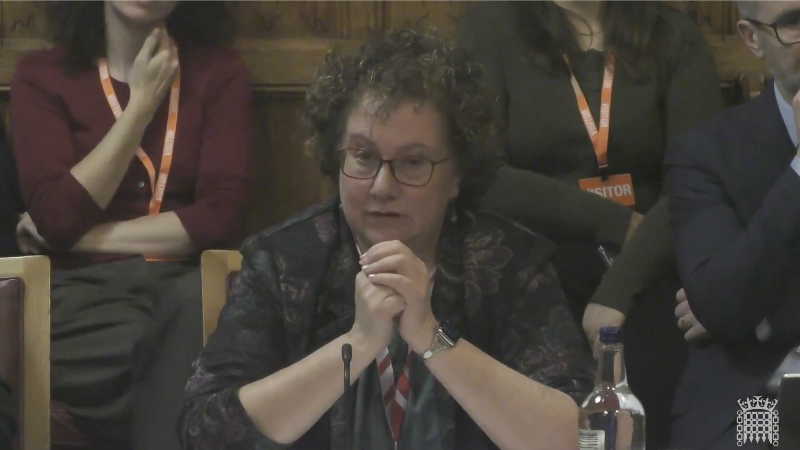
Baroness Cass appearing before the joint committee on Monday
16th November
When Olivia Bailey, then a junior equalities minister, launched the draft Conversion Practices Bill in June, Baroness Hilary Cass provided what appeared to be a ringing endorsement. She said the legislation gives “a clearer definition of what conversion practices are, compared to previous drafts, but also what they are not”.
This week, asked by the parliamentary committee carrying out pre-legislative scrutiny of the bill if its wording was really clear enough, she gave an unequivocal answer: No. And she told the committee precisely how it happened that she had given the bill her apparent endorsement.
The story was shocking, and particularly awkward because Bailey sits on the committee – in effect, marking her own homework.
Cass said that while the bill was being worked on she had met with Bailey, who had set out its principles, but not shared the draft. When she was asked for a comment to go in the press release alongside its publication, it was at such short notice that she had no time to read the text. She said she was “trying to be helpful to the minister” and “gave a statement on the principles that I had been told about”.
Cass was so determined to make sure that the committee understood what had happened that she said all of this twice. I was watching live in the committee room, so I got to see Bailey’s reaction: both times she glared and shook her head.
In every one of the committee’s evidence sessions, witnesses who express criticisms of the bill or doubts about the underlying evidence are pressed on whether they accept abuse is happening and whether they condemn it. The same happened to Cass – and it resulted in her accepting an overly broad statement appearing to endorse the bill, directly after she had explained how she had felt pressured to do precisely this before.
Lord Isaac, a former chair of Stonewall, asked her whether she stood by what she said in paragraph 11.5 of the final report of the Cass Review, which he quoted as saying “no LGBTQ+ group should be subjected to conversion practice”.
Cass replied: Absolutely. But once again, she did so without the text she was being asked to endorse in front of her. Her report discusses “conversion practices”, not as they are widely defined in the draft bill to cover quite ordinary speech and actions by parents, teachers, social workers, pastors, siblings and other relatives, but solely in relation to therapy. It says equating exploratory therapy with “conversion therapy” is harmful.
Cass added that there had been a statement on the website for the Cass Review conveying that “those practices are abhorrent and are not something that anyone would condone”.
But what that statement had actually said was more cautious and carefully hedged:
“No LGBTQ+ group should be subjected to conversion therapy. However, through its work with clinical professionals, the Review recognises that the drafting of any legislation will be of paramount importance in building the confidence of clinicians working in this area.”
This is very far from agreement that the broad conduct defined by this bill is to be condemned or criminalised. And yet that is how Cass’s words are already being characterised.
Following her appearance before the committee, Stonewall described her as having put on record “her opposition to these abusive practices”. It omitted to mention her clear rejection of the bill’s vague definition. Stonewall’s chief executive, Simon Blake, dismissed concerns about the bill’s impact on parents as “unhelpful commentary” rather than acknowledging that Cass’s intervention had been a bombshell. He insisted that “a conversation between a parent and a child, even if it is challenging and even if there is strong disagreement, would not meet those thresholds for prosecution”.
Bailey picked up on Isaac’s line of questioning:
“You mentioned some examples, such as a parent not using pronouns or not being willing to buy a breast binder, as reasons why they might be affected by this legislation. Subject to further clarification from Lord Isaac, we have then established that you accept that people’s perception of the law is not the same as what is actually in the law.
“If you accept, as you just have, that you think there should be a ban on abusive conversion therapy, would clarity on both those points for parents and healthcare providers satisfy you?… Would that satisfy you and enable you to continue to support a ban on the abuse of LGBT people?”
This time Cass’s response was more nimble and cautious: “The devil is in the detail; I would need to see the text of it.”
Media coverage
Baroness Cass turns against ‘chilling’ trans law
“It’s hard to see how the bill can now feasibly progress given that she has withdrawn support and expressed fundamental concerns about how the proposed legislation will impact children, parents and clinicians.” - Maya Forstater
Genevieve Holl-Allen, Daniel Martin • The Telegraph
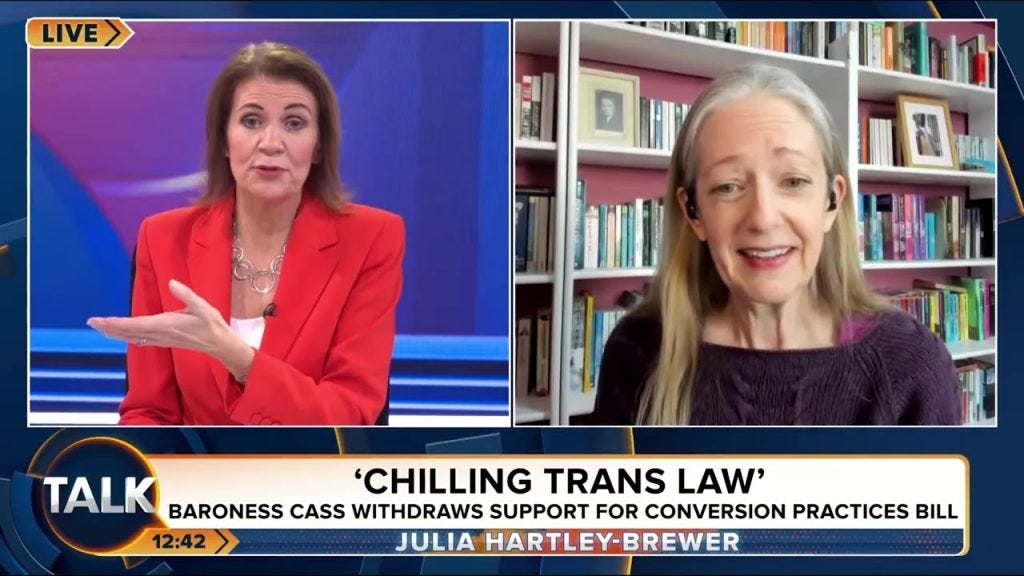
Baroness Cass withdraws support for the Conversion Practices Bill | Helen Joyce on Talk TV
Julia Hartley-Brewer • Talk TV
The ‘detransition’ helplines at risk from Labour’s trans law
“If this authoritarian bill becomes law, it will be the death of free speech in the UK.” - Maya Forstater
Julie Bindel • The Telegraph
Trans law would put parents at risk, says family court expert
“The government cannot continue to insist that the bill will not catch ordinary, responsible parenting, when witness after witness has assured the committee it will.” - Helen Joyce
Sapphire Hope • The Telegraph
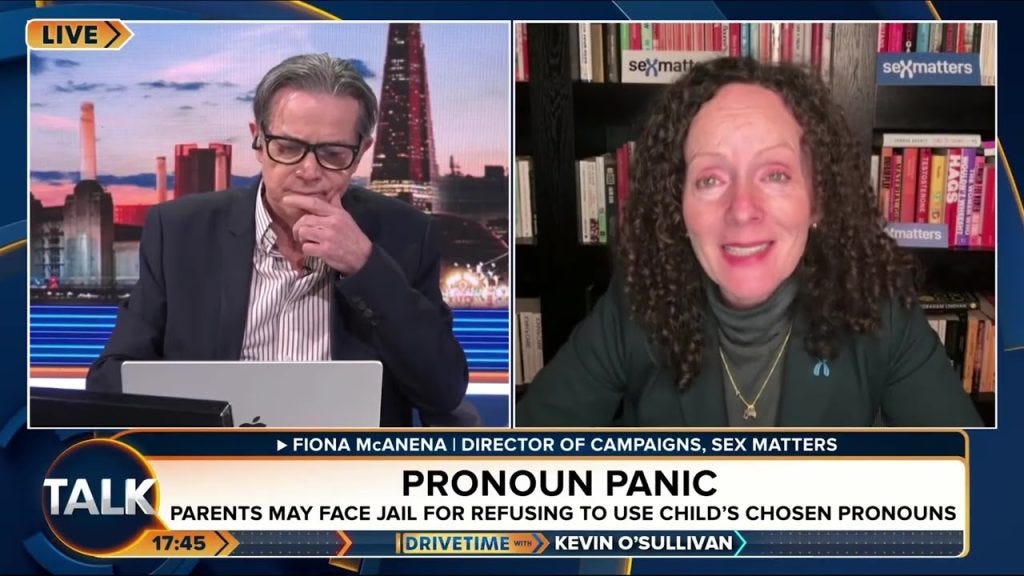
Jailed for pronouns? | Fiona McAnena on Conversion Practices Bill
Kevin O’Sullivan • Talk TV
Trans law ‘could lead to children being taken away from parents’
“That family will be destroyed, no matter what happens eventually in court.” - Helen Joyce
Sapphire Hope • The Telegraph
“This bill will cause devastating problems for schools…. Teachers, headteachers and school governors could be threatened with jail for following statutory safeguarding guidance.” - Maya Forstater
Sam Merriman • Daily Mail
Therapists divided: the third evidence session

Dr Igi Moon and Dr Alison Berner appearing before the joint committee on Thursday 12th November
On Thursday 12th November the joint committee of MPs and peers examining the draft Conversion Practices Bill held its third evidence session. It heard two panels of two witnesses. The first was Dr Igi Moon, chartered counselling psychologist and chair...
20th November 2026
Media coverage
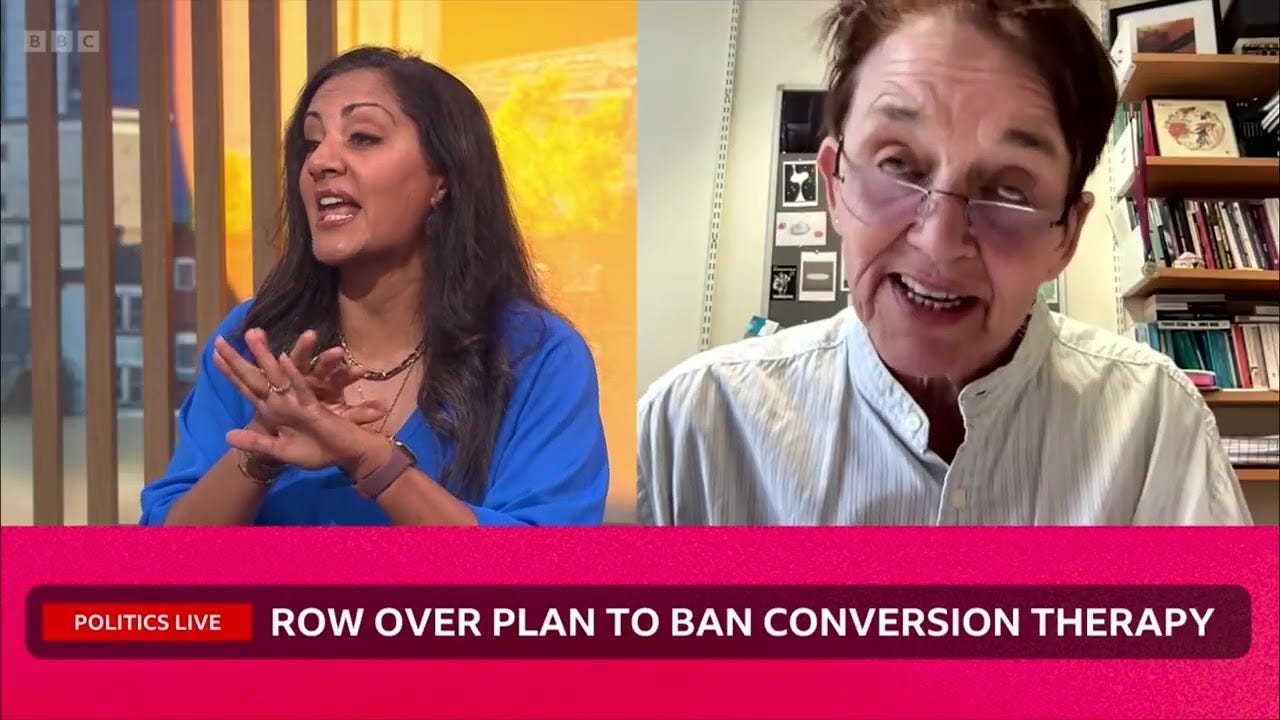
“Criminal lawyers are horrified” | Sonia Sodha debates Dr Igi Moon on Conversion Practices Bill
Vicki Young • BBC Two
Why is Humanists UK promoting a blasphemy law?

Source: Patrick Devries
Humanists UK, the charity representing and serving the UK’s humanists, is meant to focus on reason and freedom of thought. Some humanists agree with gender-identity ideology; some don’t. But the organisation has in recent years come down dogmatically on the...
18th November 2026
Biology, Balance, Complaints

When a news report calls a man a woman, readers are misled about what happened. They may be misled about who committed a crime, who won a women’s race or who was in a women’s changing room. Accurate reporting on...
16th November 2026
Find out more
When will the BBC face up to the truth?
In other news
SNP accused of reviving Sturgeon’s self-ID agenda by stealth
In an interview with Rebecca McCurdy for The Herald, Maya Forstater warned that Scottish proposals to ban conversion practices would be a “Trojan horse” that could be used to undermine the Supreme Court’s ruling on what a woman is. - Maya Forstater
Rebecca McCurdy • The Herald Scotland
If you’d like this memo in your inbox every Friday at 5pm, join our mailing list now.
Sex Matters survives on your support.
Without it, we simply wouldn’t exist.
Sex Matters can deliver essential research and analysis, help shape the debate, and empower people with clear, published guidance on their rights – but only with your support. Please contribute what you can to keep us going.