

Update from Maya
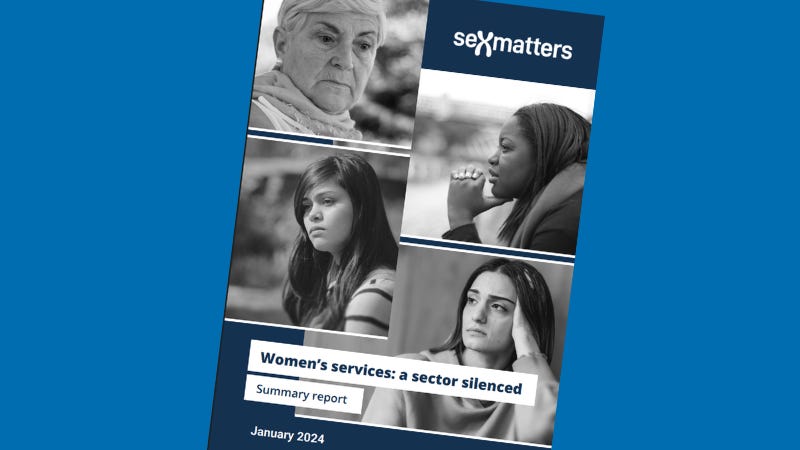
I was on leave last week. While I was away, I visited a women’s centre that supports women who are subject to, or at risk of, sexual exploitation. It runs drop-ins, takes referrals and does outreach on the streets of the city’s so-called red-light district. At the centre’s request, I’m not naming it.
I met the centre’s chief executive and its chair. I also talked to a member of staff and to a woman who uses the service.
It’s based in a city-centre building with a peaceful enclosed garden. The team has made the space homely and welcoming, with handmade blankets and sofas where women sometimes just curl up and sleep. It is women only, and it takes this seriously. Apart from the occasional workman, who will always be escorted, no men come into the building. Many of the women who come here have been abused and exploited by men. The centre gives them somewhere they feel safe enough to talk and gain confidence to take control of their own lives.
On the wall of a meeting room I spotted the “sisterhood agreement” to which women attending groups sign up. “This group is a safe space where women can learn, heal, grow, and support one another,” it begins. It asks women to keep private what is shared in the room, to listen without judgement and to “create trust, safety and respect”. It reminds them: “You are the expert on your own experience.”
That kind of trust depends on honesty. It couldn’t work if women were expected to pretend that a man in the room is a woman.
I spoke to one woman who uses the service and also volunteers for it. She was passionate and clear about this. She told me she knows young women who identify as men, often as an escape from trauma: “They are still one of us, they have still been through what we’ve been through.” About men who identify as women, she was in no doubt: “They might be transitioning to women but they are still male. So many women will be triggered. You have to feel safe. We share all sorts here. It’s just not the same. I’ve nothing against them, but they cannot be here.”
Before the For Women Scotland judgment this centre was one of very few women’s centres which were clear and explicit that woman means female. Many other centres felt pressured by funders, commissioners and staff to say that they were “trans inclusive”, even when this undermined their core mission and made women feel unsafe and unsupported.
The centre’s chief executive told me how difficult it was to hold the line in the face of internal and external pressures. She had expected that after the Supreme Court judgment in April 2025, other women’s organisations would welcome the legal clarity. Instead, the surprising response has often been: how can we get around this?
There was no reason not to act quickly. On 21st July the Charity Commission told charities that they “do not need to wait for the Commission’s guidance to comply with the Act and the Code”.
The law, as clarified by the Supreme Court, is clear that a women-only service is lawful where it is a proportionate way of achieving a legitimate aim, and that if such a service admits men who identify as women it is no longer single sex. The big change in understanding provided by the For Women Scotland judgment is that there is no need for case-by-case assessment to exclude a trans-identifying man, but there is such a need if you are considering excluding a woman who identifies as a man, or redirecting her from group to one-to-one-support.
We talked about how Sex Matters might support the centre and leaders of other women’s organisations to find the confidence and clarity to prioritise women and to do so without fear of backlash.
One of the things I promised was that we would update our model policy for single-sex services, which we first published in 2021. Here is a draft updated version. If you are involved in women’s services, please get in touch with any comments or suggestions.
If you work or volunteer for a charity and think sex matters, you are not alone. Find likeminded others through Third Sector SEEN.
This week
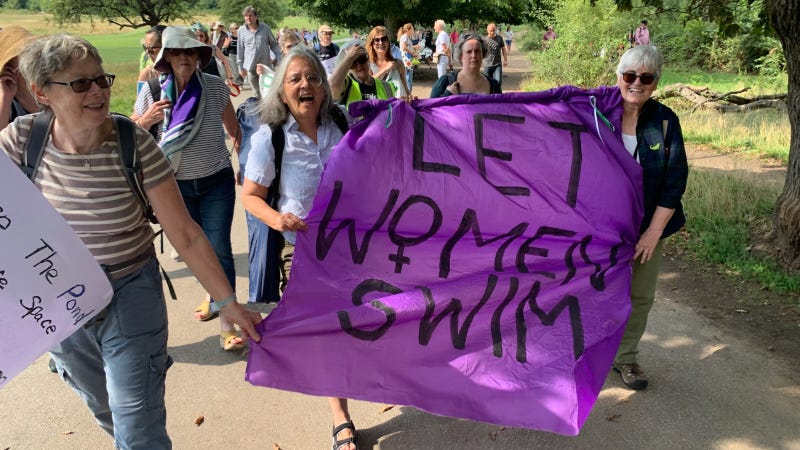
Campaigners at the Hampstead Ponds in 2022. Photo: Lily Maynard
Hampstead ponds: what we will argue in the High Court
On Tuesday 3rd and Wednesday 4th November, the High Court will hear Sex Matters’ judicial review of the City of London Corporation’s admissions rules for the Kenwood Ladies’ Pond and the Highgate Men’s Pond on Hampstead Heath. The hearing is...
7th October 2026
“No, you can’t wear a breast binder.” “No, I won’t call you by a new name.” These are reasonable things for a responsible parent to say to a gender-distressed 13-year-old. Under the government’s draft Conversion Practices Bill, they could become...
7th October 2026
Sex Matters shortlisted for in-house PR team of the year
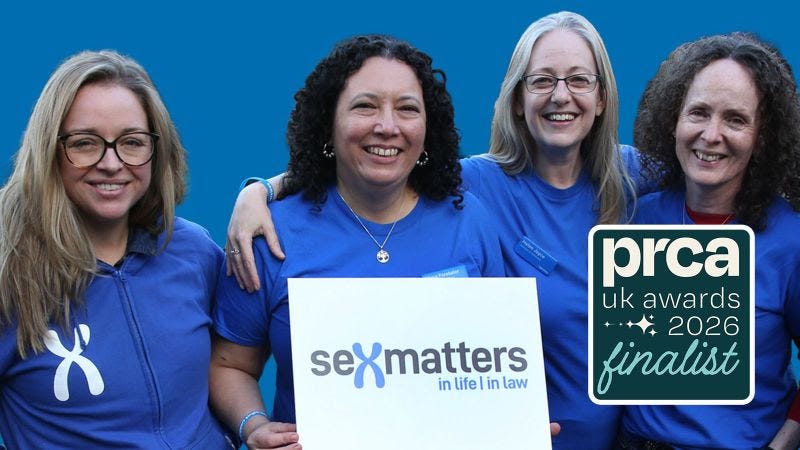
Sex Matters has been shortlisted for in-house team of the year at the Public Relations and Communications Association (PRCA) UK Awards 2026. The other finalists are Cancer Research UK, Marie Curie and NHS Property Services. We are proud to be...
6th October 2026
In other news
Cambridge is gorging on social justice foolery, and destroying its reputation
Zoe Strimpel for The Telegraph writes on how social-justice orthodoxies have taken hold at Cambridge University and the students refusing to go along with them. She highlights Thea Sewell, who began speaking out after hearing Helen Joyce... - Helen Joyce
Zoe Strimpel • The Telegraph
Janet Murray and Nick Pyke for the Daily Mail write on our new report, Criminalising conversations, for which social-science researcher Matilda Gosling interviewed 30 mental-health professionals.
Janet Murray, Nicholas Pyke • Daily Mail
How Sandie Peggie union denied being ‘steeped in gender ideology’
Sandie Peggie’s hearing against RCN has provided a “stark case study of the failure of unions to support female members who are discriminated against by their employers simply for demanding their sex-based rights.” - Helen Joyce
Georgia Edkins • The Times
Sex Matters at the Battle of Ideas

The Battle of Ideas Festival is next weekend – but it’s not too late to book for the Battle of Ideas using the code SEXMATTERS26 to get 20% off.
Helen Joyce, Fiona McAnena and Matilda Gosling are all on panels on Sunday 18th October: Helen for Conversion Practices Bill: criminalising parents, teachers and priests? and Assisted death to sexual freedom: autonomy and its discontents; Fiona for Post-trans mania: the future for women in sport and Matilda for Techlash: blaming social media for everything.
If you’d like this memo in your inbox every Friday at 5pm, join our mailing list now.
Sex Matters survives on your support.
Without it, we simply wouldn’t exist.
Sex Matters can deliver essential research and analysis, help shape the debate, and empower people with clear, published guidance on their rights – but only with your support. Please contribute what you can to keep us going.