

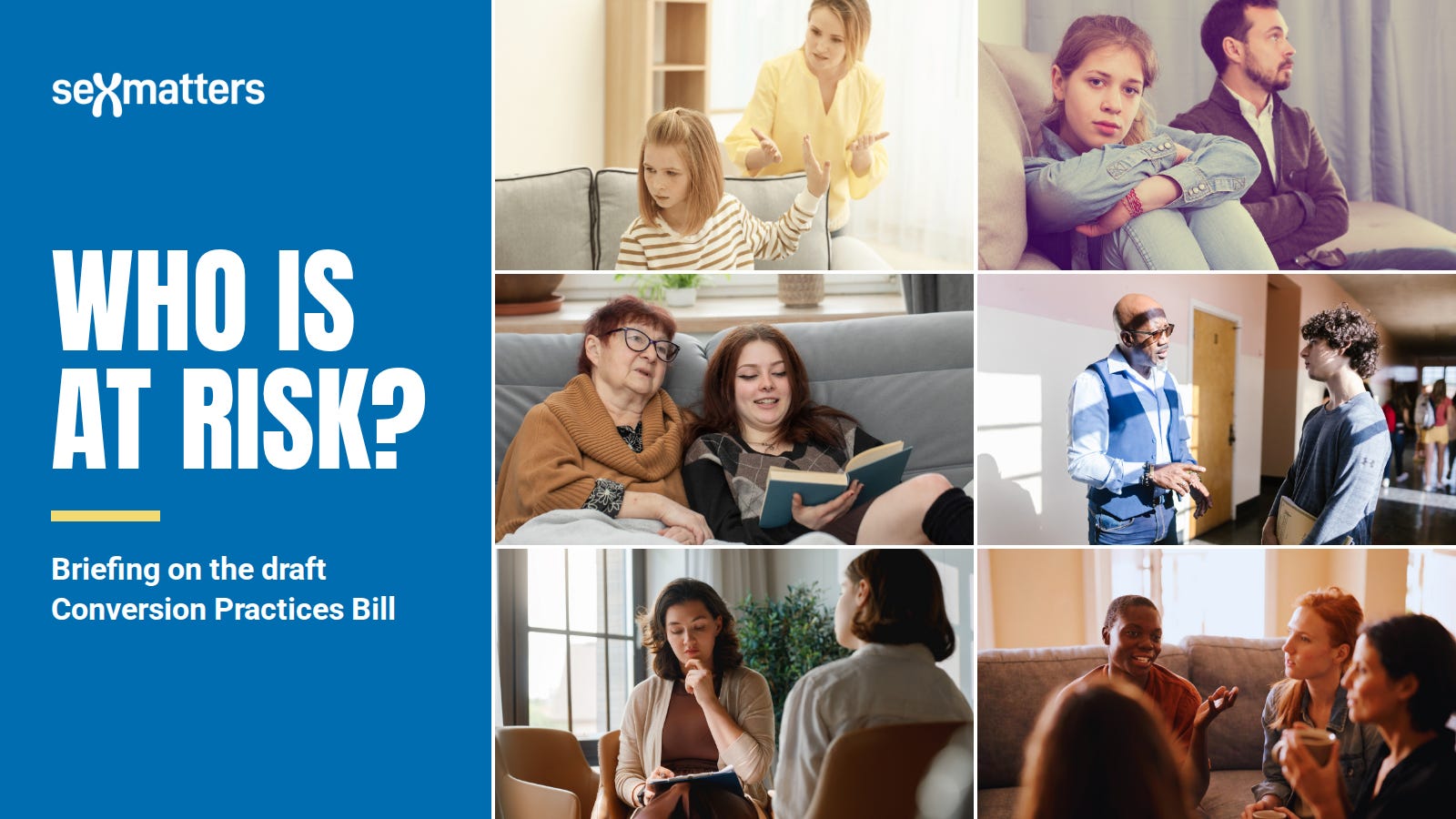
The parliamentary committee on the draft Conversion Practices Bill has issued its call for evidence, and Sex Matters, together with LGB Alliance and the Gay Men’s Network is due to give oral evidence on Thursday 29th October.
We have published initial guidance on how to send written evidence to the committee.
Under the bill, a conversion practice is any conduct intended to change a person’s sexual orientation or “transgender identity”, and the maximum sentence for an “abusive” conversion practice is five years in prison. Our new briefing, Who will be criminalised?, sets out 21 realistic situations in which ordinary people could face investigation and potential prosecution if the bill becomes law, or be made subject to a “conversion practice protection order”.
Some are based on real cases we know of. Some of the people are frank, blunt or unkind, and some lose their temper, but none comes close to breaching existing criminal law.
They include:
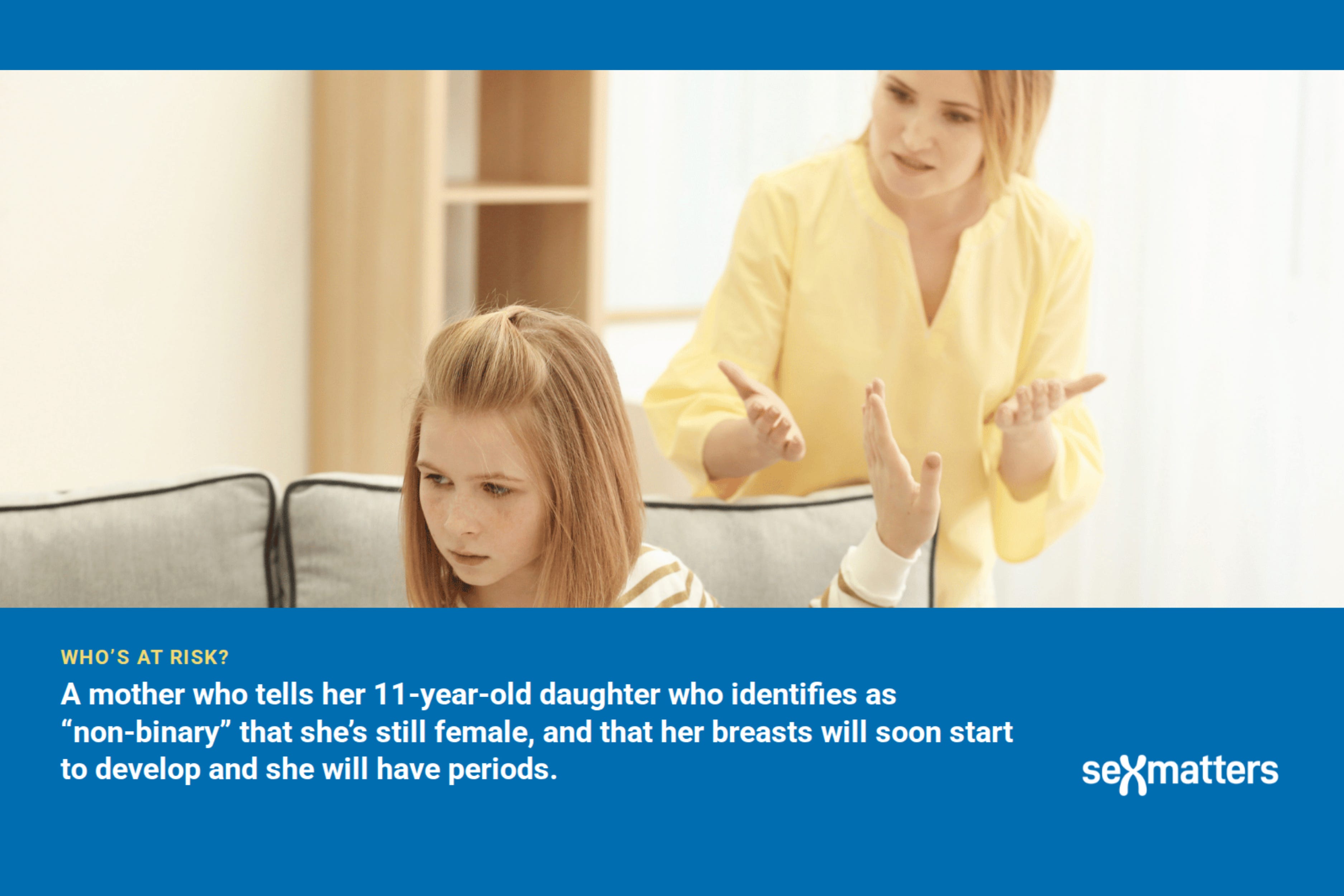
a mother who won’t call her 11-year-old daughter “they”
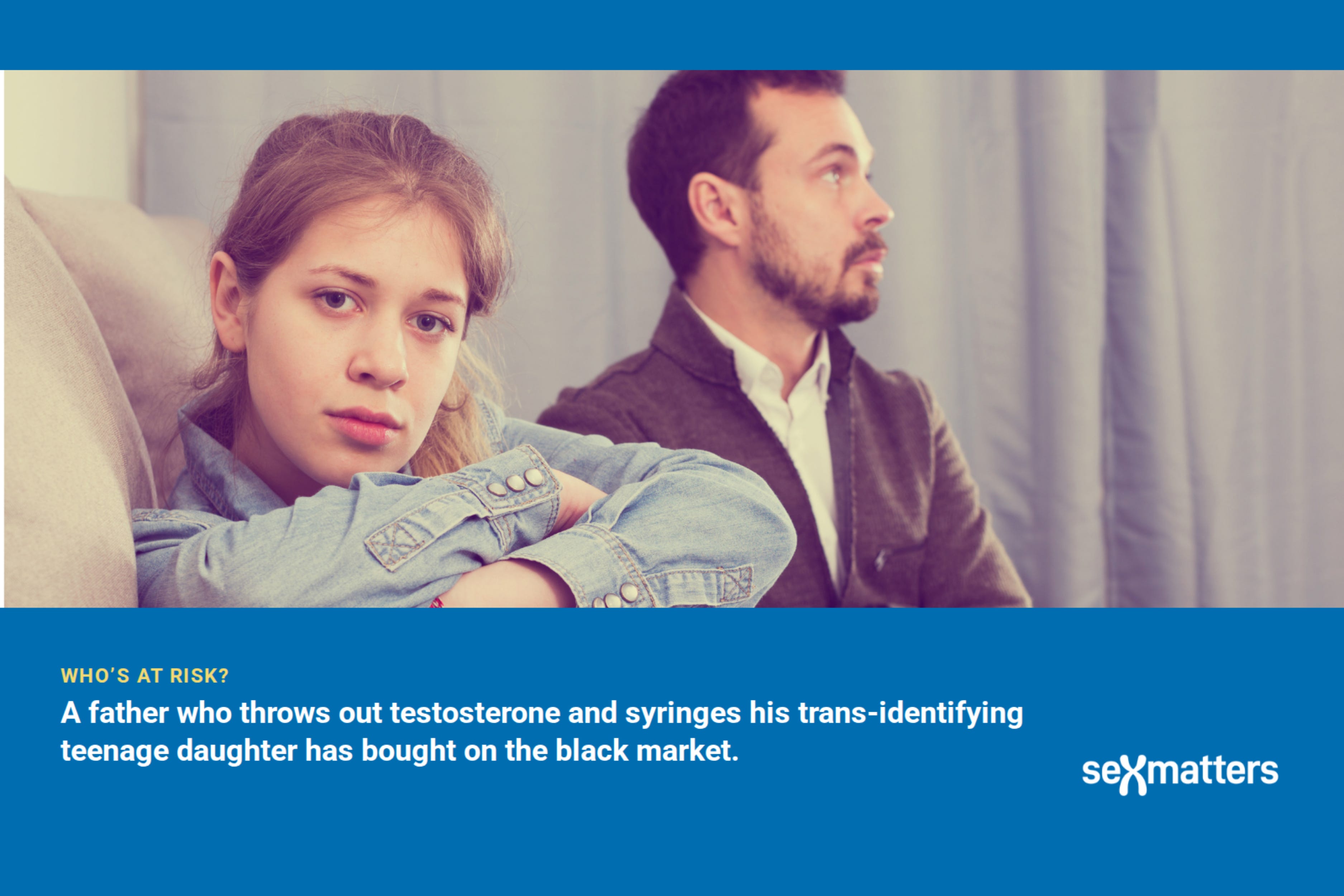
a father who throws away testosterone his teenage daughter bought online
a lesbian who tells her trans-identifying niece it’s fine to be a lesbian
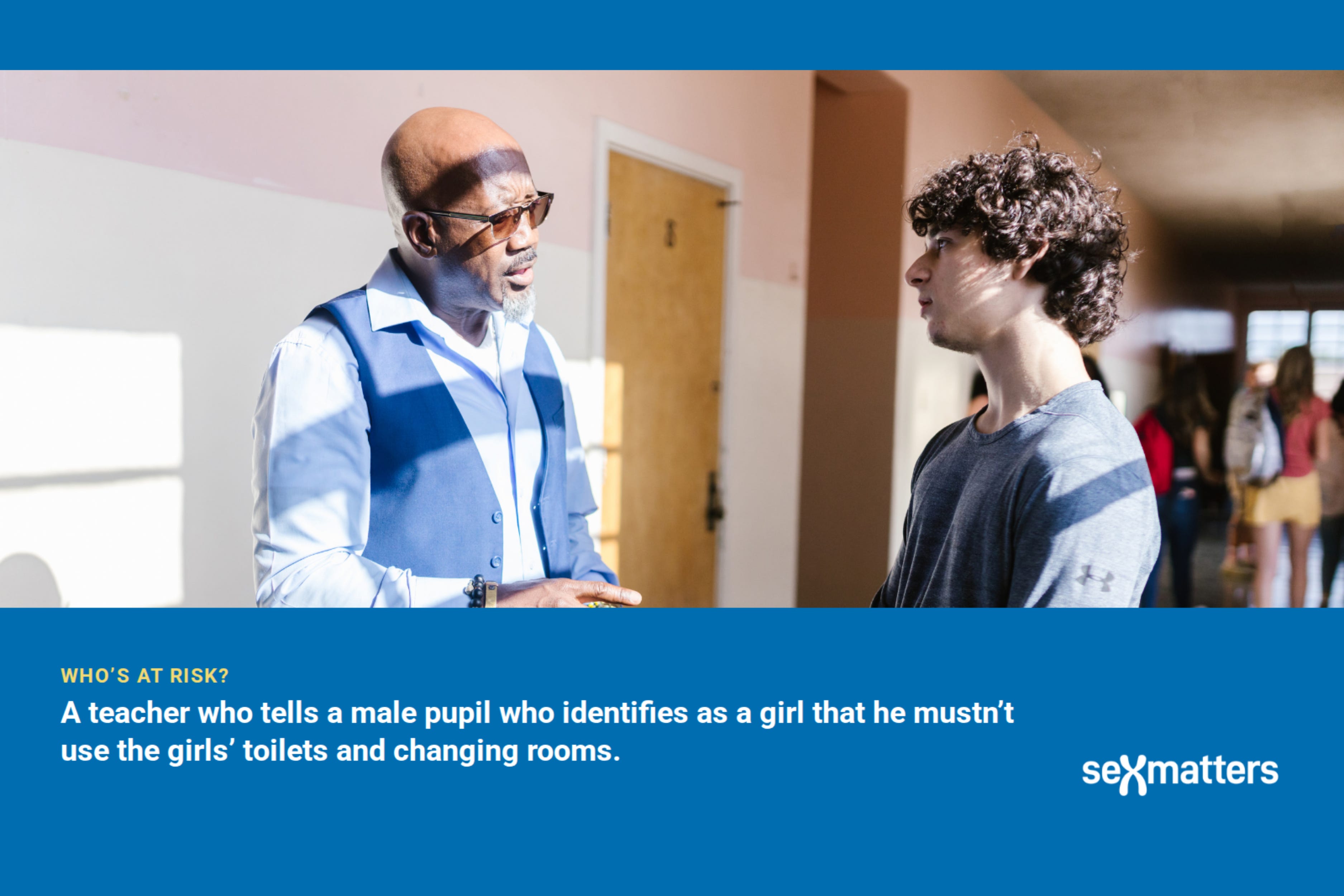
a teacher enforcing school policy on single-sex toilets
a GP accurately recording the sex of a man who identifies as a woman
parents of trans-identifying children who form a support group.
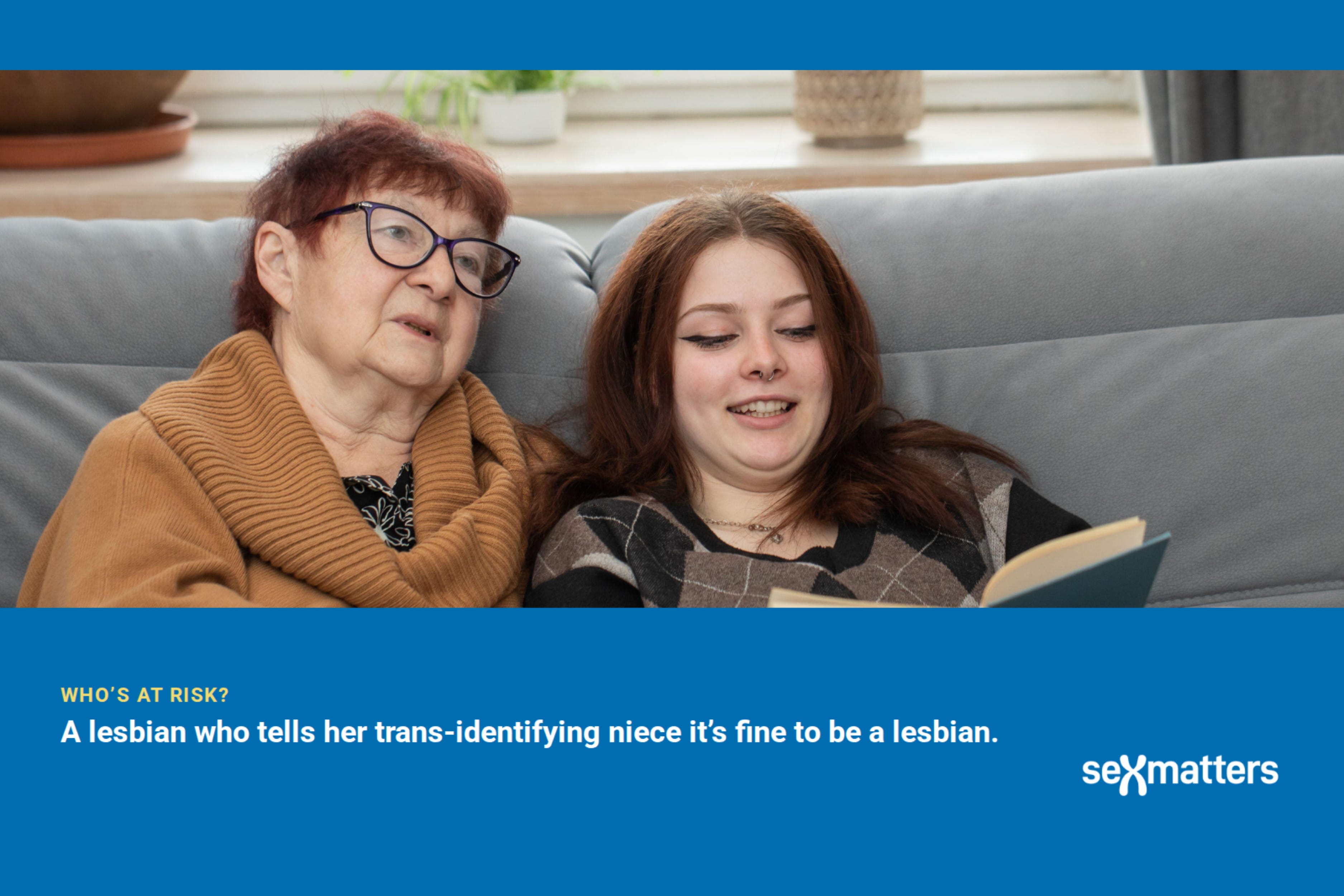
Many are acting in the best interests of the person they’re accused of harming, and some are doing what existing law requires of them. But none of that is reflected in any defence under the bill.
It has no defence of reasonableness, so following the Equality Act, workplace regulations or schools’ statutory safeguarding guidance is no excuse.
It requires no intention to cause harm, only an intention to change someone’s sexual orientation or transgender identity, or what they believe about it.
A single conversation, refusal or rebuke could be enough, because no pattern of behaviour is needed.
There is no exception for parents, and only a narrow one for healthcare professionals.
For each scenario, the briefing explains how a complaint could lead to investigation, prosecution or a protection order, why the conduct is lawful now, what would have to change for the conduct to become criminal under existing law, and where the bill clashes with human-rights protections and other legal rights and duties.
Perhaps one of these scenarios accords with your experience. The parliamentary committee is seeking evidence from a wide range of people. The deadline is 16th November.
Related content
Submit evidence to the Conversion Practices Bill committee
Draft Conversion Practices Bill threatens parents with jail time
Thank you for the very clear guidance (& for the link to it) on how to send written evidence to the Committee taking evidence for the Conversion Practices Bill.
It seems a pity that images are excluded: but presumably links to online images are allowed.