

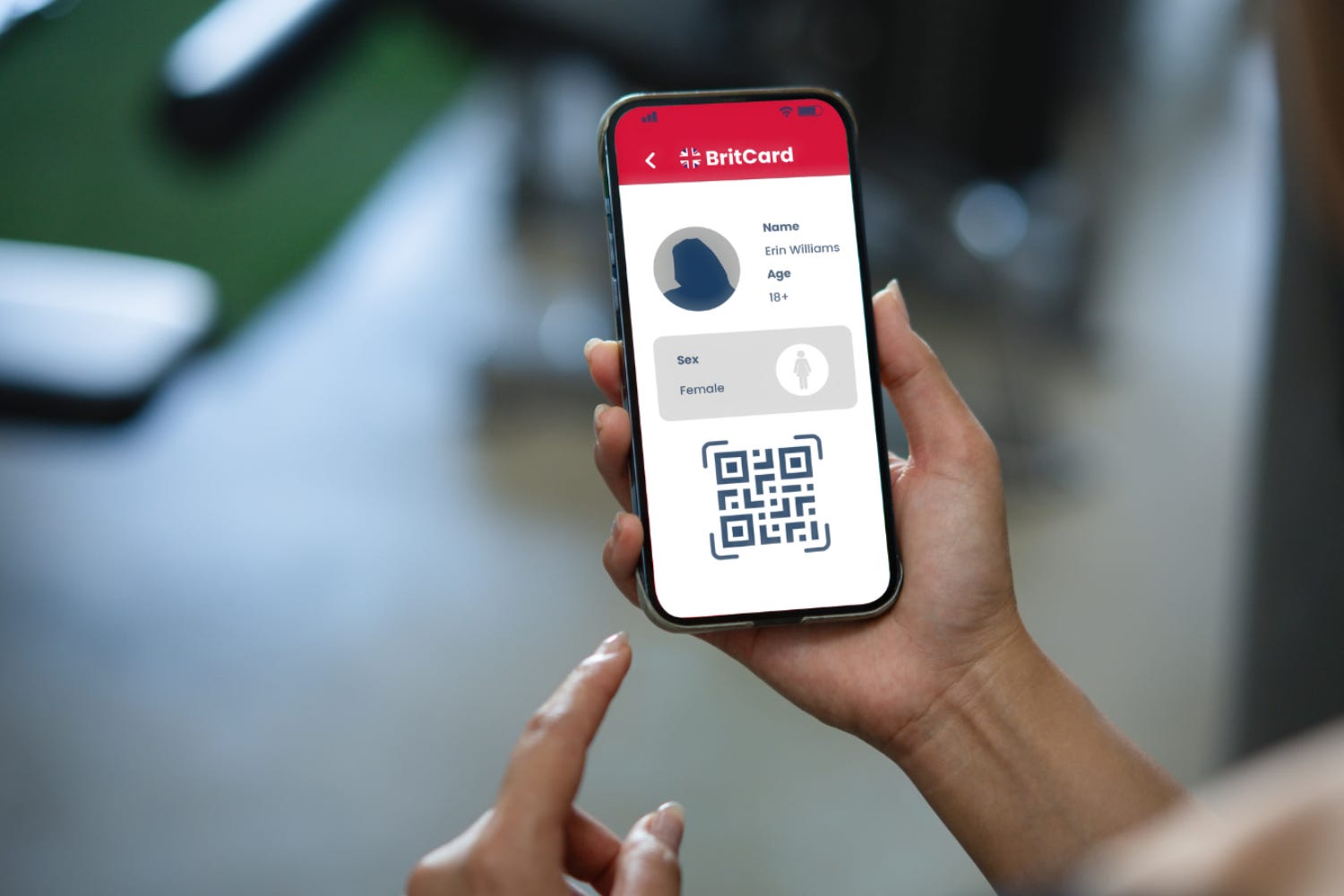
The government has committed to creating a new national digital ID (BritCard) by the end of this Parliament, which it says will be useful, inclusive and trusted. It aims to enable better access to public and private services, saving time and effort, as well as better safeguarding of personal information and privacy, while reducing fraud and improving efficiency.
But the government does not plan to include sex on the BritCard, as it says sex “is not necessary for the intended purpose of the digital ID”.
We think this is a mistake. It is a cop-out that will leave individuals and service providers floundering and mired in conflict, instead of being able to simply and clearly verify a fact about people that is often needed.
Examples include:
joining a dating service
joining a single-sex association, such as Girlguiding or the Women’s Institute
applying for a bursary, prize or award that is only for women
joining a gym and using its ID to access male or female changing rooms
registering for sport with a national governing body or sports team, or for competitions
applying for a job in social care, policing, prisons or a single-sex service
seeking to rent in a shared house, homestay, hall of residence or dormitory
registering with a healthcare or social-care provider
registering with a single-sex service such as a rape crisis centre or women’s refuge, or being referred between such services.
Currently people in the UK have no reliable way of verifying their sex. What is worse, apparently authoritative documents like passports, driving licences and health records contain inaccurate information that mixes sex and gender identity.
This doesn’t just affect the records of people who have changed their recorded sex. It affects everyone. It means that even if a person’s sex is accurately recorded on their passport, driver’s licence or NHS record, they cannot use the document to prove this, because there is no way of knowing whether their documents are or aren’t trustworthy.
Sex Matters does not take a general position on digital ID. We recognise that there are civil-liberties concerns about digital ID. But if a national digital ID is developed, we think it should include sex.
Sex should be included as a voluntary field
The development of a national digital identity is an opportunity to provide a simple, useful, inclusive and trusted way for people to verify their sex, which is needed in lots of everyday situations for eligibility for services (just as age, one of the most-cited use cases for digital ID, is).
Including sex on digital identity does not mean that people would always need to share this data.
It would not be difficult or disproportionate to include accurate sex data on digital ID as a voluntary field. For many people it will be possible to verify their sex easily by cross-referencing with the birth register, which is being digitised and which remains accurate. Making this data field voluntary allays privacy concerns for those who do not want this data on their digital ID.
Including sex on national digital ID would be simple, cost-effective, privacy-protecting and rights-respecting for everyone. It would not harm trans people’s rights. Failing to include sex on national digital ID will create difficulty, confusion, compliance problems and costs.
Whatever your view on digital ID, you can argue that if it exists it should include sex.
Take action
A government consultation, “Making public services work for you”, is open until Tuesday 5th May. It is important that lots of people and businesses respond to say that sex should be included on digital ID.
Please read the Sex Matters briefing explaining the issues and then respond to the consultation. We have produced guidance on answering the questions. It should take you about 10 minutes.