

Update from Maya
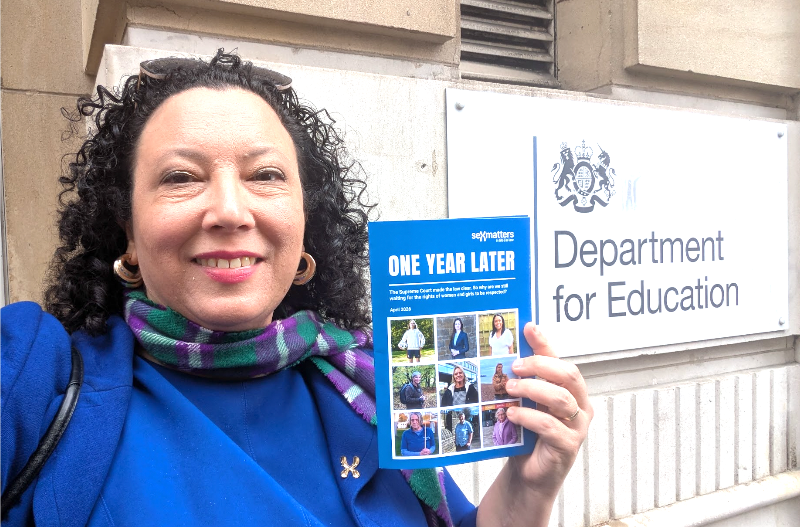
Maya delivering our One year later report to Bridget Phillipson
The Minister for Women and Equalities, Bridget Phillipson, has promised to present the long-awaited code of practice for services, public functions and associations for approval by Parliament this month. If she is going to meet her deadline, the parliamentary timetable means that in practice she has to do it in just a few days’ time – during the week starting Monday 18th May. Once it is laid before Parliament, it will come into legal effect 40 days later unless a motion is passed to annul it. The last time that happened was in 1979.
The code, when it comes, will provide a detailed explanation of the single-sex and separate-sex exceptions as applied in different kinds of single-sex services, with lots of practical examples. Perhaps its most important function will be to stop duty-bearers repeating endlessly that the reason they haven’t changed unlawful policies in the year-plus since the Supreme Court judgment in the case of For Women Scotland is that they are “waiting for guidance”.
There was never any reason to wait. The previous version of the code, which dates from 2011, was clearly wrong in saying that “If a service provider provides single- or separate sex services for women and men… they should treat transsexual people according to the gender role in which they present.” That was already true before the Supreme Court judgment. Service providers really should already have stopped pretending to be confused about this.
In cases such as the Red Lion Pub and Croft v Royal Mail in 2003, Green v Secretary of State in 2013 and the first For Women Scotland case in 2022, courts have confirmed again and again that identifying as transgender doesn’t confer the right to be treated as the opposite sex. The Supreme Court made clear last year that having a gender-recognition certificate doesn’t either. Earlier this year the High Court confirmed that the EHRC’s straightforward explanation of what the Supreme Court judgment means in practice for separate-sex facilities accurately reflected the law.
Most recently, on 13th May, news broke that Faye Russell Caldicott (a pseudonym; she was granted court anonymity) had won her case against NHS England. She was represented by our former chair, Naomi Cunningham – congratulations, Naomi! The judgment is a breakthrough, concluding that a policy of allowing trans-identifying men to use women’s toilets, showers and changing rooms amounts to discrimination and harassment related to sex.
NHS England had defended itself by saying it had applied the law as it understood it based on advice from Stonewall, GIRES and Unison. The judgment brushed that excuse away, saying that “reliance on contemporaneous guidance or good practice advice cannot justify an incorrect interpretation of the law”. It was just the latest confirmation that, whether or not the EHRC’s code of practice is laid next week, organisations that have been delaying fixing faulty policies really need to get on with it.
In other news, my colleague Helen Joyce attended a debate at the Cambridge Union, at which Maeve Halligan, founding president of the Cambridge University Society of Women, spoke in favour of the proposition “This House believes modern LGBTQ+ activism fails its community.” You can watch the entire debate on YouTube; both Maeve and her fellow CUSW founder Serena Worley, who spoke from the floor, performed remarkably.
Maya Forstater
The state of free speech on campus
Equality Act-shaped hole at the heart of Sussex judgment
In this week’s episode, Maya and Helen discuss the recent legal judgments that highlight the importance of strong protections for free speech and academic freedom to people who hold gender-critical views.
As Maya wrote last week in Times Higher Education, at the heart of the High Court judgment in the judicial review brought by the University of Sussex is an Equality Act-shaped hole. The Office for Students’ investigation into its failure to protect academic freedom and free speech on campus had been sparked by the hounding of Professor Kathleen Stock, who had been accused of hate by activists for speaking up about misrepresentations of the Equality Act. The High Court overturned the regulator’s £585,000 fine punishing Sussex for infringing on academic freedom and freedom of speech by adopting a policy in 2018 banning so-called transphobic propaganda from its campus and pledging to discipline those committing “transphobic abuse”.
EHRC code: any moment now...
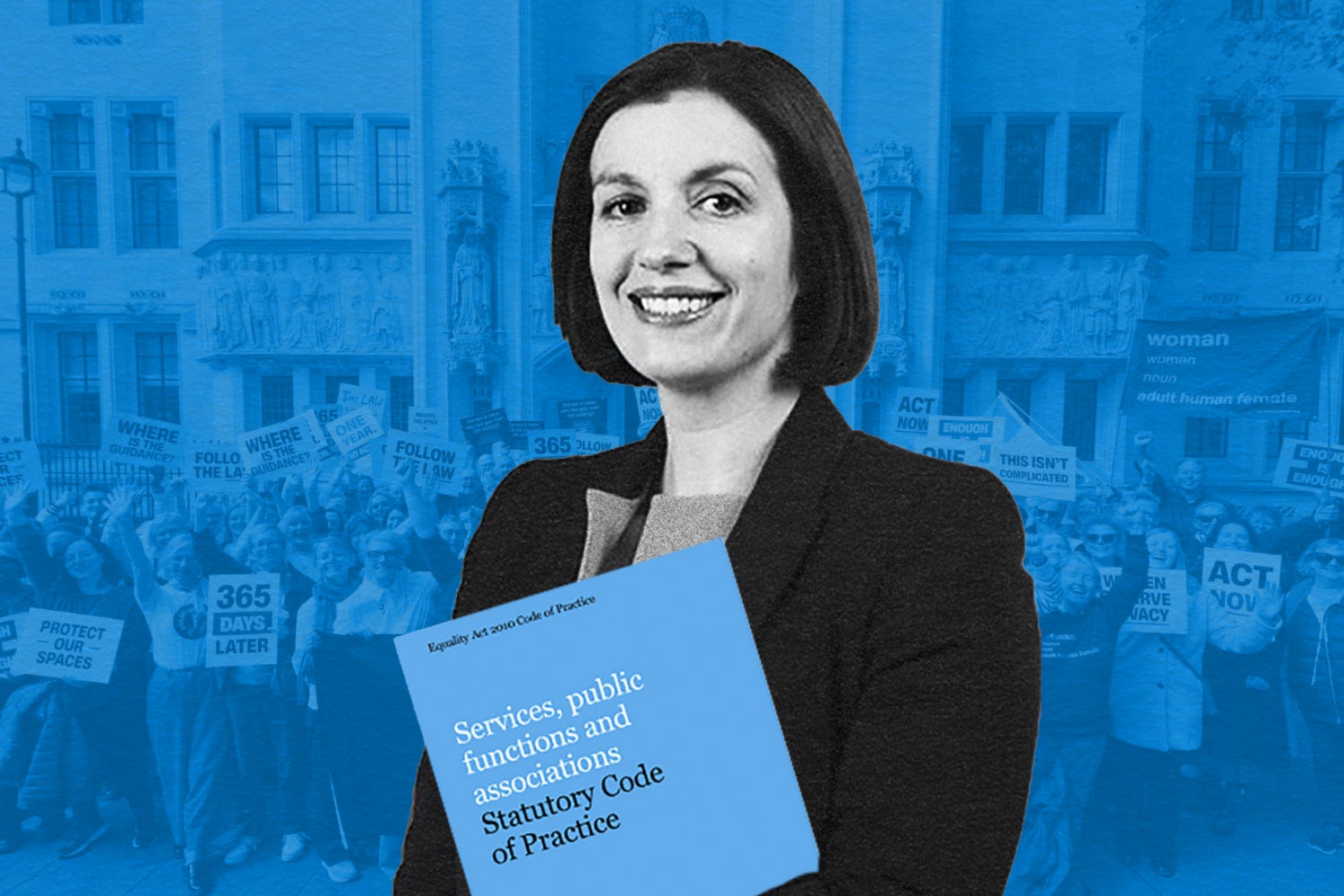
The EHRC Code of practice for services, public functions and associations is expected to be presented to Parliament for approval before the end of May.
We have published a short explainer about the code: what it’s for, what happens next and why it matters.
Hampstead Ponds: update
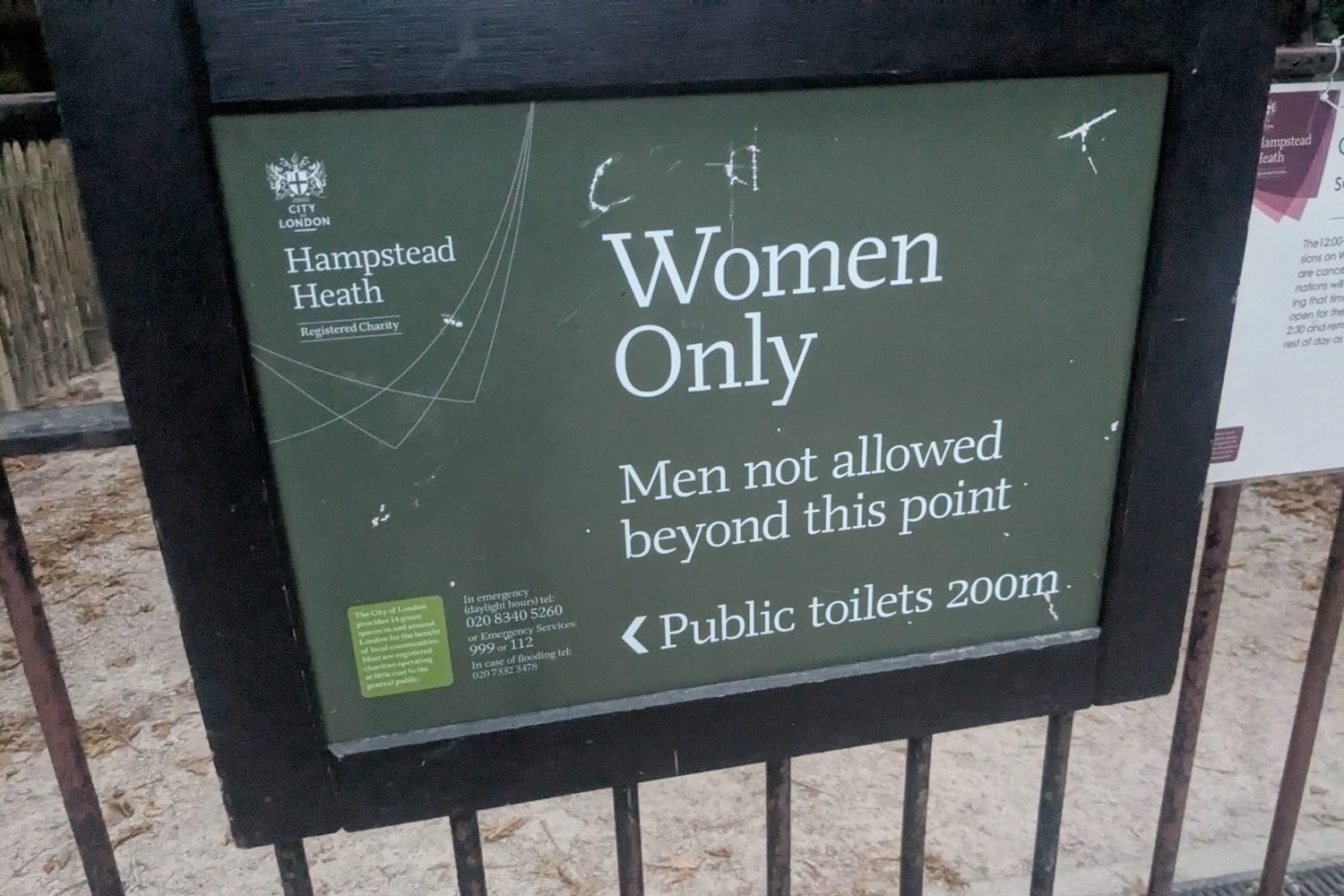
You may have seen media reports that the City of London has decided to stick with its policy of permitting people to access the ponds designated for the opposite sex on the basis of their “lived gender”. After the vote in support of the plans at a meeting on 12th May, they must now go before another committee on 4th June.
Meanwhile our legal challenge continues: the court has let us know there will be a hearing this autumn.
In the news
Ben Lynch for BBC News, The Standard and The Mirror broke the news that City of London councillors have voted not to change the policy of allowing trans-identifying men to access the Ladies’ Pond at Hampstead Heath, which is subject to an ongoing legal challenge by Sex Matters. Susanna Siddell for GB News revealed that the City plans to spend £1m on “privacy” upgrades at the ponds. Legal news site LexisNexis published its analysis.
Writing for Civil Society, Léa Legraien covered Sex Matters’ first annual report. Maya was quoted as saying that much of our work has been about pressing institutions, employers, regulators, schools, sports bodies and public authorities to follow the law.
Sam Merriman for the Daily Mail reported that the King’s Speech included plans for a ban on “conversion practices”. Helen said that the real targets are parents, teachers, therapists and spiritual advisors who don’t subscribe to trans ideology, and don’t think the incoherent, subjective notion of “gender identity” is what makes someone a boy or girl, or a man or woman.
Further coverage of our report on sex-based rights in the City included Emma Ann Hughes for Insurance Post, who focused on insurance provider Admiral’s decision to stick with gender-neutral (mixed-sex) toilets, and Oliver Partridge for GB News.
Fiona was interviewed by Kevin O’Sullivan on TalkTV on the news that Harriet Harman has been appointed as the government’s advisor on women and girls. Shortly after last year’s Supreme Court judgment, Baroness Harman claimed it meant that trans-identifying men could still use women’s spaces.
If you’d like this memo in your inbox every Friday at teatime, join our mailing list now.
Sex Matters survives on your support.
Without it, we simply wouldn’t exist.
Sex Matters can deliver essential research and analysis, help shape the debate, and empower people with clear, published guidance on their rights – but only with your support. Please contribute what you can to keep us going.