

Update from Maya
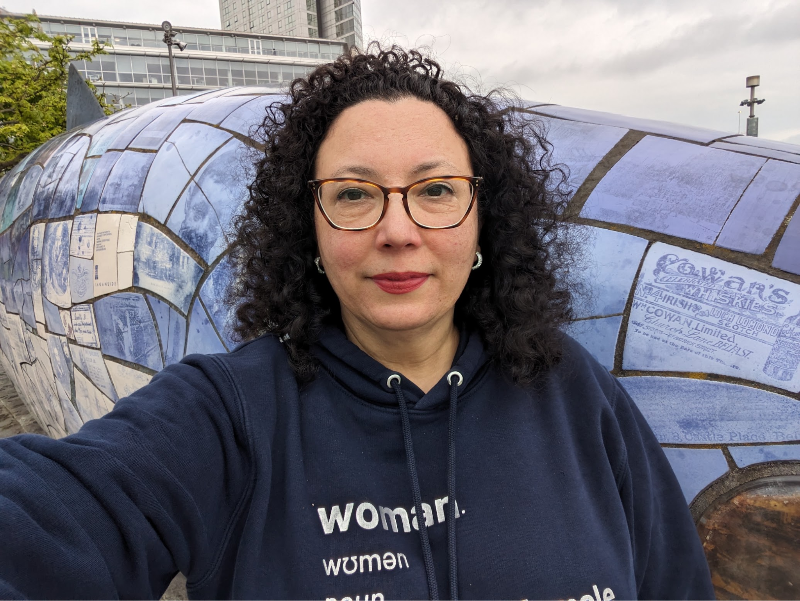
Maya on a visit to Belfast in 2024
One of the things we say to each other inside Sex Matters is that you know you’re over the target when you start catching flak. And this week it has been relentless.
Fiona is due to speak in Belfast on 4th August at a panel arranged by Women’s Rights Network Northern Ireland as part of the Féile an Phobail arts festival. On Monday the names of the four women on the panel were announced, and transactivists began to whip up an online campaign against them. The mob called for the charity to cancel WRN NI’s panel, and shamefully it did so.
This is belief discrimination and it is unlawful.
I’ve written to Féile spelling out the law and asking it to reinstate the event and apologise to WRN NI, Sex Matters, Fiona and the other speakers. Otherwise we will see them in court.
On Friday Gordon Lyons, the Northern Irish communities minister, weighed in saying that if the charity refuses to follow the law then it should lose public funding. This is quite right.
The reason that Féile and so many other charities commit unlawful discrimination so recklessly is that sensible voices among their staff and on their boards who might notice the legal risk have been silenced. In large parts of the voluntary sector – and the public sector and academia – people who dare to express facts as commonplace and evidence-based as the fact that men are statistically more dangerous to other people than women are, and that doesn’t change if those men call themselves women or non-binary, have been demonised.
This week For Women Scotland published a meticulous analysis of how public money has been used to embed the position often labelled “trans rights”, which can fairly be summarised as the demand that people and institutions ignore what they know about the dangers men pose when those men say they aren’t men.
Also this week, policy analysts Murray Blackburn Mackenzie mapped out Amnesty International’s role in this process. For almost a decade, Amnesty has used its good reputation to lend credibility to those who describe recognising facts that are necessary for safeguarding as “hateful” and “anti-rights”. It has repeatedly been shown to be wrong about human rights and the law, but it refuses to budge.
Now Amnesty is claiming that the Growing threat report it withdrew after widespread criticism was an isolated incident rather than indicative of any wider pattern. In response to my email asking for a meeting, Amnesty UK’s chief executive, Kerry Moscogiuri, said she could find time in September or October. Perhaps by then she will have worked out her organisation’s position.
While Amnesty has realised that it went too far in naming the target organisations to be cancelled, the Good Law Project (which claims to be “like a charity”, although it is controlled by one man, unregulated and owned by a trust based in Jersey) is less cautious. It has leapt into the role vacated by Amnesty and launched a campaign against Sex Matters, accusing us of running a “campaign of hate” and “spewing abuse online and in the media”. It says it has submitted 46 examples of this to the Charity Commission, but has been coy about the evidence for this claim.
From the few examples GLP has published, it seems that what it counts as “hate” is any clear articulation of the fact that men are statistically more dangerous than women, and that this doesn’t change if those men call themselves women or non-binary.
For those who regard this fact as taboo, what is “hateful” about saying it isn’t how you say it, but that you say it at all. In fact, if you say it politely, reasonably, calmly and with evidence, in ways that can be heard by politicians, journalists and employers, that makes it worse. If you say it while being a middle-aged woman, that is worst of all.
As Helen Joyce said in a speech GLP described as hateful (which you should watch if you haven’t already):
“When a lie is embedded in a system, over time it propagates throughout that system, and then everyone working within it has to try to protect the lie by staying well away from it. It’s worse than a loophole, which over time tends to get bigger – it’s a loophole you have to avert your eyes from and avoid mentioning.”
Helen gave the example of Sonia Appleby, the safeguarding lead at the now-closed GIDS clinic at the Tavistock in London, who successfully took the clinic to the employment tribunal after being disciplined for raising safeguarding concerns. It was two words she said that got her into trouble: Jimmy Savile.
Three are three lesson we should all take from Jimmy Savile, and from Wayne Couzens, the grooming gangs and every other institutional abuse scandal that has happened in plain sight:
Men are statistically more dangerous than women, and this doesn’t change no matter who they are or what positions they hold. This includes but is not limited to male celebrities, scout leaders, teachers, religious leaders, therapists, charity workers, dads, cousins, uncles, transwomen, non-binary people, LGBTQ+ allies, police officers, members of ethnic minorities, gym coaches, Hollywood moguls and politicians.
Situations where individuals or groups of men are excluded from the ordinary rules, scrutiny and safeguards that apply to other men are likely to attract men who are particularly dangerous.
Organisations where these facts cannot be stated are institutionally corrupt.
The discomfort you feel about saying this is real and justified. It means you are over the target and about to come under fire.
46 reasons to keep going

Here is some of our work defending safeguarding, human rights and women’s rights, which GLP describes as “hateful”. We invite you to judge for yourself:
Fiona on GB News discussing the High Court ruling on Sex Matters v City of London
Letter to the Minister for Women and Equalities about the EHRC code of practice.
Media coverage
BBC News (Robbie Meredith) broke the news of the Féile cancellation, quoting Maya saying the festival was discriminating against WRN NI and Sex Matters. The News Letter (David Thompson) reported on our letter warning of legal action if the event was not reinstated. Maya joined BBC Radio Ulster’s The Nolan Show with Robin Moira White, a trans-identifying male barrister, to discuss the festival’s decision.
In the Daily Mail, David Churchill highlighted an Amnesty report published in May, which Maya said showed a longstanding pattern of misrepresenting those who recognise the importance of the two sexes, and Noor Qurashi reported that the Charity Commission had opened a regulatory compliance case into Amnesty.
The Telegraph (Ruby Cline) and the Daily Mail (Will Hallowell) focused on JK Rowling’s offer to support legal action for organisations Amnesty had branded “anti-rights”. The Times (Marc Horne) quoted Maya saying Amnesty should have reported itself to the Charity Commission after promoting an interpretation of equality law that the Supreme Court later found to be unworkable.
In The Scotsman, Jenny Lindsay’s column teased out the lessons of the Amnesty report for other institutions captured by gender ideology. International coverage included the Washington Post (Andrew Doyle) and the National Post (Amy Hamm).
Keeping children safe in education
In this week’s episode, Maya and Helen discuss the updated version of Keeping children safe in education (KCSIE), which places guidance for schools on dealing with trans issues within the statutory safeguarding framework.
The most important change is the addition of three clear safeguarding principles that constrain how schools can respond to requests for “social transition”.
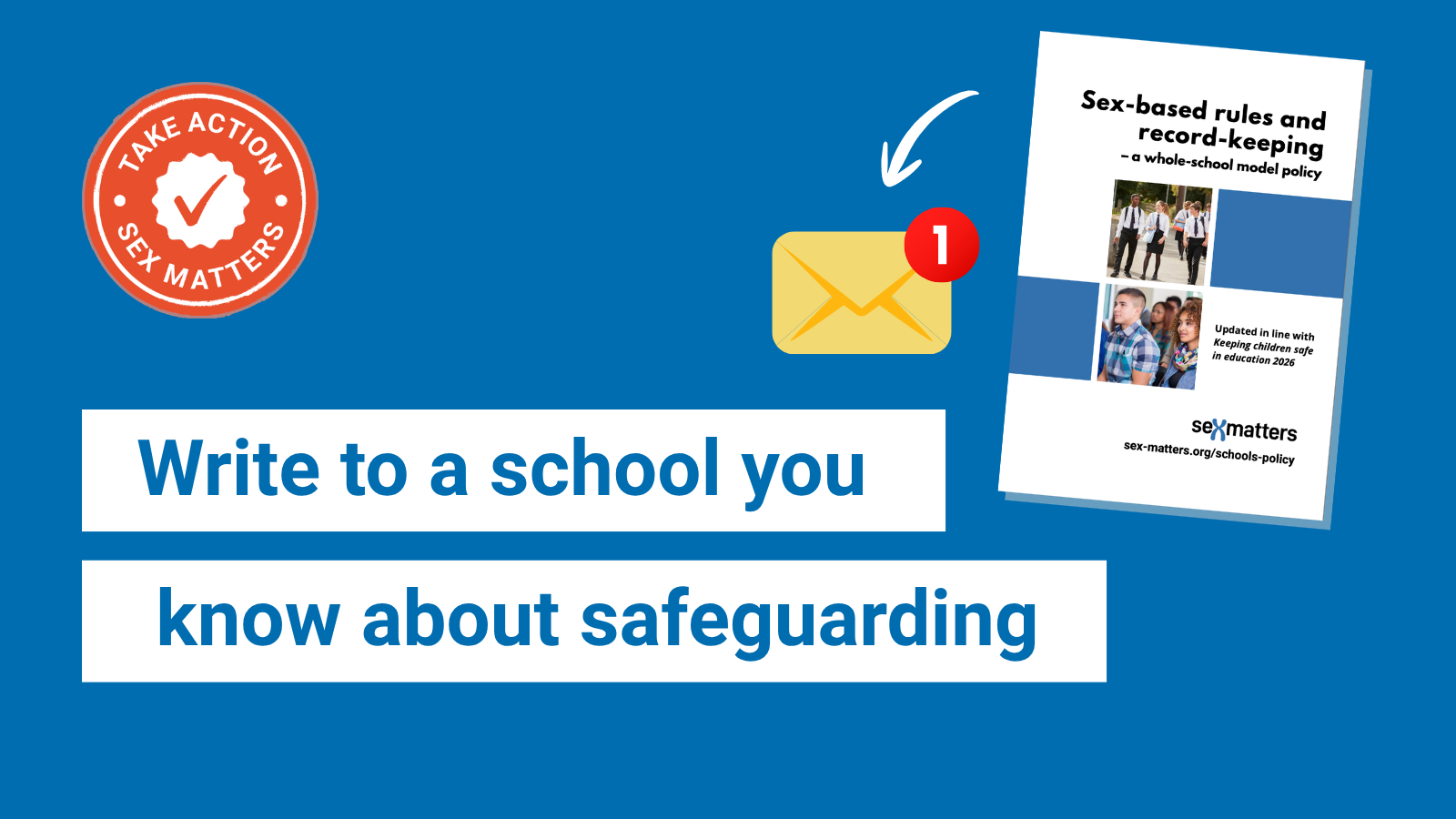
Schools in England are updating their policies and training in time for September, when the KCSIE update comes into force. You can help them get this right by sending a school you know our updated whole-school model policy on sex-based rules.
In other news
The Telegraph (Madeleine Ross) broke the story that the Cabinet Office has refused to publish its new model policy for trans-identifying civil servants. The story was followed up by GB News (Dan McDonald). Maya said the previous policy had done untold harm by embedding unlawful practices across the public sector and that its replacement should be developed with utmost transparency.
In the Daily Mail Sam Merriman revealed what was in the policy. Maya welcomed its protection of single-sex facilities but warned that it remains shockingly biased on pronouns and misgendering, and that threatening to punish staff for recognising biological sex is unjustified and discriminatory. Maya was also interviewed by Julia Hartley-Brewer on Talk TV about the leaked guidance.
The Daily Mail (Nicholas Pyke and Janet Murray) published an investigation based on Through the looking glass, a report by SEEN in Publishing exposing gender ideology in children’s books and schools. Helen was quoted saying that young children are especially vulnerable to believing the false idea that changing clothes or appearance can change their sex.
If you’d like this memo in your inbox every Friday at 5pm, join our mailing list now.
Sex Matters survives on your support.
Without it, we simply wouldn’t exist.
Sex Matters can deliver essential research and analysis, help shape the debate, and empower people with clear, published guidance on their rights – but only with your support. Please contribute what you can to keep us going.
An essay that is right over the target (great phrase).
Typo: "Three are three lesson" ("There are three lessons")
Thank you everyone at SEX MATTERS & Helen Joyce. I so appreciate your efforts on our behalf.