

Update from Maya
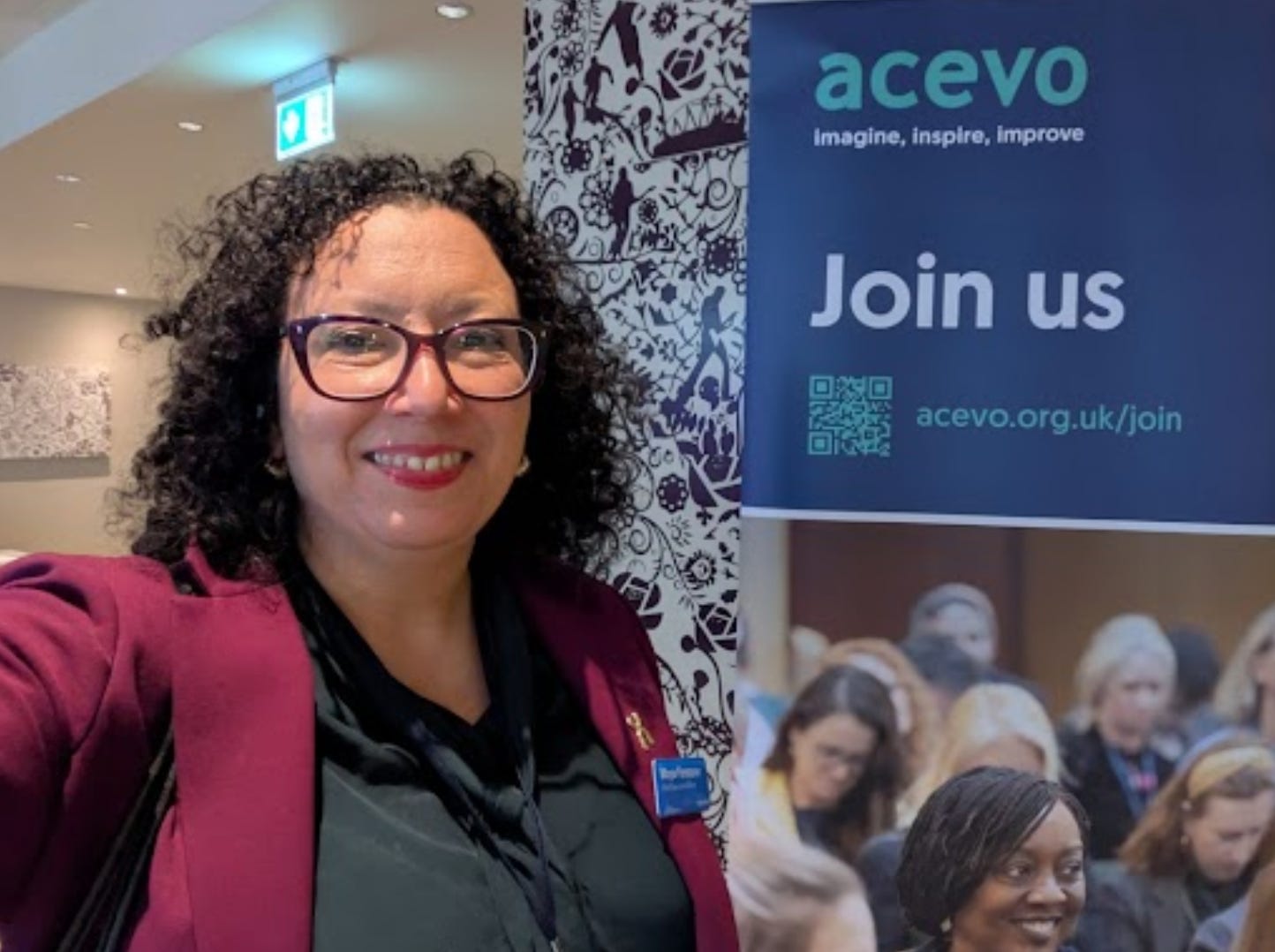
I spent 24th March at the Wembley Hilton with hundreds of charity CEOs for the annual conference of the Association of Chief Executive Officers of Voluntary Organisations (ACEVO). I didn’t know if I would be welcome. But I am the CEO of a charity, and I have appreciated ACEVO’s practical support, so I put on my best “worthy of respect” face and joined them.
Jane Ide, CEO of ACEVO, told us that charities rank second only to doctors as the most trusted institutions in the UK. As it happens, charities and the healthcare professions are the two sectors that have done the greatest harm by accommodating and promoting the extremist demands of gender ideology.
None of the big-name charity CEOs talked to me, but plenty of others did. Over the course of the day several people came up and said “Thank you”. One asked if I was speaking (“Not this year!”); others listened with obvious surprise when I told them my story and the stories of women like Roz Adams and Sandie Peggie (it’s amazing what you can miss if you read nothing but The Guardian and watch nothing but the BBC). A few looked askance when they spotted me and made a quick getaway.
Many people said: “It’s so nuanced and complicated.” I tried not to lose my patience. It’s actually quite straightforward, I replied. There are two kinds of people: male and female. There are three kinds of spaces: male, female and unisex. Maybe that’s a bit basic for the “it’s nuanced” crowd, but it happens to be true.
In 2023 hundreds of charity CEOs signed the I Stand With Trans declaration. The campaign defined “transphobic behaviour” to include misgendering, deliberate exclusion from physical spaces and propagating the idea of trans as being an ideology.
That campaign, which was a proud declaration to commit unlawful belief discrimination, is now defunct, and the vibe even in the charity sector has shifted. I didn’t hear anyone declare their pronouns from the stage, the toilets hadn’t been performatively made gender-neutral for the event, and none of the speakers (one was Simon Blake, CEO of Stonewall) used their slot to hand-wring about the reset of expectations on trans rights. Instead they talked about international relations, the cost of national insurance, what to do with AI, and large-scale inequalities such as race, class, age and disability.
Most charities seem to have moved on from the briefly fashionable obsession with trans “inclusion”. The latest edition of Charity Times includes an overheated and under-informed article on the Supreme Court judgment, but the layout, all pink and blue ribbons, and the journalist, a signatory to I Stand With Trans, seem behind the times. The latest charity pledge, Third sector against transphobia, has a much less impressive list of signatories. The group promoting it is closed and secretive, as is the one behind Unlock the GATE, the campaign to continue to allow boys into Girlguiding.
The Equality and Human Rights Commission guidance will eventually be put before Parliament, and the Charity Commission might finally produce some guidance of its own. By now it is obvious to anyone with any common sense that a charity, like any other institution, needs to run on reality in order to succeed in its mission.
One of the themes of the day was collective courage. There hasn’t been much from the sector. Adopting trans ideology creates a conflict of interest that is kryptonite for governance. Maybe they will ask me to speak about this next year. I’m not holding my breath.
If you want to hear and be part of something inspiring, I’ve just come across the Unsilenced Project. It’s a collection of oral histories from those affected by the modern trans movement gathered by Suzanne Malyon, a gender-critical campaigner based in Scotland. There are so many stories to be told from this extraordinary time by ordinary people who found the courage to refuse.
Maya Forstater
Boys told to leave Girlguiding
Maya and Helen discuss Girlguiding’s recent decision to reverse its policy of allowing boys who identify as girls to join its groups. They trace the history of the charity’s move towards “inclusive” policies, the failure of the Charity Commission and other regulators to provide the necessary leadership, and the practical safeguarding risks that follow when a supposedly female-only organisation admits boys under the pretence that they are girls.
Protests planned for one year later
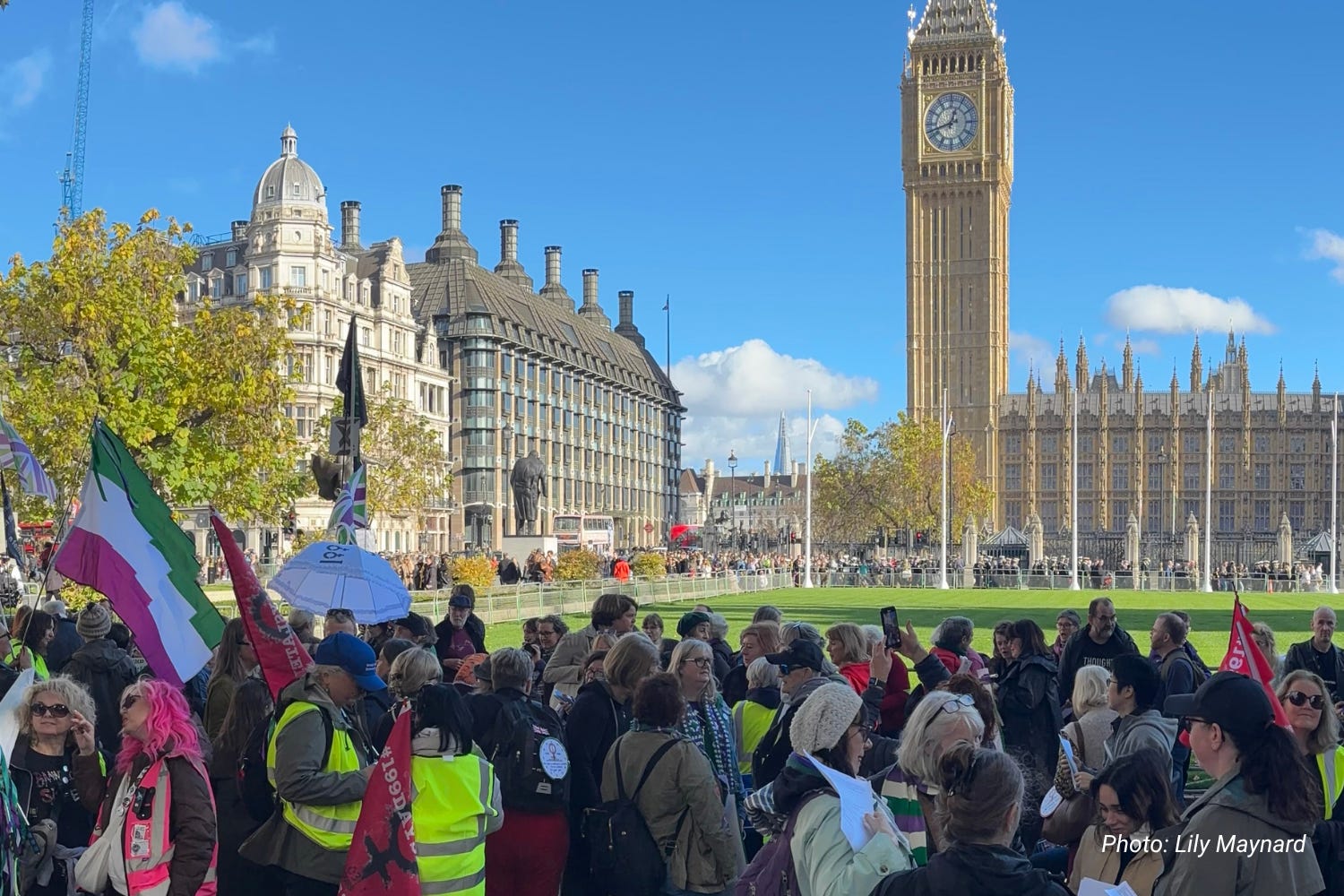
On Saturday 11th April, nearly a year after the Supreme Court confirmed that sex means sex in the Equality Act, the grassroots group @acts_grassroots is organising a series of #OneYearLater protests against the government’s inaction at locations across the country. Everyone is welcome – just turn up and make your voice heard.
MPs debate the puberty-blocker trial
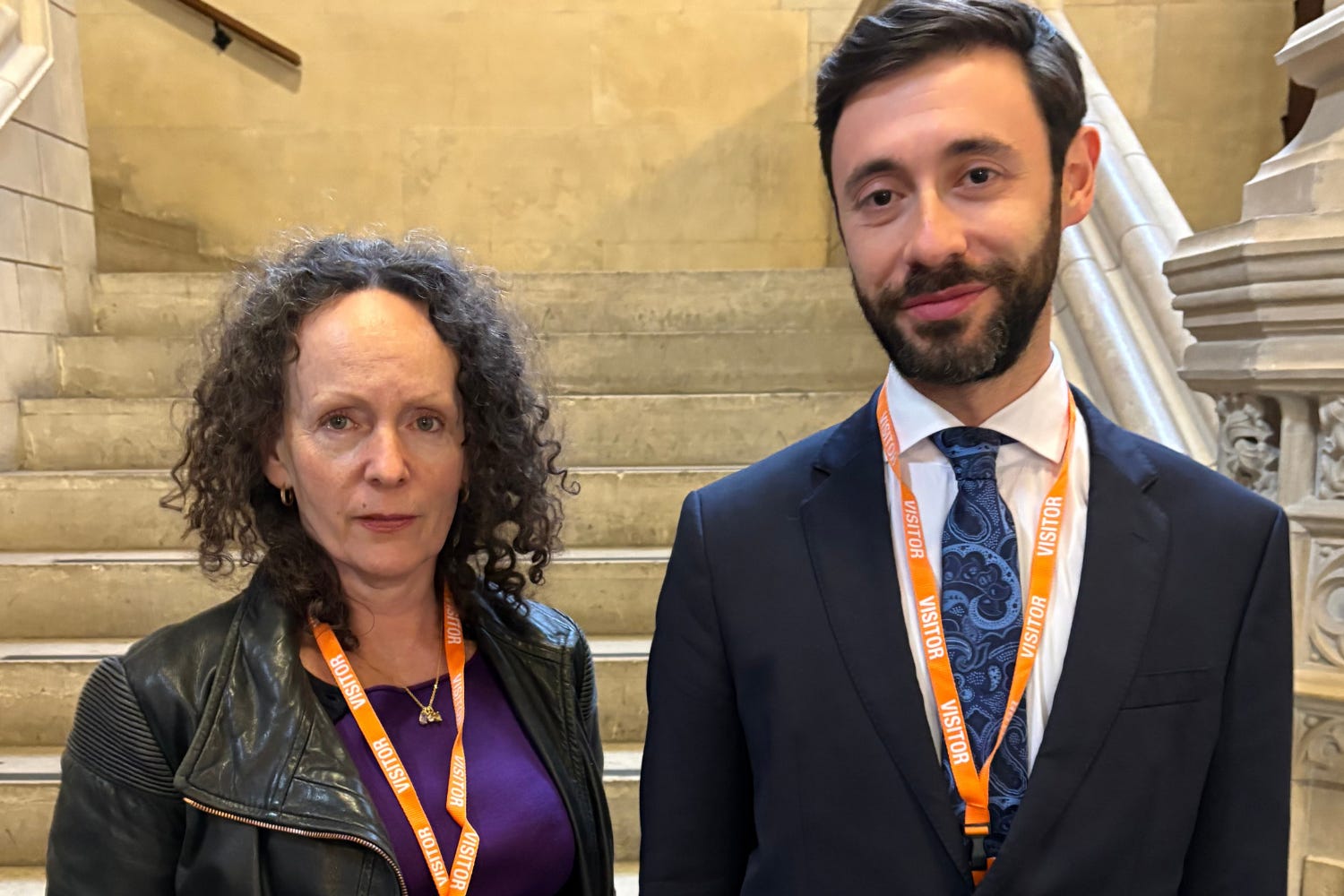
Fiona McAnena with James Esses, whose petition secured the debate
A Westminster Hall debate on the petition to cancel the puberty-blocker trial was held on Monday 23rd March. We summarise the arguments of the 12 MPs who spoke for the petition and the six who spoke in favour of the trial.
In the news
It was a bumper week for news on sex and gender. The International Olympic Committee’s decision to bar male athletes from female events was covered globally. Fiona was quoted in many stories, including those by Lori Ewing and Iain Axon for Reuters, Dan Roan for the BBC Sport and Oliver Brown for The Telegraph. Welcoming the news, she said that women have been cheated of medals and of fairness in sport for years, and that this change must not be solely for elite competition. Sean Ingle for The Guardian quoted Sex Matters’ chair, developmental biologist Dr Emma Hilton, who said that SRY screening is a simple, non-invasive, once-in-a-lifetime check that returns female sport to female athletes.
In broadcast coverage of the story, Helen was interviewed by Peter Cardwell on TalkTV and Fiona by Miriam Cates and Alex Armstrong on GB News, while Sex Matters’ statement was mentioned on BBC Radio 4 and Radio 5.
Girlguiding UK’s announcement that trans-identifying boys will need to leave groups by September was covered by Jessica Murray for The Guardian, Michael Sheils McNamee for BBC News, Sanchez Manning for The Times, Gabriella Swerling for The Telegraph and Eleanor Harding and David Churchill for the Daily Mail. Helen said that Girlguiding had shown no concern for girls’ boundaries and failed to think clearly about what boys confused about their sex really need, which isn’t validation in a falsehood.
Jacob Freedland for The Telegraph broke the news that employment judges have received “awareness” training from transactivist groups. Maya said that training by Scottish Trans raises questions about the influence of gender ideology on the Scottish judiciary.
Will Bolton for The Telegraph and Richard Ashmore for the Daily Express reported that Vivenne Taylor, a trans-identifying man who stalked and threatened the female surgeon who did his gender-reassignment surgery, has been moved to the trans wing at the women’s prison HM Downview. Fiona pointed out that trans-identifying men in Downview have access to women’s facilities and even mix with female prisoners. Helen discussed the story with Julia Hartley-Brewer on TalkTV.
Maya wrote for the Daily Express on the Crown Prosecution Service referring to trans-identifying male murderer Aurin Makepeace as female and omitting the fact that Makepeace had met his victim when both were serving sentences in a men’s prison.
Maya was also quoted by Chris Hastings for the Mail on Sunday on Harriet Harman’s dismissive comments on the late Jenni Murray, saying that Murray’s principled stand was an integral part of her feminism rather than, as Harman insultingly insinuated, detracting from it.
Crowdfund to keep men out of the Ladies’ Pond
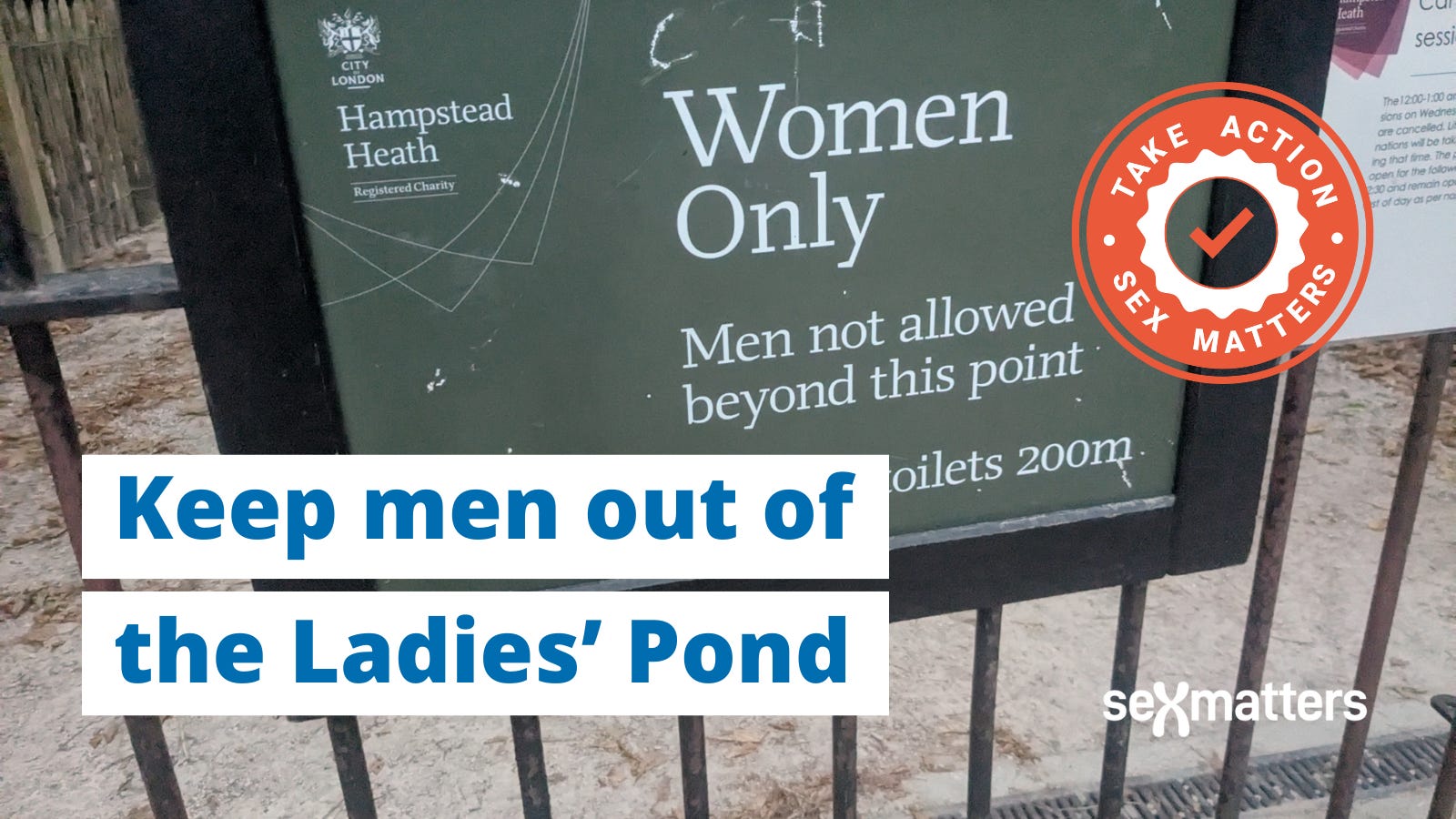
Thank you to everyone who donated to get us this far. We’ve increased our target to enable the next stage in this case!
If you’d like this memo in your inbox every Friday at teatime, join our mailing list now.
Sex Matters survives on your support.
Without it, we simply wouldn’t exist.
Sex Matters can deliver essential research and analysis, help shape the debate, and empower people with clear, published guidance on their rights – but only with your support. Please contribute what you can to keep us going.
Those in Girl guiding who failed the boys by not telling the truth and getting them the help they
need.
And failed to keep their Girls safe should resign as a matter of integrity.
Any professionals should be deregistered and not allowed near children ever again.
It’s incredibly hard to stay patient when your leftist friends say things like “it’s so nuanced”…. and “the trans community is so very vulnerable”…. and, “there are much bigger problems to be concerned with in the world at the moment, like what Israel is doing” and “how does it affect your day to day life?”. Thanks for this amazing resource https://www.unsilencedproject.co.uk/?utm_source=substack&utm_medium=email