

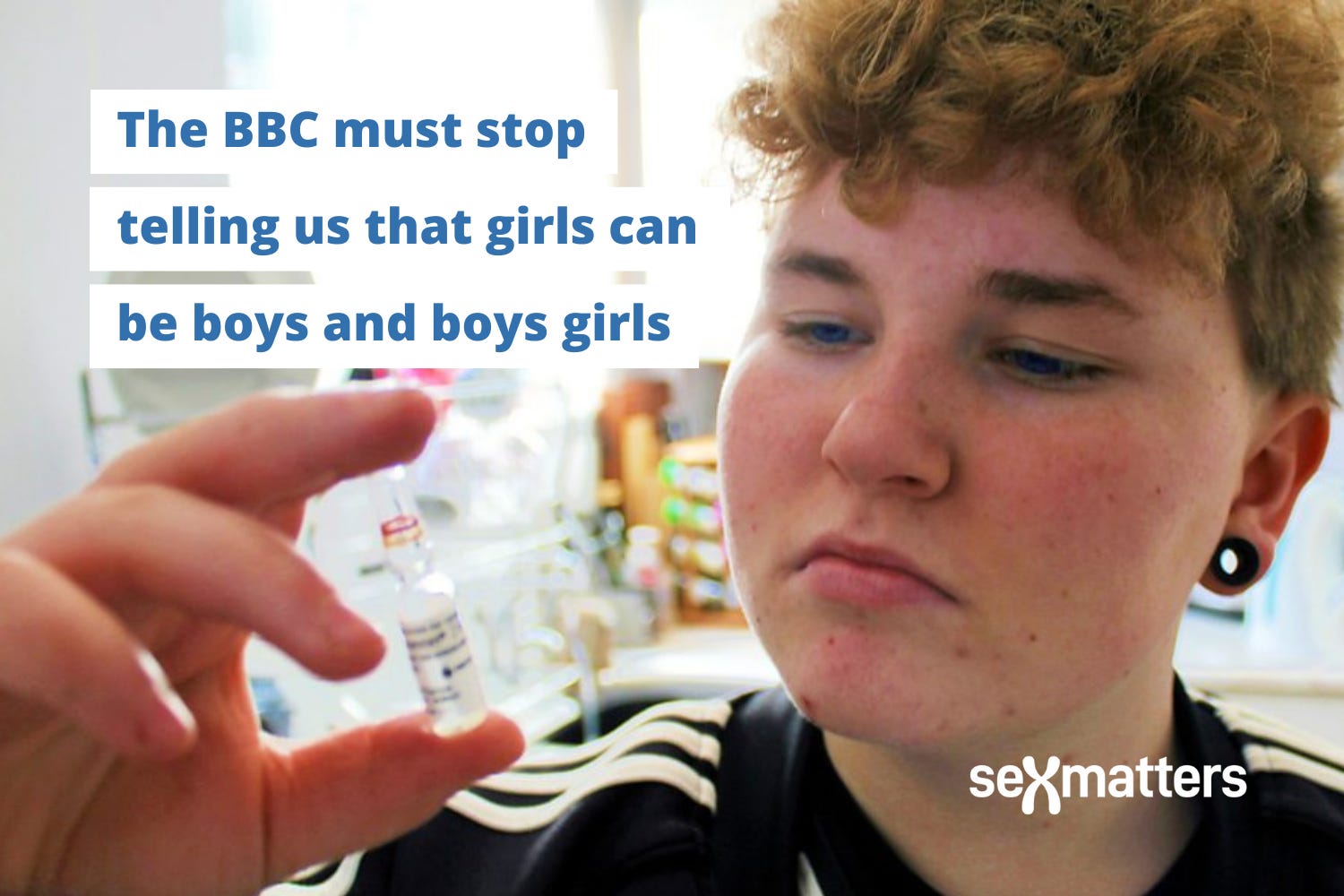
If the BBC is to win back public trust, it must stop telling us that men are women.
The BBC style guide directs journalists to use preferred pronouns. This is systematic bias. It is reporting so-called “gender identity”, a contested and misleading concept, instead of sex, knowing that the audience will believe it means sex. Thus we get “Woman kills husband with samurai sword” and “Scarlet Blake confessed murder to her ex, court hears”. The details of both brutal killings suggest they were highly unlikely that they could have been committed by women. In fact both killers are men.
But the harm goes much deeper than misleading the audience. The BBC has promoted social and medical transition to children as a positive step, and represented puberty blockers as benign, a “pause button”. It has largely ignored evidence of harm, reporting on the Cass Review as if its main finding was that there were not enough gender clinics, and ignoring the scandal of the leaked WPATH files completely.
Sex Matters has written to senior BBC executives four times about this in the past two years, most recently since the leaked Prescott report which revealed that the board had been told of the problems months ago. With other concerned groups, we have met with senior BBC executives on several occasions. We have all contributed to style-guide reviews, made endless complaints and offered solutions. The BBC has so far failed to accept the severity of its failings, and has made only the slightest of changes to its reporting.
The Culture, Media and Sport committee had a chance to question BBC board members about this on 24th November when it met to discuss the Prescott report. Sex Matters sent a briefing to all committee members, asking that they explore this issue. Disappointingly, the committee did not do so.

The last time senior BBC executives appeared before this committee, in March 2024, Damian Green MP accused the BBC of institutional bias. He pointed to the BBC’s reprimand of Justin Webb for explaining that transwomen were “in other words, male” as a clear sign of bias. The director-general, Tim Davie, dismissed the issue as a culture war, saying people should just “be nice”.
This time, the BBC’s representatives were not even asked about the misleading reporting of sex and the promotion of transgender identities.
The BBC must stop pretending that men can become women and that boys can become girls, or girls boys. It must start telling the full, unvarnished truth about how institutional responses to gender identity and transgenderism are affecting our society.
This means rebalancing away from the endless diet of celebratory stories about people who identify as transgender. The BBC has a responsibility to report the truth about the impact of this on other people, and the challenges facing those who have realised “transition” was a mistake. It must change its style guide too, so that we can believe what we are reading. That seems the most basic requirement of an impartial news organisation. Is there the will at the BBC to do any of this?
Read the Sex Matters briefing »
More about BBC bias at the Sex Matters website »