

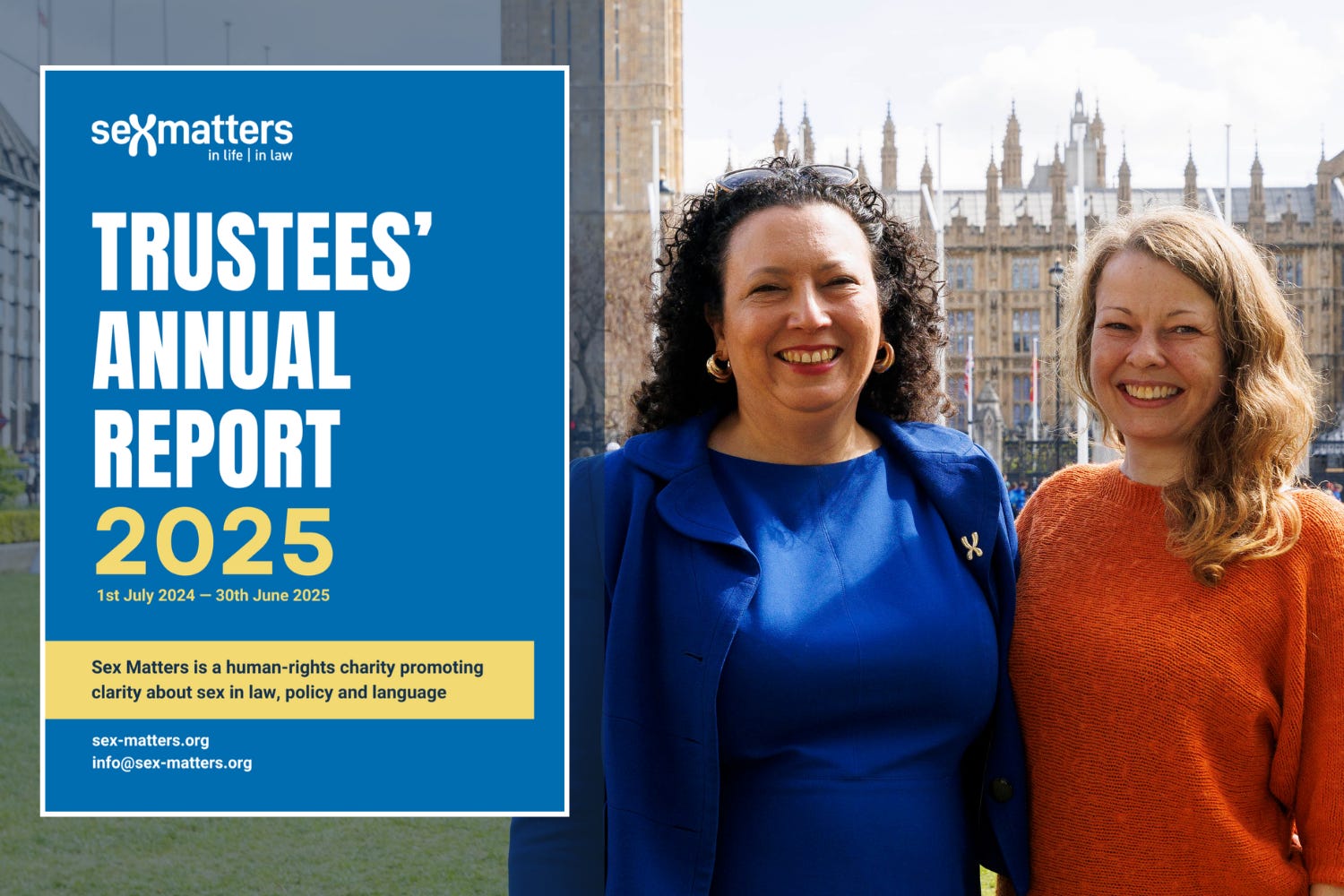
Filing Sex Matters’ first annual return to the Charity Commission and publishing our first annual report has been a milestone for the charity, and for me as chief executive. It is one of the many “first time for everything” experiences the board and I have gone through together, with input from the team. It is part of the board’s statutory responsibility, but together we also wanted to make sure what we produced was useful and interesting for our supporters.
The annual report sets out the charity’s short history, its principles and strategy, the resources we have attracted and how we are using them. If you don’t have time to read the whole thing, you might still enjoy the summary.
We started out around a kitchen table with a rough idea – that “sex matters in life and in law, and it shouldn’t take courage to say so.” Since then, we have experimented furiously to work out how we can most effectively make that vision real, and we will keep doing that.
I’ve never been a chief executive before, so pulling the report and audited accounts together was daunting. But the feedback has been so encouraging. Here is a selection: “We are very proud of you all!”, “What an impressive document”, “Thank you and well done! I’m proud to have been a supporter” and “Thank you for having our backs and being in the frontline of our battles.”
I am grateful to all the trustees, including those who stood down this year, in particular Naomi Cunnigham as chair and Julia Casimo as treasurer, and to Emma Hilton, who replaced Naomi as our chair. Without all their hard work, we would not have got this far.
The annual report has also provoked challenges, mainly by people asking “why aren’t you doing X?” To which my answer is generally: “Because we are doing Y.” My job as chief executive is to make sure the team all know what “Y” is, and why we are doing it, and that they are supported and able to do their jobs. It is the board of trustees who have ultimate responsibility for the charity’s strategic direction, and together with the senior leadership team – me, Fiona McAnena and Helen Joyce – they spend a lot of time thinking about what to do next and how to manage risks and resources.
As you can imagine, a lot goes on behind the scenes. As well as board meetings, we have an annual strategy weekend; this year’s has just taken place.
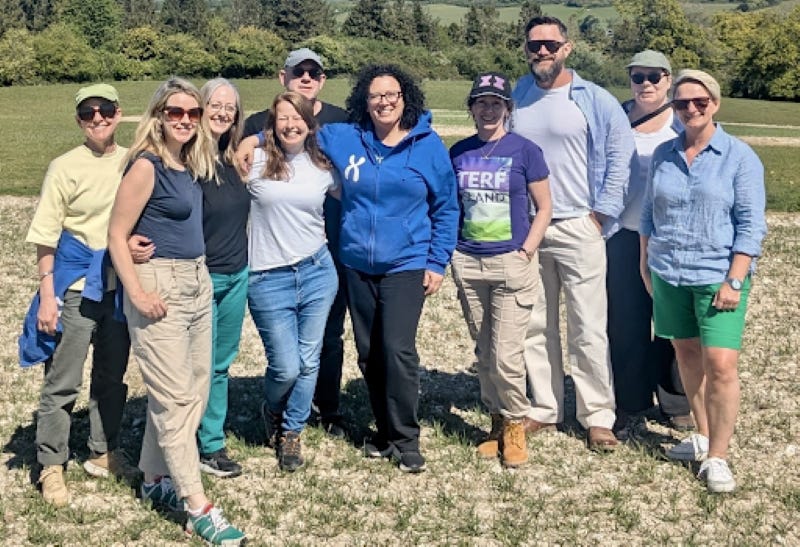
From left to right: Emma Moore (administrator and help-desk manager), Rebecca Bull (trustee), Helen Joyce (director of advocacy), Michael Biggs (trustee), Emma Hilton (trustee and chair), Maya Forstater (CEO), Fiona McAnena (director of campaigns), Simon Knapp (trustee and treasurer), Anya Palmer (trustee), Charlotte Cadden (trustee).
We welcomed a new board member, Simon Knapp, who is taking over the important role of treasurer.
Simon has worked in senior finance roles across the charity sector and is strongly committed to our mission. (I think there are more people in the voluntary sector like this than you might imagine!)
Last week I also started a short course for new charity CEOs at Bayes Business School, with a cohort of charity CEOs. Some were pleased to meet me, and a few were not. One asked with incredulity how we could be a human-rights charity. I explained that our starting point is that human rights are universal, but this does not mean that transgender people get everything they want: other people have rights too. I gave her a copy of our human-rights framework.
The practical discussions on the course were fascinating and helpful. My big lesson from the first day was that the challenges I face as a CEO are not so different from those faced by other charity CEOs (even the ones who think we are deplorable): sitting between the board and the team and trying to make sure we stay true to our mission, respond to opportunity and hostility, and act effectively.
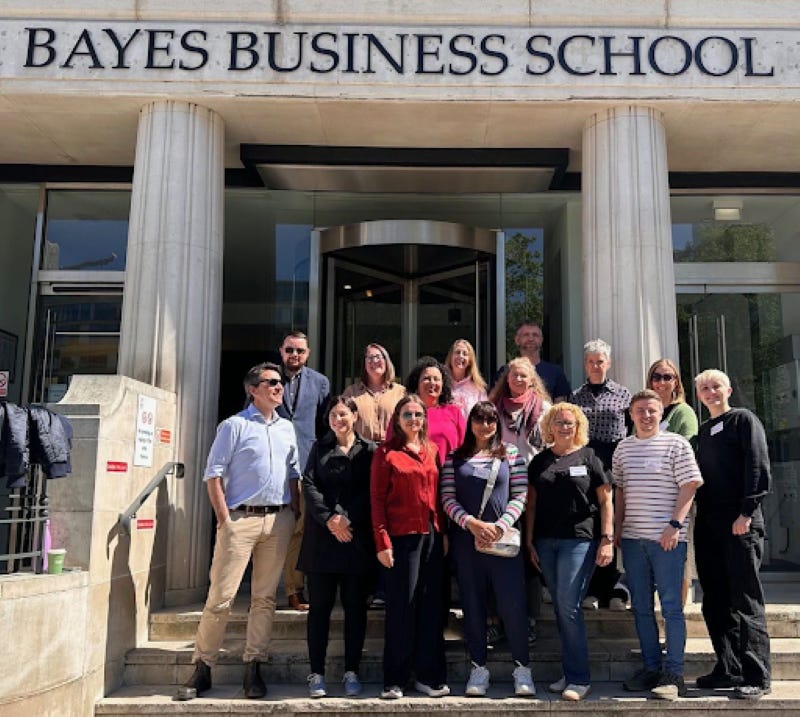
Back: Hargey Fionntán (Market Development Association), Jennie Lucas (Maggie Oliver Foundation), Katie Nurcombe (Intensive Care Society), Sam Plummer (Youth Connect South West), Christine Fogg (Bayes Business School), Middle: Maya Forstater (Sex Matters), Leonora Sharp (Terapia), Alanna Harris (Canary Wharf Multifaith Chaplaincy), Front: Dan Jones (Settle), Tamara Newman (Committee for Middle East Peace), Elisabeta Pashaj (Downhurst Residential Home), Rukia Augustine (St Albans Food Bank), Kate Heslegrave (St Helena Hospice), James Roberts (Citizens Advice Peterborough), Izzy Ivezic (The Baked Bean Charity).
Many of the worst cases of capture by gender ideology that we at Sex Matters hear about concern charities. Their boards and leadership seem particularly prone to losing sight of their mission and getting confused about the Equality Act. Scope cancelling Janet Murray’s choir from singing at the London Marathon (and then reinstating it with a grudging statement) was just the latest example.
Thinking hard about governance is important for how Sex Matters conducts itself as a charity, but also for understanding how things have gone wrong in so many institutions. One of the most important bits of good governance is identifying and managing conflicts of interests. The Charity Commission has just published new guidance on this important topic. It emphasises that a conflict of interest doesn’t mean something dishonest is going on, and that conflicts are also not always about financial decisions. They can be about personal loyalties and the interests of people or organisations connected to trustees getting tangled up with decision-making.
When charity trustees, public policy-makers, regulators or judges make decisions related to sex and gender, there is too often an undeclared conflict of interest: a trans-identifying family member or friend whom they hold dear, and whose strong personal wishes shape their decisions and the language they use. It is crucial that people who are working for the public good do not confuse this purpose with doing what feels good for the people nearest and dearest to them.
If you work in a charity and are gender-critical, get in touch!
Maya Forstater
Meet the Sex Matters help desk
In this week’s episode, Fiona talks to Emma Moore, who manages our help desk. They discuss common themes, the advice provided to those seeking support and the resources available on our website.
Practical help
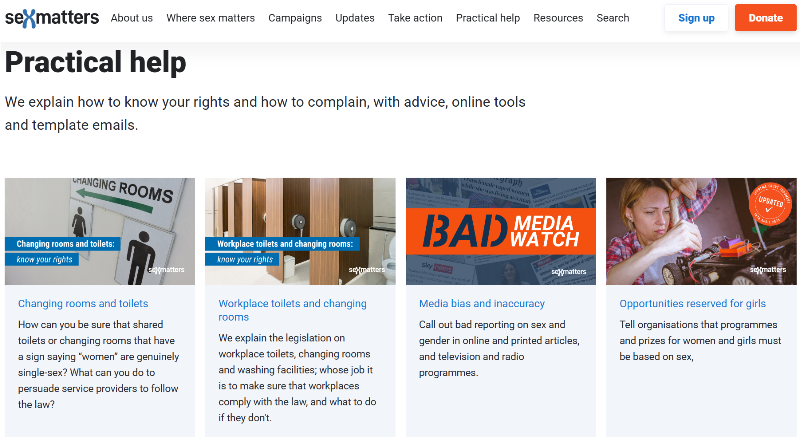
This new section of our website makes it easier to find our practical tools and template emails, as well as general advice and tips on What you can do if you have a problem.
Hampstead Ponds: the City of London says it is sticking with "trans inclusion"
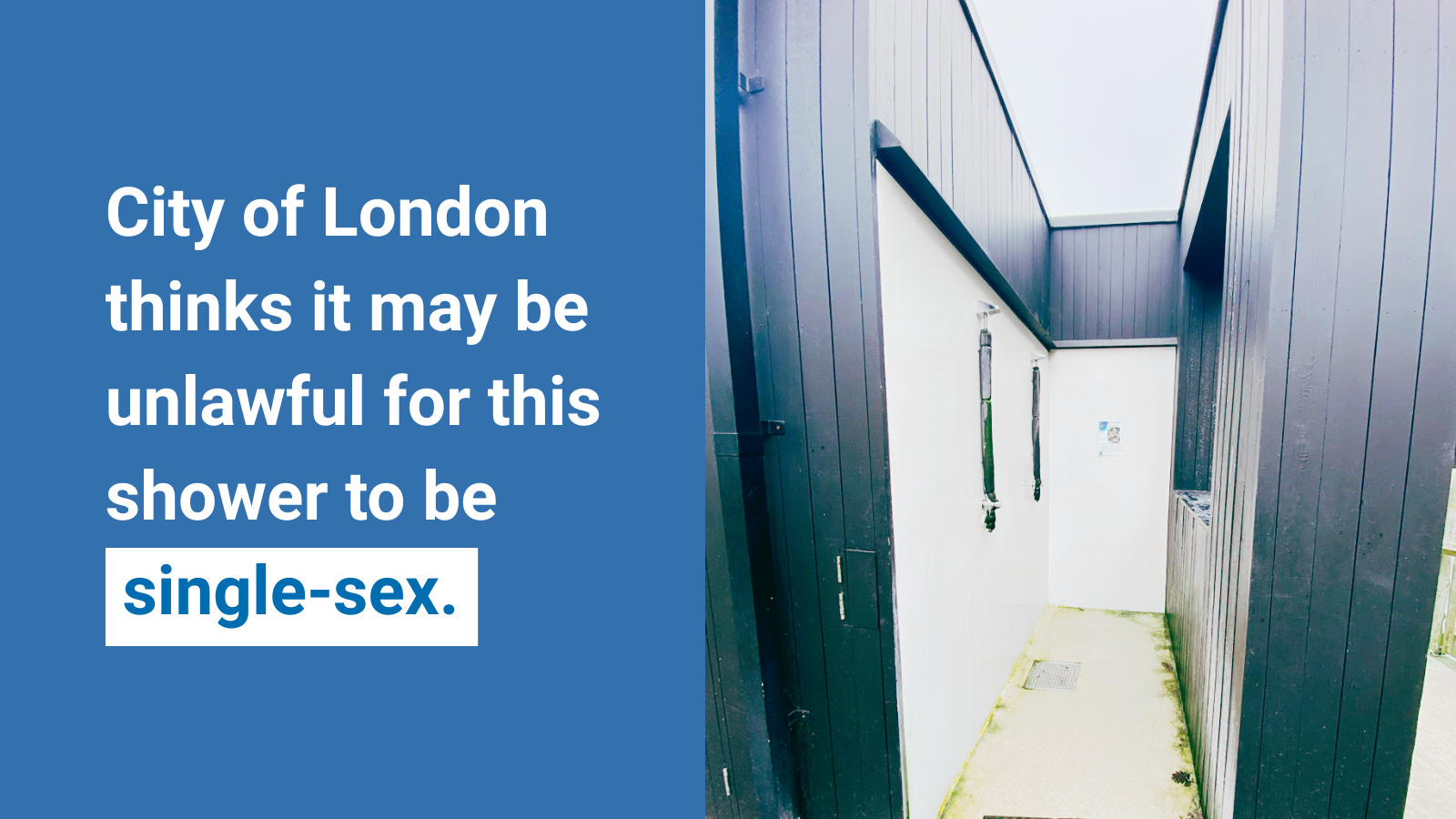
Sex Matters says: “We’ll see you in court”
The City of London Corporation has published its report on the Hampstead Heath bathing ponds and is planning to take a decision about the final policy to be adopted on 4th June.
We have received an order from the High Court that our case against the City of London will be listed between October and December 2026. We will keep you updated.
Don't forget: Consultation on digital identity closes today

The government’s consultation on digital ID closes on 5th May. Here are the instructions on how to take part.
Last week we talked about this on the podcast and our survey got nearly 1,000 responses. Thank you for your thoughtful and constructive comments. There are diverse views and important concerns. But whatever you think about digital ID, you can tell the government to include sex!
In the news
Ben Lynch broke the news that the City of London is recommending that the Ladies’ Pond at Hampstead Heath remains mixed sex, even as Sex Matters’ legal case continues, in a piece that ran in BBC London, MyLondon and Ham & High (print only). Maya said that the City of London’s proposal to continue with its approach of allowing fully intact males into the women’s pond is simply unlawful, and that the City is operating as if Hampstead Heath is outside the law. Alastair Lockhart also covered the story for The Standard.
Justin Bowie for The Courier interviewed Sandie Peggie, who said that she was shocked by bogus quotes in her judgment that were first revealed by the same newspaper to have been incorrectly attributed to Maya’s 2021 tribunal judgment.
Helen’s book Trans: When Ideology Meets Reality (2021) was included in The Times’ list of the 25 best non-fiction books of the 21st century.
If you’d like this memo in your inbox every Friday at teatime, join our mailing list now.
Sex Matters survives on your support.
Without it, we simply wouldn’t exist.
Sex Matters can deliver essential research and analysis, help shape the debate, and empower people with clear, published guidance on their rights – but only with your support. Please contribute what you can to keep us going.