

Update from Maya
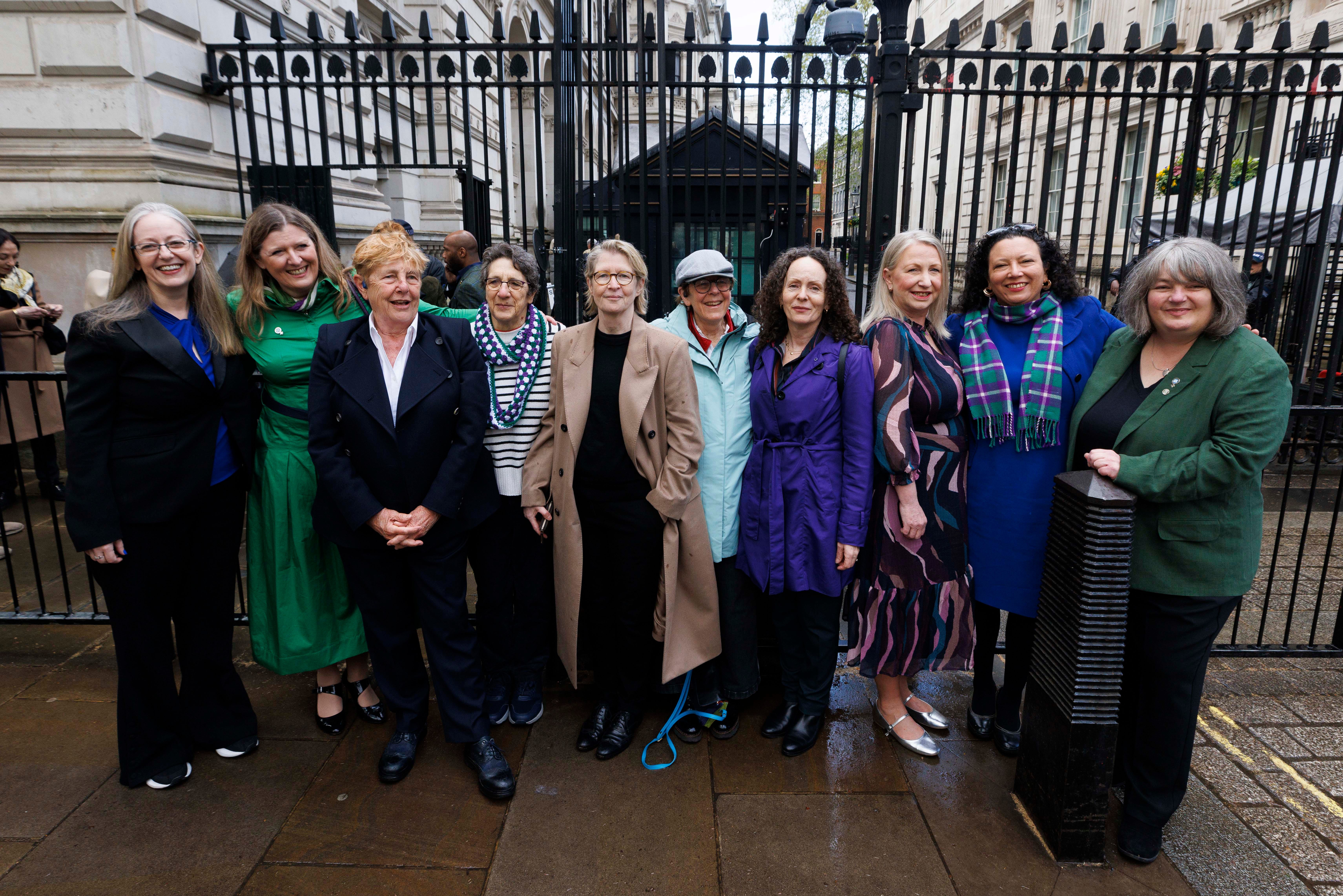
For Women Scotland, Sex Matters and the lesbian intervenors outside 10 Downing Street – all photos © Belinda Jiao
This is the speech I made to the All Party Parliamentary Group on Women’s Rights on 15th April 2026
One year ago, the Supreme Court gave us clarity. We couldn’t have got a better, clearer judgment.
Every morning for the past year I have thought: “Thank you For Women Scotland… Thank you Lord Hodge, Lady Simler, Lady Rose…” And thank you to the lesbian intervenors. And to Ben Cooper KC, who made the arguments for Sex Matters in the Supreme Court.
Yet one year later it feels like nothing has changed.
Employers, service providers and the government are still pretending that it is difficult to understand that a man who feels sad about being a man, who puts on women’s clothing and make up, who may or may not get a sexual kick of out of this, who may or may not have parts of his body hormonally or surgically altered, is not a woman.
And women and men who articulate these facts in clear plain language are not bigots, or hateful or saying anything that shouldn’t be said.
But the truth is it is still dangerous to say these things. It is still the safer, smarter option to pretend not to know what everyone knows. We are pushing against the weight of institutions that have been corrupted from the inside out by an ideology that makes the truth unsayable.
So the lack of action following the Supreme Court judgment isn’t that surprising.
The law cannot do magic. A piece of paper cannot change people’s sex. And a Supreme Court judgment, however good and carefully reasoned, cannot immediately change institutions that have turned away from their purpose and systematically set women’s rights to zero.
It is a brilliant, clear judgment, and on 16th April last year some people thought the job was done. But we still have to win this the hard way – we have to win back language, institutions, incentives and hearts and minds. It’s not that people don’t agree with us, it’s that there’s still a climate of fear and the real danger from simply saying what the law has confirmed is right remains. And so many people seem to find it so easy to forget that women are full human beings.
For the anniversary of the judgment, Sex Matters has produced two publications. One is an easy-read version of the EHRC’s short update on single-sex facilities. The other is the One year later booklet, which tells the stories of 14 women and girls. It illustrates the harm that has been done and continues to be done by the misunderstanding of the Equality Act and the weaponisation of the law that is meant to protect women’s rights against women.
Some of the stories you will know, some you won’t. You will know the names of Sandie Peggie, Bethany Hutchison and the other Darlington nurses; other women have had to remain anonymous. There are longer stories on our website, and we will keep adding more stories of harm, until we don’t have to.
We sent the booklet to the Prime Minister, Keir Starmer with a letter from 26 women’s groups. We’ve also put it in the pigeonhole of every MP – including Bridget Phillipson, the Minister for Women and Equalities – and every working peer (we had them all enveloped and ready to go, and then when Phillipson made her announcement on the guidance, we had to rip open 1,200 envelopes and put in a new letter!)
The booklet includes the stories of women like Eleanor Frances, who joined the civil service to serve her country. When she raised concerns about policies she believed were unlawful and undermined civil service objectivity, she wasn’t heard – she was pushed out and her career derailed. The DCMS settled with her for six figures and said it would revise its policy. It hasn’t changed a thing.
And Charlotte Hawkins, an NHS paramedic trainer, who was asked to rewrite maternity guidance to remove clear biological language and replace it with vague terms. She spoke up. A few colleagues from the LGBT network started combing through her Facebook feed for gender-critical posts and she was suspended.
Then there are Bethany Hutchison and the other Darlington nurses, and Sandie Peggie. They simply didn’t want to undress in front of a male colleague in the women’s changing room. They asked for privacy – nothing more. They were called bigots and told to move.
One of the worst stories is from a woman we have called D. She is a service user of a mental-health charity; she qualified as a peer mentor to support other people with similar struggles. She has run a women’s group for several years.
After the Supreme Court judgment her local branch said it was going to change the name of the women’s and men’s groups in order to be inclusive. It told her that because they were only peer-support groups they couldn’t be single sex. It told her this is the law.
She asked us to help. So we wrote to the charity and explained the law. We said that it is perfectly lawful to have women-only groups and that it may well be indirect discrimination against women to let “trans women” into the group.
The charity took more than two months to reply to our letter. Then it came back and said that it was going to stop providing men’s and women’s peer support altogether and just have mixed-sex groups for people who want to talk about women’s mental health and men’s mental health.
Then someone reported D for being a bigot and a transphobe. Now she is being investigated and is barred from the offices of the service that has been a lifeline to her.
And all this happened after the Supreme Court judgment. All this happened because the charity responded to the judgment by trying to get around the spirit and letter of the law.
One thing that is really striking about the case studies in the booklet is that these are salt-of-the-earth women. Many work in frontline public services; others are seeking to do good within their communities. There are very few stories of women like Baroness Falkner who are at the top of their institutions and sticking their necks out. I want to pay tribute to Kishwer Falkner for her bravery and thank her for everything she has done.
In our letter to the minister for women and equalities, we said that her statement that “This government has always supported the protection of single-sex spaces based on biological sex” is a slap in the face to all the women whose stories we have told. It is a slap in the face to the women that stop me in the street and say thank you, and to the women who are in our inbox every day telling us that organisations are failing to follow the law.
We will keep bringing strategic legal cases, and working to shape public understanding. And we call on the government to show leadership – to lay the guidance, to withdraw the civil-service model policy that puts a legally incorrect definition of “discrimination” at the heart of the decision making, and to fix the data. Women have already waited far too long.
Maya Forstater

READ: The letter from 26 organisations and groups to the Prime Minister: why are women still waiting?


USE: The easy-read version of the EHRC’s update

READ MORE: The stories of each of the women in the One year later booklet
Podcast
In this week’s episode, filmed in London, Maya, Fiona and Helen discuss the week’s events marking the anniversary of the For Women Scotland judgment at the Supreme Court.
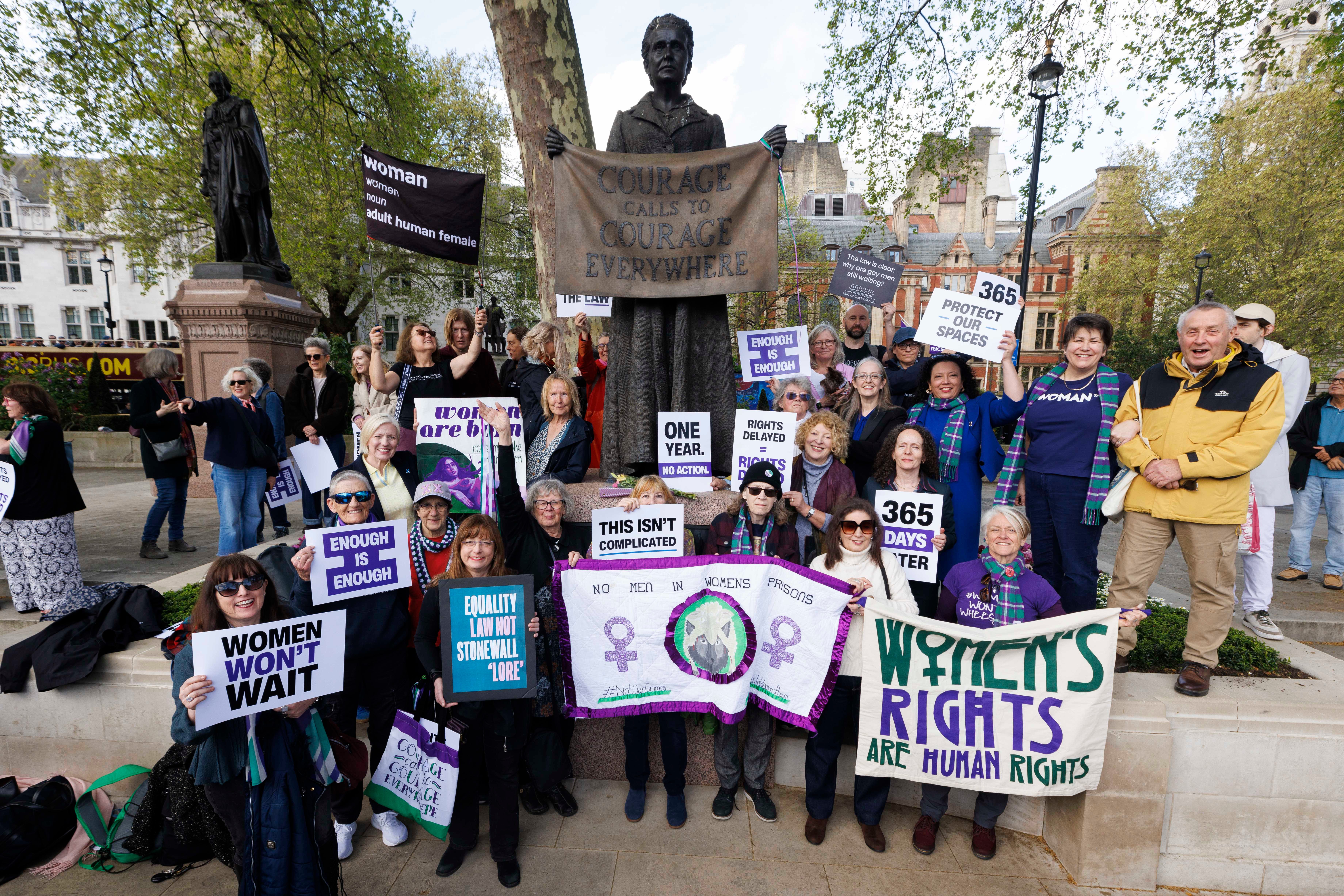
Celebrating in Parliament Square with supporters
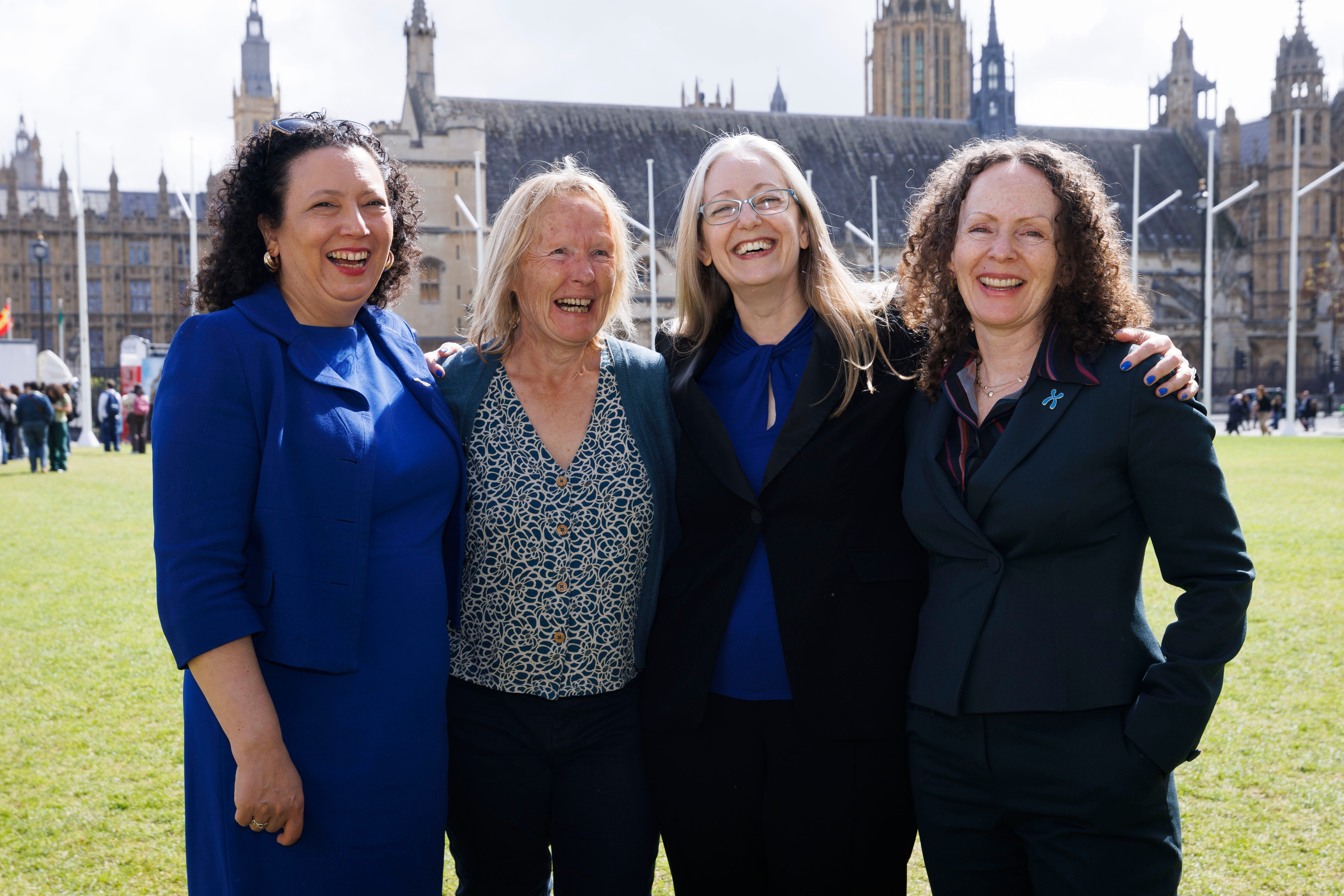
In Parliament Square with Stephanie Davies-Arai of Transgender Trend
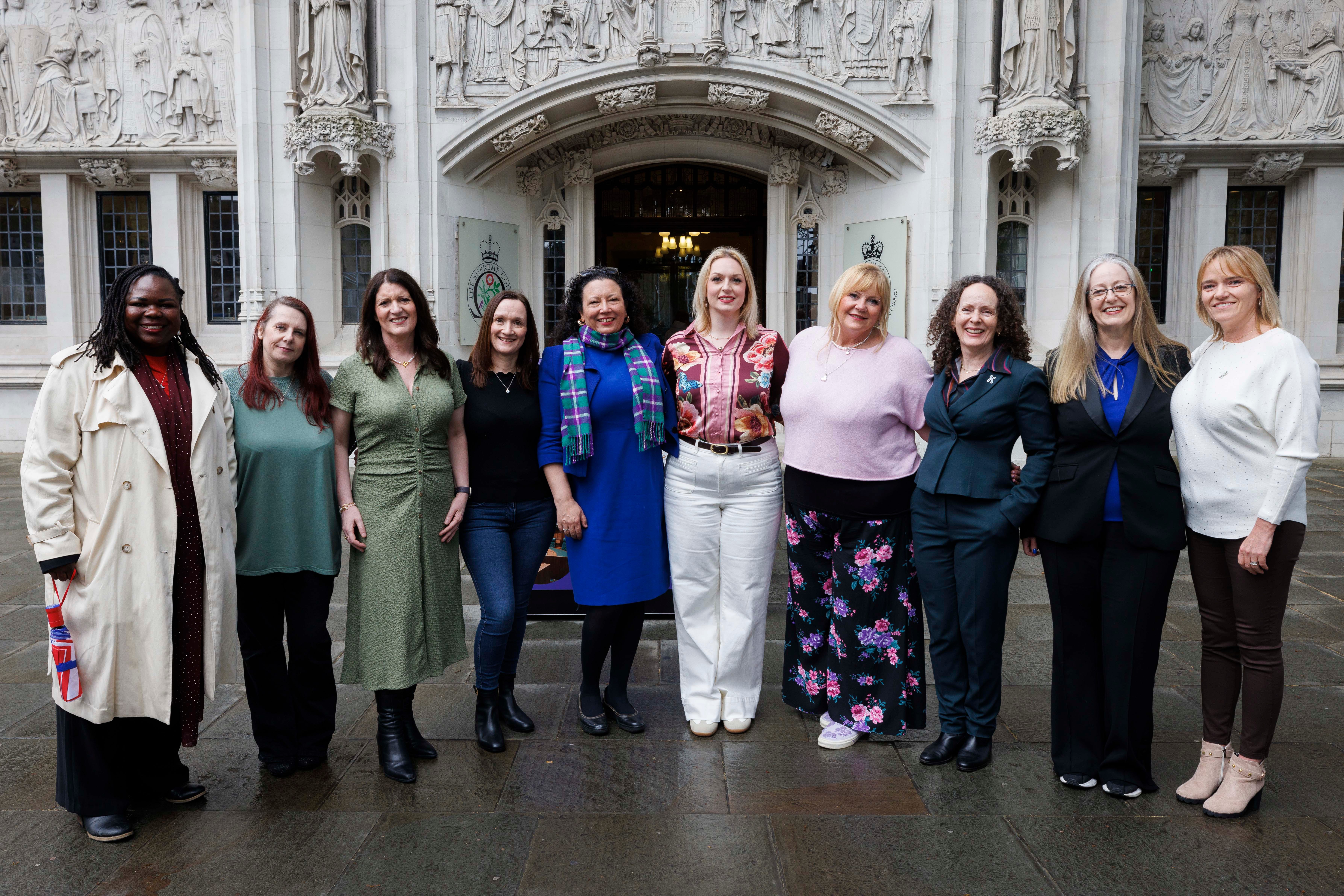
In front of the Supreme Court with the Darlington nurses, Jennifer Melle (furthest left) and Sandie Peggie (furthest right)
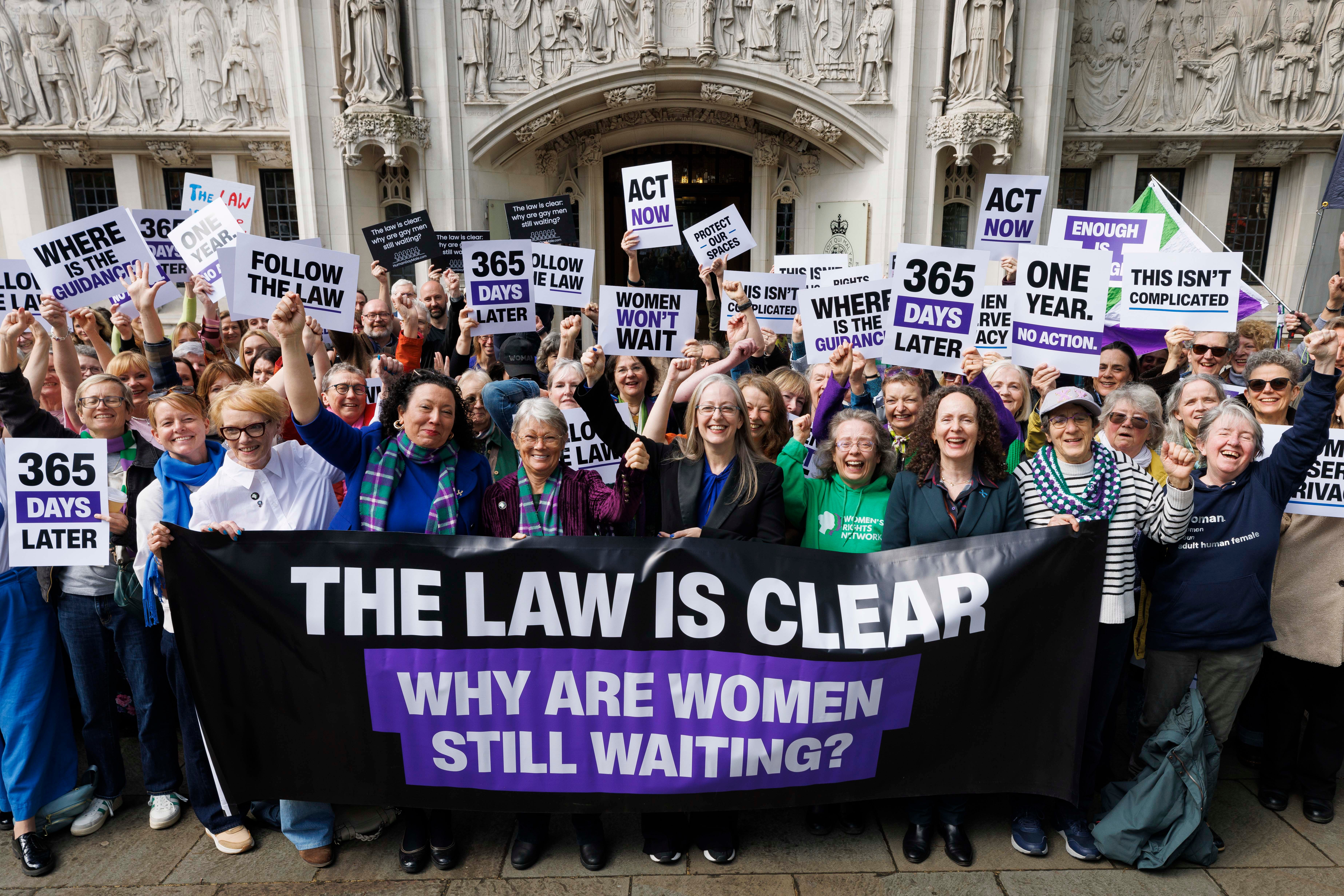
Thank you to everyone who turned up to mark For Women Scotland’s first anniversary!
Maya Forstater
In the news
Ahead of the one-year anniversary of the Supreme Court ruling, the news that the government plans to lay the ERHC code of practice after local elections was covered widely, including by Peter Walker and Libby Brooks for The Guardian, James Melley for BBC News, Martin Beckford for the Daily Mail and Daniel Martin for The Telegraph. Maya said that the government had found another excuse for delaying the guidance and that there appeared to have been negotiations regarding its content between the government and the EHRC. Maya was interviewed on the story by TalkTV by Julia Hartley-Brewer and Ian Collins, and Fiona was interviewed by Carole Walker on Times Radio.
On the eve of the anniversary, Sonia Sodha for The Times mentioned pressure from Sex Matters on the Cabinet Office to withdraw its unlawful model policy regarding trans-identifying employees, which applies across the civil service.
Reports on public bodies flouting the law dominated headlines on the day of the anniversary. David Churchill and Martin Beckford for the Daily Mail reported on widespread defiance within the NHS, police, local authorities and schools. Helen said that the failure of public bodies to adopt policies based on biological sex has caused untold harm to women and girls.
Martin Beckford for the Daily Mail and Daniel Martin for The Telegraph reported on research finding that more than a dozen councils across England have put forward motions criticising the Supreme Court ruling. Fiona asked why these councils are wasting time and resources like this.
Helen was interviewed by Georgina Mumford for Spiked TV to mark the anniversary of the ruling.
At the weekend, Maya was interviewed by Nana Akua on GB News on a blistering interview former EHRC chair Baroness Kishwer Falkner gave to Daniel Martin at The Telegraph on her experience of being at the helm of the equalities watchdog for five years.
Health Secretary Wes Streeting’s comments on the complications of implementing single-sex wards were covered by Martin Beckford for the Daily Mail. Maya said that Streeting’s focus on trans-identifying women was pure deflection and that accommodating them cannot be an excuse for delaying the exclusion of men from women-only wards. Helen was interviewed about the story on LBC by Nick Ferrari.
Earlier in the week, Fiona wrote for the Daily Express on the fallout from nurse Jennifer Melle’s case against the NHS for “misgendering”, saying that the NHS needs to cure itself of gender madness before more people are harmed.
If you’d like this memo in your inbox every Friday at teatime, join our mailing list now.
Sex Matters survives on your support.
Without it, we simply wouldn’t exist.
Sex Matters can deliver essential research and analysis, help shape the debate, and empower people with clear, published guidance on their rights – but only with your support. Please contribute what you can to keep us going.