

Update from Fiona
“You must be sick of talking about this.” That’s what Steve N. Allen said to me on the Free Speech Nation show on GB News on Sunday night. He was talking about the latest rebellion against the Equality and Human Rights Commission’s revised code of practice that had come into force on 5th August.
The fight to make the Equality Act clear was won when the Supreme Court gave judgment in favour of grassroots campaigners For Women Scotland. But it seems like every week brings a new report of formerly law-abiding organisations declaring that women who want male-free spaces for any reason are hateful and bigoted. They claim that the law and EHRC guidance are complicated and unworkable – but also that these are clear enough to be actively flouted, and that they plan to do just that.
Six London councils have vowed to disobey the law. So have trade unions representing millions of workers. Next month the TUC will vote on a motion to “oppose the EHRC code of practice”. Meanwhile students (and a handful of staff) at Oxford University have demanded that the university use “its money, prestige, and power” to resist the EHRC code and to challenge its interpretation of the law.
But look beyond the news stories highlighting such shameless grandstanding and you will see a more positive story, one of quiet compliance. Organisations amending flawed policies tend not to shout about it, but the shift from two years ago, before the Supreme Court judgment, is massive.
As our sports timeline shows, the judgment precipitated a speedy shift in sport policy in the UK, restoring fairness for women in football, netball, cricket and others within weeks. Many other organisations claimed they were waiting for the EHRC code before deciding what to do. This feeble excuse was frustrating, but when the code finally came into force it triggered another round of policy updates.
A particularly good example is clear guidance from UK Active, the industry body for the leisure sector. Published earlier this month, it tells gym and swimming-pool operators that single-sex changing rooms are best, and must be run lawfully.
As more and more organisations come into line, the fightback by transactivists is getting more desperate. We are seeing disinformation spread by activist organisations and a handful of trans-identifying men who claim expertise. Their websites and LinkedIn pages provide “advice” that is simply wrong. Any employer or service provider following this advice is surely doing so because it’s what they want to believe. Inevitably, more legal challenges will follow.
So, yes, I am sick of it. I imagine we all are. It’s infuriating that we have to keep talking about something that should have been settled long ago. But the more we talk, the more change we see, and it’s only going in the right direction. The incoherent position promoted by transactivists looks shakier by the day.
Find out more
The councils and unions flouting the law
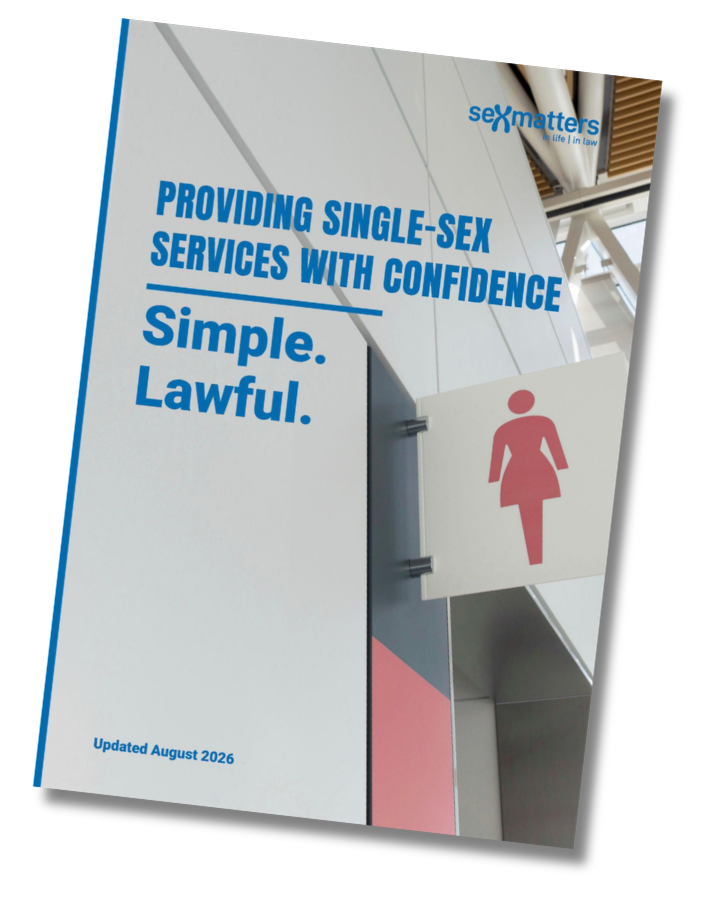
We’ve updated our guide, Providing single-sex services with confidence.
Media coverage
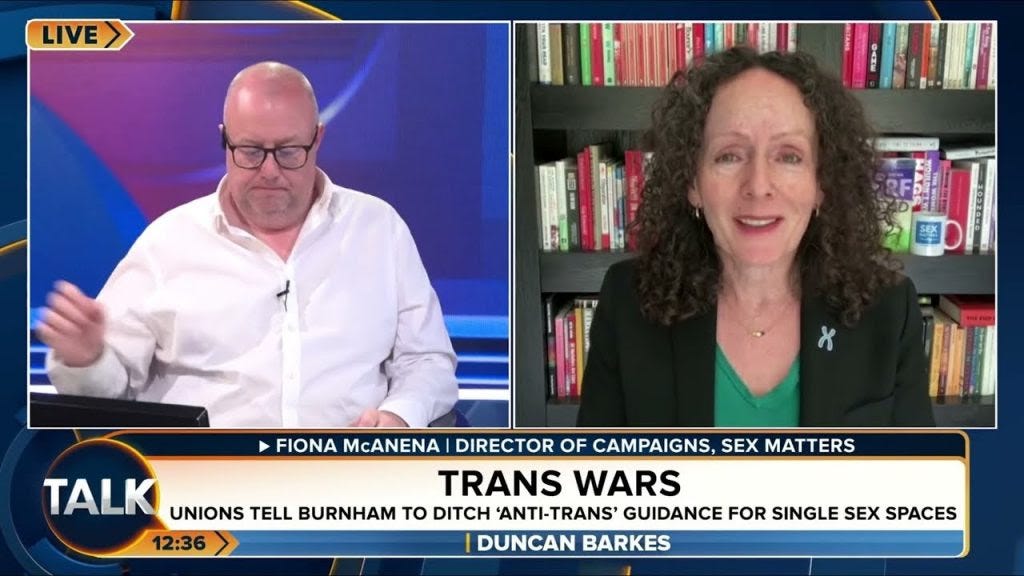
Female union members deserve better | Fiona McAnena on Talk TV
Duncan Barkes • Talk TV
Oxford staff and students rebel over single-sex space rules
“It’s worrying that some of the UK’s brightest minds can’t get their heads around the simple fact that the EHRC doesn’t make the law, but merely advises organisations on how to follow it.” - Helen Joyce
Bill Curtis • The Times
Trade unions vow to fight against single-sex spaces
“The mad rush by unions to prioritise the feelings of trans-identifying men over the rights of women to safety and dignity in the workplace is a shocking scandal.” - Fiona McAnena
Francine Wolfisz • Daily Mail
Conversion Practices Bill threatens ethical therapy
Proposed new law will drive away therapists and criminalise responsible parents
In this week’s episode, Helen Joyce speaks to psychotherapist Stella O’Malley, founder and director of Genspect, about how the government’s plans to criminalise so-called “conversion practices” would harm families and therapists.
Good therapy requires open, trusting conversations, Stella points out. But the planned law risks making discussions about trans identification taboo, and driving therapists away from working with gender-distressed young people, who will be left without support. Stella also explains how conversion-practices bans elsewhere have silenced parents and prevented them from giving their children honest, loving guidance.
Watch Stella’s conversation with Canadian writer Peter Gajdics about surviving abusive conversion therapy and why he now believes conversion-therapy bans are a Trojan horse.
Catch up on our conversation with non-practising barrister Dennis Kavanagh on the flaws of the draft Conversion Practices Bill.
Read our briefing on the bill.
In other news
Conflicting ideas of fairness in women’s sports fuel transgender participation debate
“If you have male pattern development, you shouldn’t be in women’s sport … That’s the only way it can exist as the category.” Emma Hilton
Reuters • Devdiscourse
Amnesty has been captured by a pernicious form of progressivism
An editorial in The Times said that Amnesty International had strayed from its founding human-rights principles by branding Sex Matters, For Women Scotland and other organisations defending sex-based rights as “anti-rights”. It added that a worryingly naive worldview has taken...
The Times View • The Times
If you’d like this memo in your inbox every Friday at 5pm, join our mailing list now.
Sex Matters survives on your support.
Without it, we simply wouldn’t exist.
Sex Matters can deliver essential research and analysis, help shape the debate, and empower people with clear, published guidance on their rights – but only with your support. Please contribute what you can to keep us going.
“Six London councils have vowed to disobey the law.”
Disobeying guidance ≠ disobeying the law.