

Update from Fiona
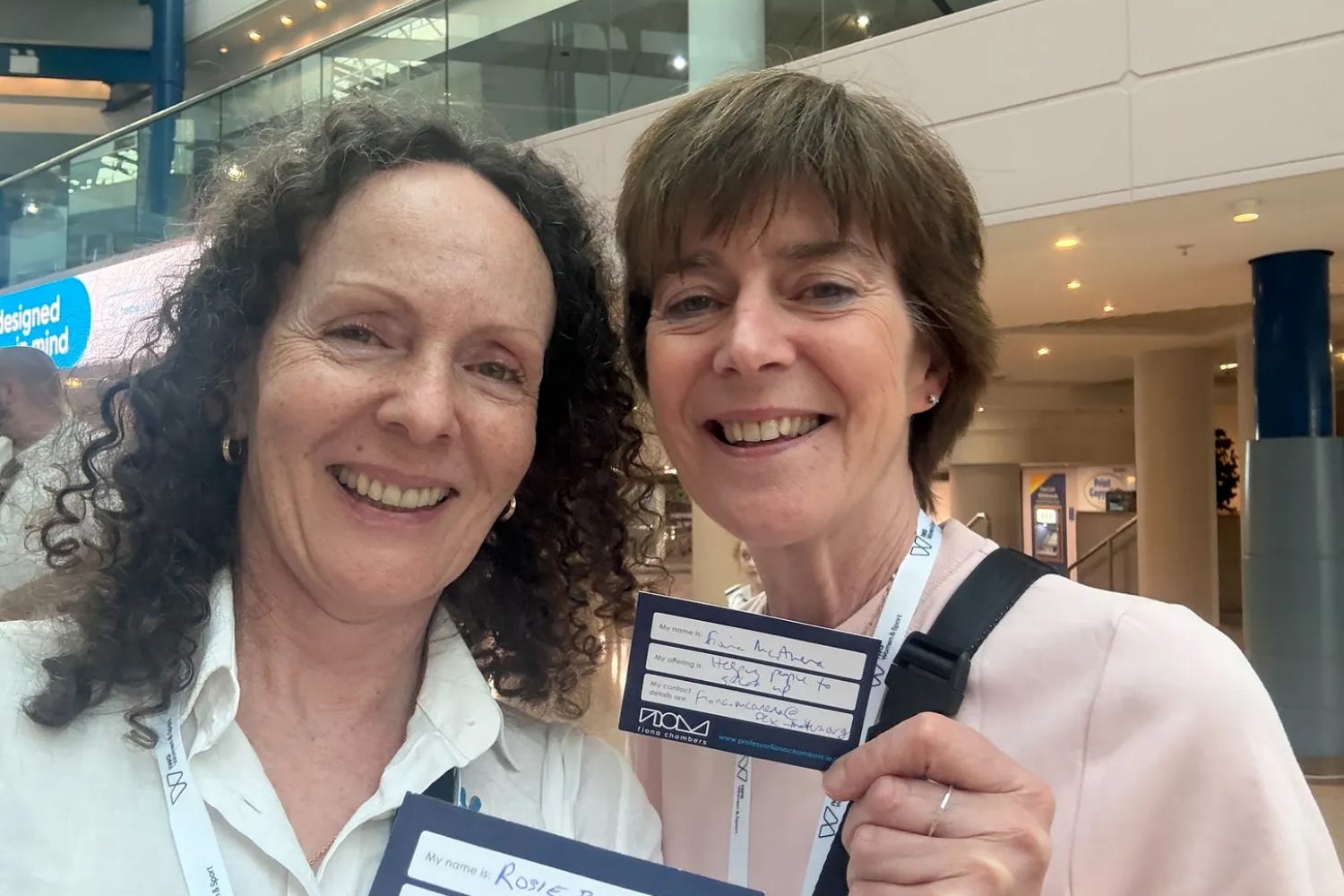
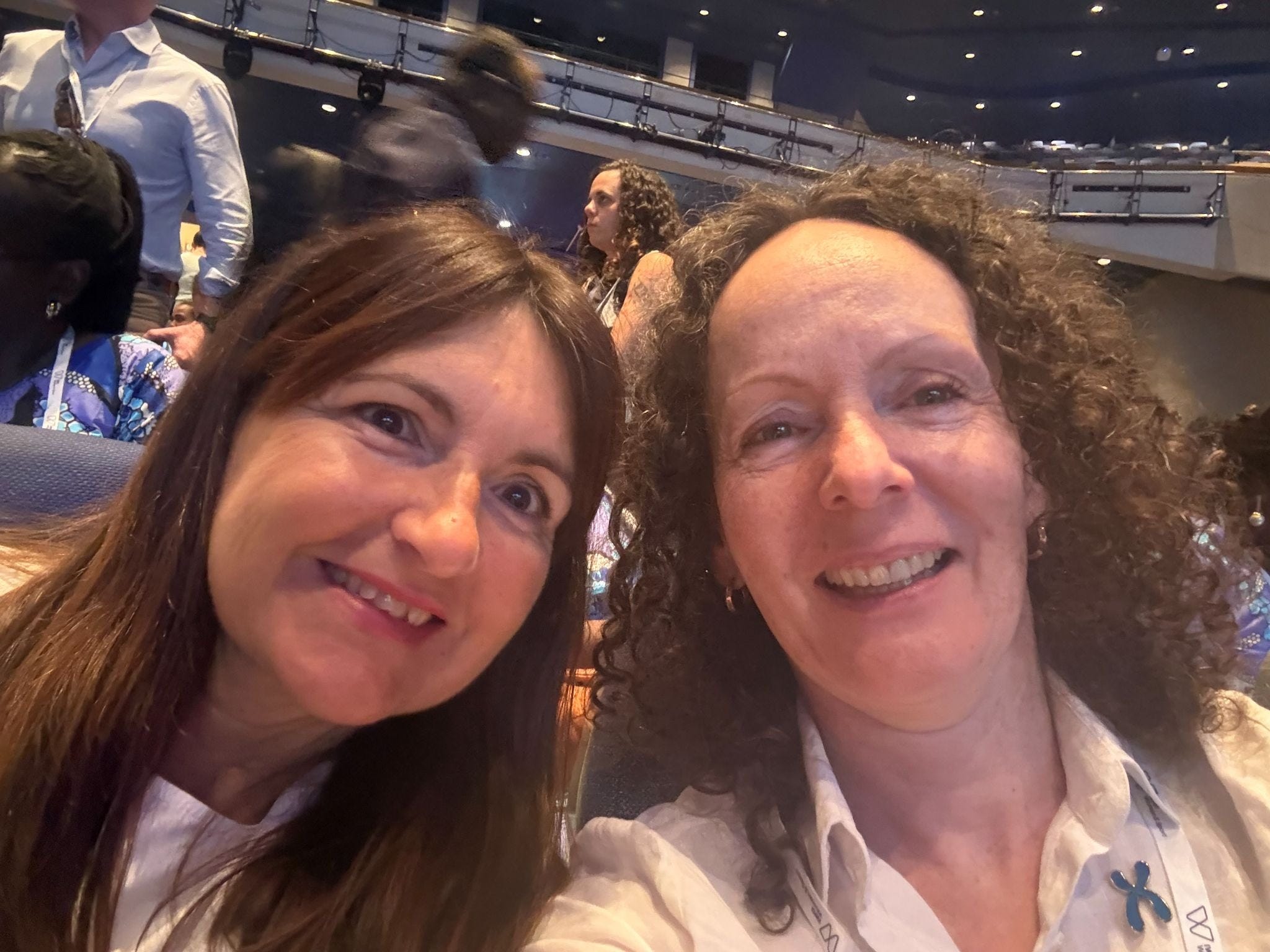
Last week I was in Birmingham at the global summit run by the International Working Group on Women and Sport, which is held every four years in a different location. Several hundred women and some men spent three days discussing participation and representation of women in all levels of sport and everything sport-related, including coaching, media and management.
On the first morning, a panel host I’d never heard of called Michelle Moore said in her introduction: “When I talk about women I include trans and DSD athletes in that, just to make that clear.” There was a smattering of loud applause.
Two of the most powerful people in sport, Kirsty Coventry, the President of the International Olympic Committee (IOC), and Lord Coe, chair of World Athletics, separately addressed the conference and both mentioned the importance of protecting the female category. Coe said: “Gender cannot trump biology.”
That should have given attendees courage, but the mood was more “don’t ask, don’t tell”. When I told people about the work of Sex Matters, a few said they agreed. Others said, variously, that it was complicated, that of course transwomen should not be in elite sport but… and that trans people have difficult lives so…. The implication was that women should make room for trans-identifying men, regardless of the impact on women. This was a hall full of sports specialists, who know about sex differences in sport and sexism in sport. They were supposedly advocating for women. But still they couldn’t put women first. They couldn’t even name the elephant in the room.
Someone who was at the previous event, in New Zealand in 2022, told me that transgender inclusion had been a major agenda item, with a big push to make everything more trans-inclusive. This time it was not mentioned, although I had lobbied the organisers for months to get it onto the agenda.
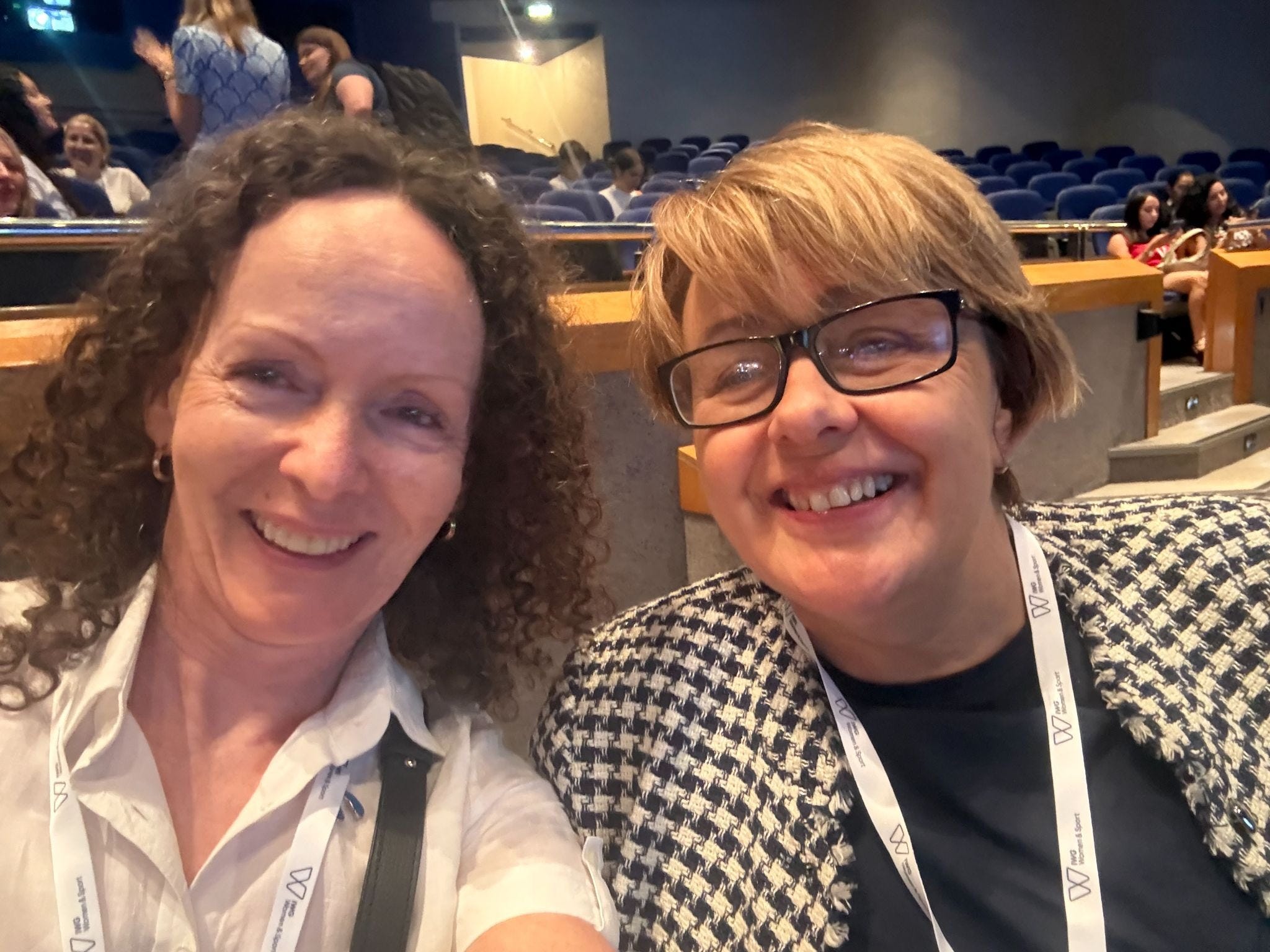
Eventually, as the programme was being finalised, Dr Emma Hilton was invited to be on the panel for a workshop called “Tested to compete: the science, the politics and the price”. This was about sex testing in sport, though that was not obvious from the name; it could have been about anti-doping.
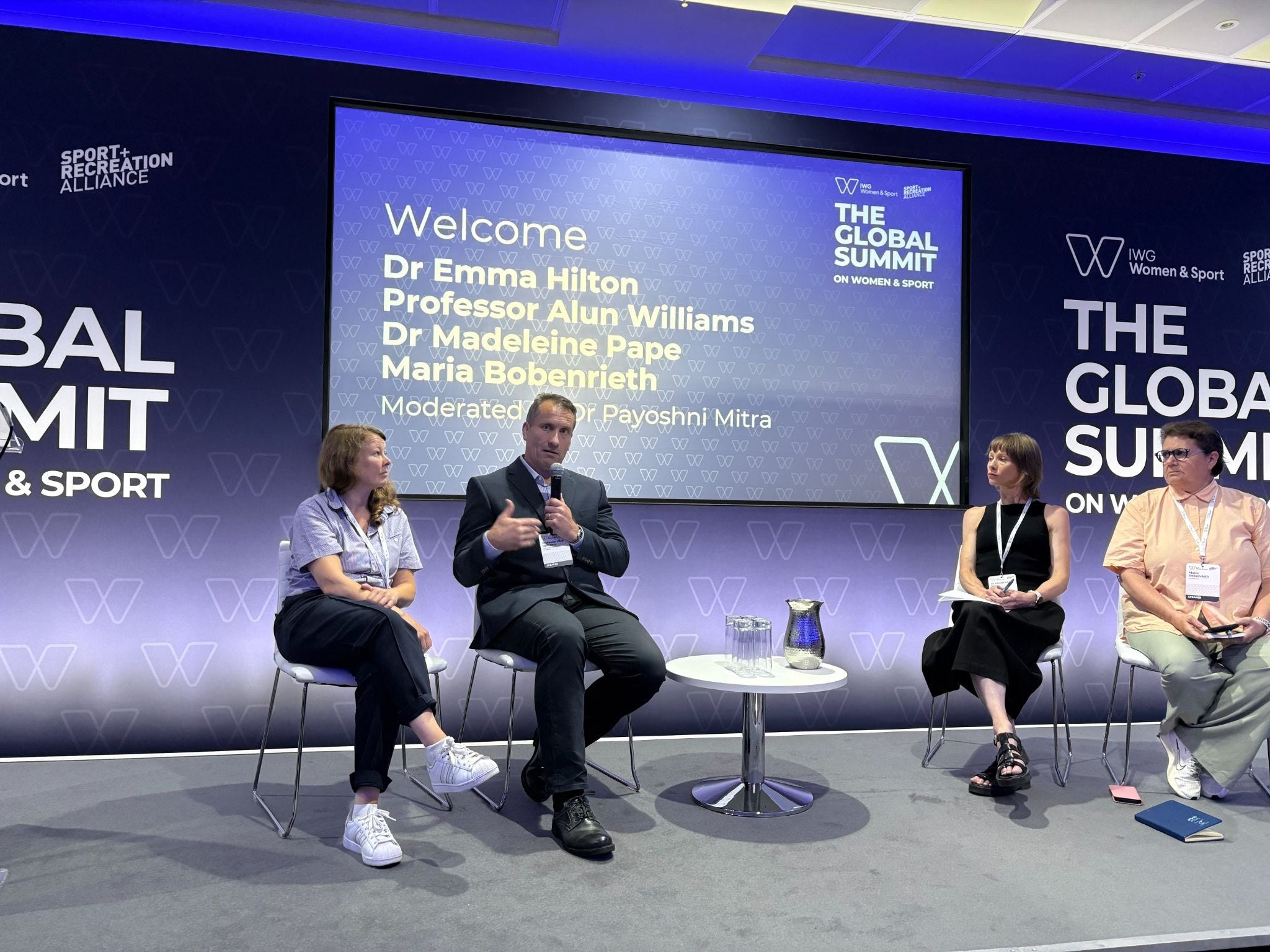
Emma explained where male advantage comes from, and the other three speakers argued that there is no evidence it exists. The researcher said that more research is needed; the sociologist said transwomen are women.
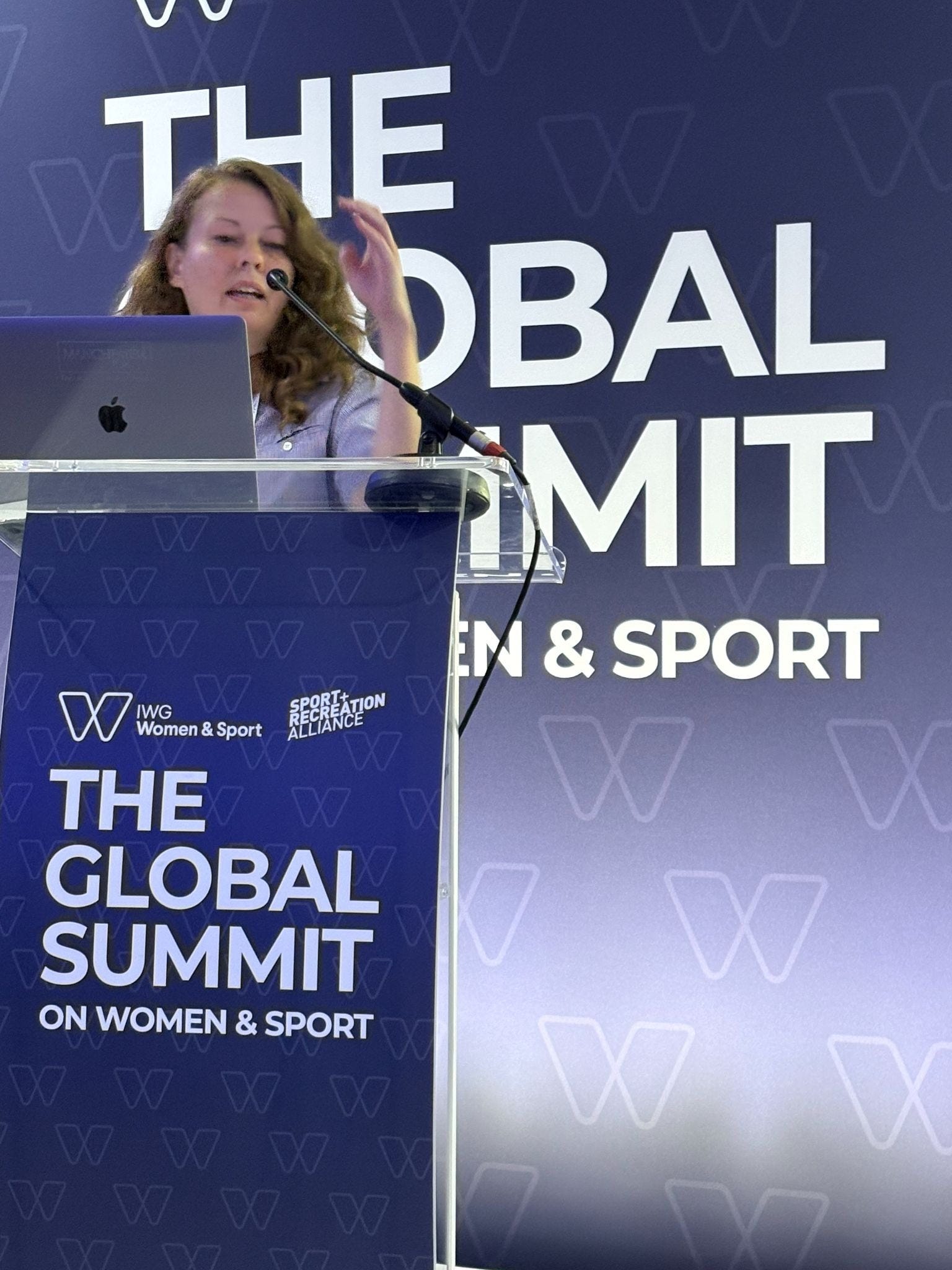
A woman in the workshop audience asked how “we” can oppose the new IOC policy, which restricts the female category to those who pass a sex screen – this means undergoing a once-in-a-lifetime cheek swab to show they are female. A speaker said: “We must fight it together.” No one said that maybe protecting the female category is a good thing. Neither Emma nor I had the opportunity to comment.
I went to the conference to advocate for male-free sport for women and girls. Some people I spoke to there quietly agreed, but overall the subject was still treated as taboo. More than one woman told me that the Sport England staffers are afraid of us. It’s hard to know what they’re afraid of.
I asked a couple of senior people from Sport England about their transgender guidance but didn’t get a straight answer. I can’t help thinking that anyone who was confident of their position would be willing and able to speak to me about it. These people were not.
I think this shows that everyone knows that it is not fair to allow male participants in a female category, but despite the clarity from the IOC they can’t speak the truth. Maybe they have spent so long pretending it’s complicated that they can’t believe it never was. Perhaps they can’t let go of the image of themselves as virtuous people who advocate for the most marginalised – and that doesn’t mean women and girls.
There can be no doubt that we are winning the argument: in global sports policy from the IOC down, in the US and UK Supreme Courts, and in public opinion. Who’d have thought the last people to get the message would be those advocating for women and girls? When you’ve denied the obvious for years and called it “the right side of history”, how do you find your way back to reality? We still have work to do.
The action we need to see is spelled out in our new sport report, Getting back on track, which I handed out to anyone who showed an interest. I’ve come back from the event with new contacts and as determined as ever to keep pressing for those in authority to restore fair policies.
Podcast
The Amnesty report
The charity is in trouble for defaming gender-critical organisations
A major row has erupted after Amnesty International UK published — and then quickly withdrew — a report labeling more than 100 organisations as “anti-rights”, including women’s rights groups, charities, support services, and campaigning organisations. Maya Forstater and Fiona McAnena talk about the parlous state of democratic debate on human rights, when organisations are branded as threats simply for advocating sex-based rights. Amnesty is now facing demands for answers, calls for apologies and potential legal action.
Amnesty must answer
Amnesty is facing growing pressure after publishing a report branding organisations defending sex-based rights as “anti-rights”. This week, we joined 40 organisations targeted by Amnesty International in calling on the Charity Commission to uphold the Equality Act and end the culture of intolerance towards gender-critical views.
Find out more
The Charity Commission must act
Media coverage
Amnesty International UK came under heavy criticism for branding Sex Matters and other organisations defending sex-based rights as part of an “anti-rights movement”. The Times (Alex Massie) and The Telegraph (Suzanne Moore) argued that the groups named had instead challenged unlawful claims and helped secure clarity that sex in the Equality Act means biological sex. Helen discussed the report on GB News’s Free Speech Nation with Josh Howie. Amnesty’s hasty retraction of the report was covered by The Telegraph (Jacob Freedland), GB News (Dan McDonald) and the Scottish Daily Mail (Dan Barker, print only).
The Telegraph (Jacob Freedland) reported on the joint letter from Sex Matters and others calling to the Charity Commission. The Times (Aaliyah Ahmed) and the Daily Mail (Dan Barker and Tom Gordon) confirmed that the commission is assessing concerns about Amnesty International and that its charitable trust has submitted a serious incident report. The Times (Aaliyah Ahmed) also drew attention to a second report portraying gender-critical people as opposed to LGBT rights. Maya said this showed a longstanding pattern of misrepresenting and denigrating those who recognise the biological and legal importance of the two sexes.
In other news
The Telegraph (Sabrina Miller) reported that the Green Party is considering adopting a policy to oppose sex-based exclusions in sport and support “trans-inclusive” sporting projects. Fiona said that, in practice, this means allowing men into the female category and denying women and girls fair competition, and that the party is once again prioritising the feelings of trans-identifying men over women’s rights.
The Telegraph (Janet Murray) revealed, with follow-up coverage in the Daily Mail (Shaun Wooller), that South East Coast Ambulance Service issued a policy allowing trans-identifying staff to use single-sex facilities according to gender identity since the Supreme Court ruling. Fiona said the trust was breaking the law by denying female paramedics privacy from men.
Calls for the Scottish Government to introduce a broader ban on conversion practices than proposed in England and Wales were covered by the Scottish Daily Express (Ben Borland). The article referred to our warning that the draft Conversion Practices Bill could lead to parents, teachers and therapists being investigated by police for lawful, loving actions such as telling a child they will not pay for puberty blockers or cross-sex hormones.
The Telegraph (Daniel Martin) wrote about the EHRC’s long-delayed code of practice for service providers, which has finally been laid before Parliament.. Maya welcomed the fact that organisations can no longer use the lack of guidance as an excuse for failing to bring their policies in line with the law.
If you’d like this memo in your inbox every Friday at 5pm, join our mailing list now.
Sex Matters survives on your support.
Without it, we simply wouldn’t exist.
Sex Matters can deliver essential research and analysis, help shape the debate, and empower people with clear, published guidance on their rights – but only with your support. Please contribute what you can to keep us going.
Thank you for your work. It's hard to find this sort of thing in the US.
> “When I talk about women I include trans and DSD athletes in that, just to make that clear.”
What I say about this:
- Women are women and men are men.
- People with DSDs have an unfortunate deformity. Deformities do not define the person, they are still fully human.
> trans-inclusive. This time it was not mentioned, although I had lobbied the organisers for months
Inclusivity Culture is suspicious because nobody is centering children, which are human beings, anymore. Even on many social platforms there is no rule that says, "no anti-childism" or even "no joking or seriously encouraging violence against children."
> male-free sport for women and girls. Some people I spoke to there quietly agreed, but overall the subject was
This is so important. But people don't know what a female human is anymore so they can't acknowledge our humanity.
> investigated by police for lawful, loving actions such as telling a child they will not pay for puberty blockers or cross-sex hormones.
That's absolutely fascistic. Sending goodwill to y'all over there.
Signed, a Black woman