

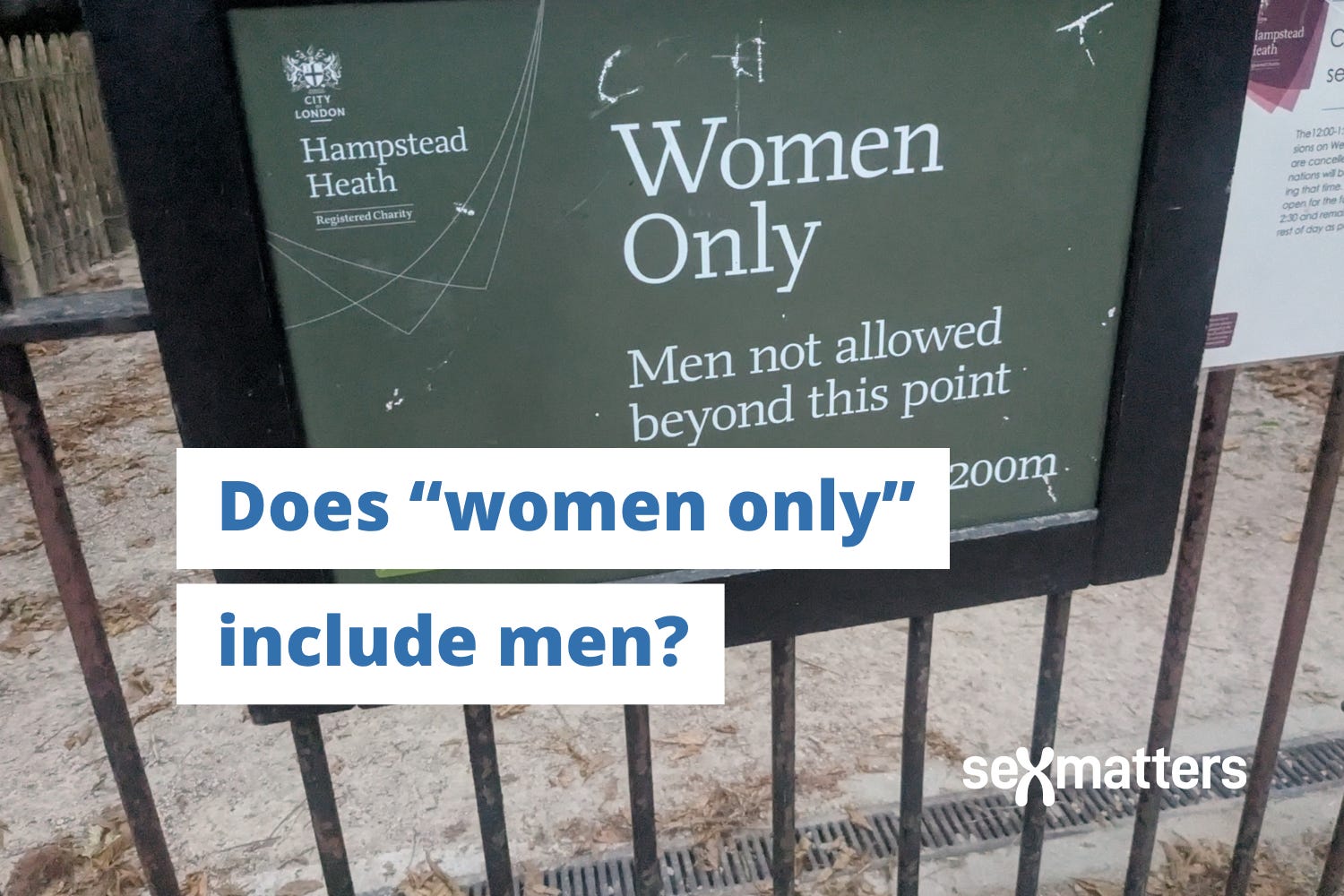
The City of London Corporation has launched a public consultation on future access arrangements at Hampstead Heath’s swimming ponds. The consultation, which will run until 25th November, says it aims “to ensure they remain fair, lawful, and respectful”.
Sex Matters is bringing a case against the City of London Corporation for the way it is currently operating these ponds (we are waiting for a decision from the court on whether we have permission for a judicial review). We argue, in short, that it is not fair, lawful or respectful to allow men into spaces where women are naked or changing, or into any spaces that have been set aside specifically for women (and vice versa).
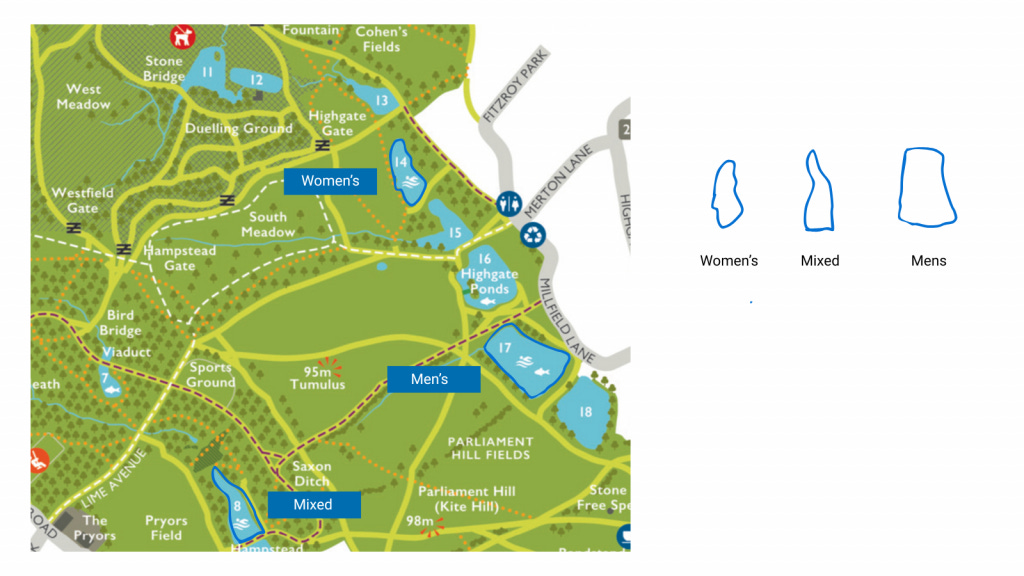
As you can see from the map below, from our evidence bundle, there are three swimming ponds on Hampstead Heath: the women’s pond (“Kenwood Ladies Pond”), the men’s pond (“Highgate Men’s Pond”) and the mixed pond. The men’s pond is by far the largest of the three.
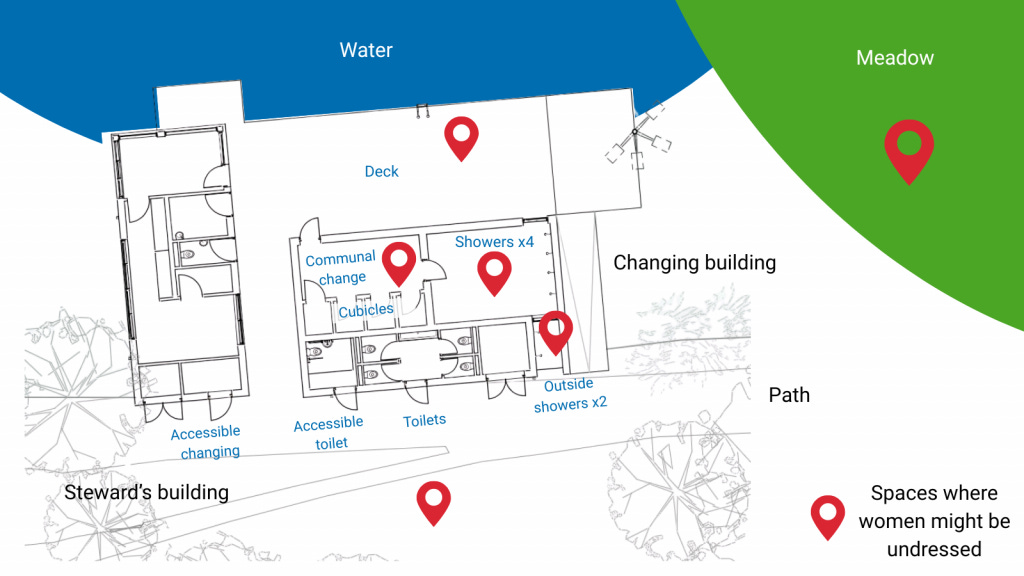
The plan below shows locations in the women’s pond enclosure where nudity is common. Nudity is also common in the open changing areas of the men’s pond.
The two separate-sex ponds are valued not only for bodily privacy but for providing a unique women-only and men-only environment for outdoor swimming, sunbathing and community.
As one men’s pond swimmer called Dan recounts:
“I always feel that even the most inane conversation with another swimmer makes me feel like I’m doing the business of being a human, I’m interacting with someone. The topics will be anything, you talk about politics in there, obviously shit like football and stuff, but the community element is absolutely key to why I enjoy it so much. I’ve made some really good friends through the Ponds. People have different backgrounds to me and certainly different ages. I’ve met lots of older men there, who I really, really love and who I have become really quite close to; it’s like having a group of grandpas you can call on, you know?”
The Supreme Court found that the terms “man” and “woman” in the Equality Act refer to the same thing that they refer to in ordinary language. As the Supreme Court says at paragraph 171:
“The definition of sex in the EA 2010 makes clear that the concept of sex is binary, a person is either a woman or a man. Persons who share that protected characteristic for the purposes of the group-based rights and protections are persons of the same sex and provisions that refer to protection for women necessarily exclude men. Although the word “biological” does not appear in this definition, the ordinary meaning of those plain and unambiguous words corresponds with the biological characteristics that make an individual a man or a woman. These are assumed to be self-explanatory and to require no further explanation.
It came to this judgment on the basis that any other interpretation “produces unworkable, impractical, anomalous or illogical results”.
That should have been the end of it. But the City of London in its consultation claims that language “is contested” and adopts the following terms:
‘biological man’ means a person who was at birth of the male sex;
‘biological woman’ means a person who was at birth of the female sex;
‘trans man’ means a person who was at birth of the female sex, but who has the protected characteristic of gender reassignment under the Equality Act 2010;
‘trans woman’ means a person who was at birth of the male sex, but who has the protected characteristic of gender reassignment under the Equality Act 2010.
It does not explain what having the protected characteristic of gender reassignment entails. As the Supreme Court makes clear at paragraph 202:
“Neither possession of a GRC nor the protected characteristic of gender reassignment require any physiological change or even any change in outward appearance… in either case [whether a person has a gender recognition certificate or not] the individual’s biological sex may continue to be readily perceivable and may form the basis of unlawful discrimination. A person has the protected characteristic of gender reassignment as soon as they propose to undergo the process so it may be that at that stage there is no change in outward appearance.”
Under the Equality Act, unlawful harassment is defined as unwanted conduct related to a relevant protected characteristic that has the purpose or effect of violating someone’s dignity, or “creating an intimidating, hostile, degrading, humiliating or offensive environment” for them.
It is clear that the presence of a man (either clothed or unclothed) in a space where women are naked or changing violates female users’ dignity and creates an intimidating, hostile, degrading, humiliating or offensive environment for them.
The showers at the Ladies’ Pond
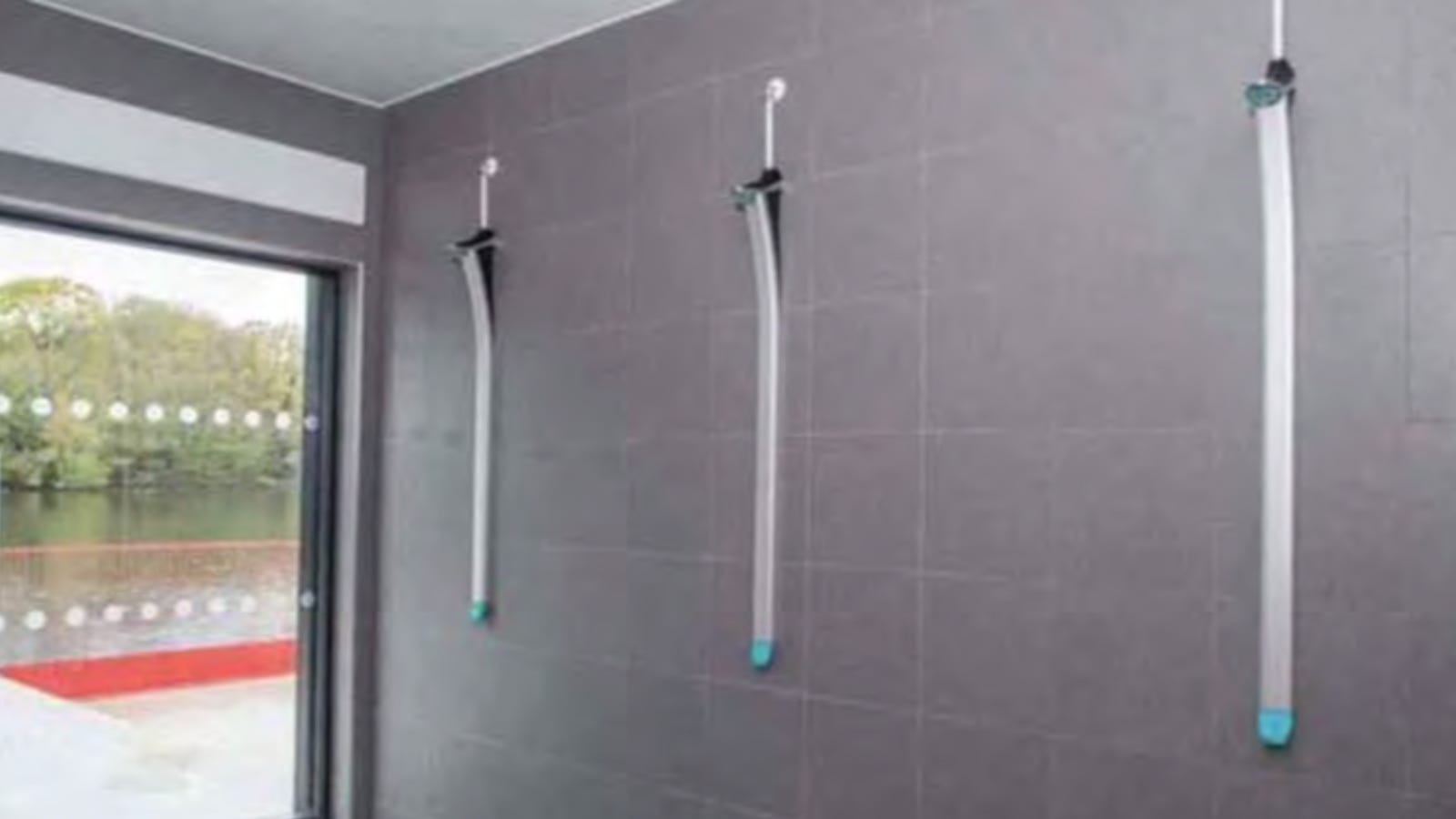
It is therefore the responsibility of the City of London Corporation to set, communicate and enforce rules to prevent this happening, and not to authorise or approve of it.
The City of London Corporation’s consultation offers six options:
Strictly single-sex: “The Highgate Men’s Pond would only be accessible to biological men and the Kenwood Ladies’ Pond would only be accessible to biological women.”
Continue as currently operated: “The Highgate Men’s Pond would be accessible to all biological men and trans men and the Kenwood Ladies’ Pond would be accessible to all biological women and trans women as at present.”
“Trans-inclusive spaces based on how people have decided to live their lives – Under this option The Highgate Men’s Pond would only be accessible to people who have decided to live their lives as men (including trans men but excluding trans women) and the Kenwood Ladies’ Pond would only be accessible to people who have decided to live their lives as women (including trans women but excluding trans men).”
Trans-inclusive spaces but communal toilets and changing rooms single sex: “Trans men would have access to the Highgate Men’s Pond and trans women would have access to the Kenwood Ladies’ Pond and Meadow, but would be required to use the separate accessible toilet, shower and changing room at each facility.”
“A hybrid approach where they are trans-inclusive spaces at stated times but are operated as strictly single-sex facilities at other times – Under this option, the Highgate Men’s Pond and the Kenwood Ladies’ Pond would continue to be trans-inclusive spaces at certain specified times, but there would be other advertised sessions/times when these facilities would be operated as strictly single-sex spaces.”
Mixed-sex: “Under this option both the Highgate Men’s Pond and the Kenwood Ladies’ Pond would be accessible to everyone regardless of sex or gender.”
Option 1 is the only single-sex option, the only one that matches the ponds’ names and rules with reality.
Our case is that current practice, option 2, is unlawful. Options 3, 4 and 5 would also be unlawful on the same basis as option 2.
Options 2, 3, 4 and 5 will result in direct discrimination, indirect discrimination and harassment against women users of the Ladies’ Pond. This is because allowing trans-identifying men to use the Ladies’ Pond places women at risk of fear, humiliation, indignity and harassment.
Options 2, 3, 4 and 5 also unlawfully discriminate against men by not allowing them into the women’s pond, and against women by not allowing them into the men’s pond (without the corporation being able to rely on the “single sex services” exception on sex discrimination in the Equality Act).
Option 3, 4 and 5 also unlawfully discriminate against trans people (by excluding “trans women” from the men’s pond and “trans men” from the ladies, without being able to rely on the single-sex services exception on gender-reassignment discrimination).
Option 6 makes no sense at all. Is the City of London proposing having three explicitly “mixed” ponds, changing the names and rebuilding the changing rooms, toilets and showers? Or keeping the infrastructure and names as they are but having no rules at all?
The City of London Corporation is spending public money consulting on options that are unlawful, instead of simply explaining and complying with the law. Still, if you want to tell the City of London Corporation what you think about its options, the consultation ends at noon on Tuesday 25th November.