

Update from Maya
It is six months since the Supreme Court judgment and too many organisations are still saying that the law is “unclear” or “too complex” or that they are “waiting for EHRC guidance”.
What they really mean is that they are afraid of saying no to the transactivists they have allowed to corrupt their decision-making processes.
Treating people fairly means recognising where there can be different and competing interests between women and men. Putting men into the category “women” (and vice versa) institutionalises a conflict of interest which destroys the ability of organisations to make good decisions.
This week Kishwer Falkner, chair of the Equality and Human Rights Commission (EHRC), wrote to the Minister for Women and Equalities, calling time on this institutional paralysis. She called on the Secretary of State to revoke the current code of practice for service providers immediately, because it is known to be incorrect about the law. And she called on her to lay the new draft code in front of Parliament as soon as possible.
We hope that the new code of practice will be clear and accurate. In practice ordinary service providers and service users, employers and employees, and school pupils and parents need to have “postcard simple” guidance that makes clear that wherever facilities, services, sports and policies are “for women” that means women. It is not the start of a negotiation. It is not hateful, and should not be controversial.
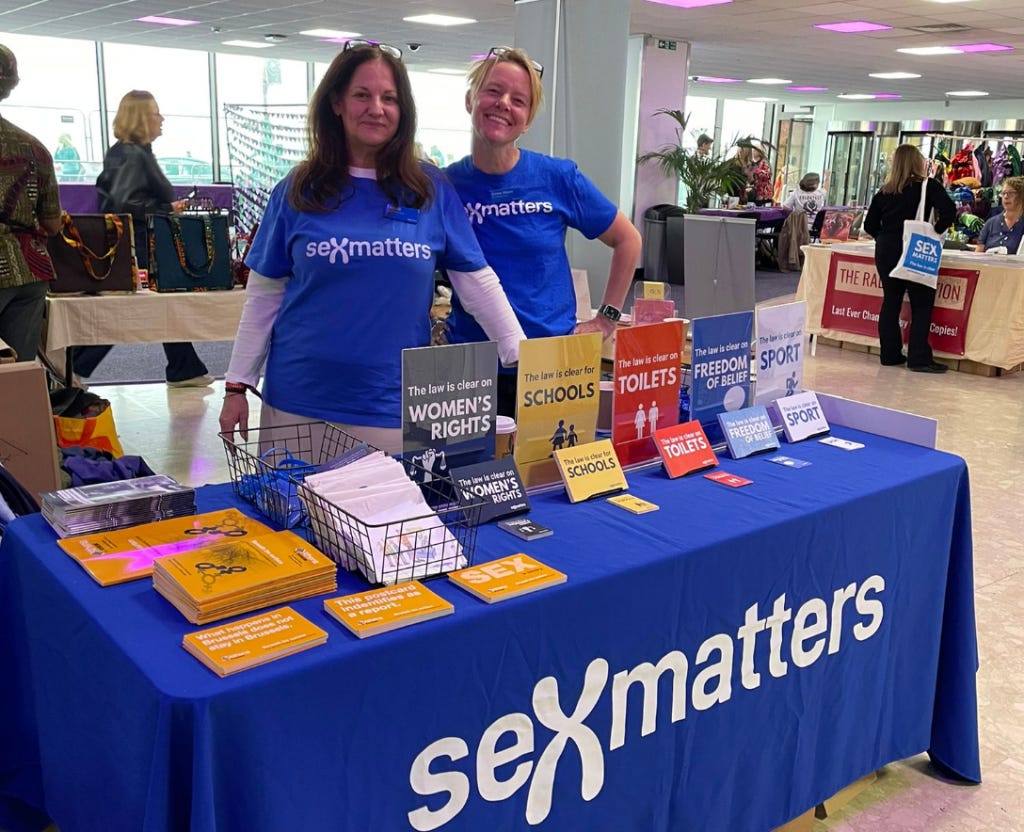
We were at the FiLiA conference in Brighton last weekend (Fiona spoke about the landmark Supreme Court judgment alongside For Women Scotland and the other intervenors) and will be at the Battle of Ideas this weekend with our new postcards which say The law is clear: so get on with it.
You can see someone with our new “Sex Matters: the law is clear” bag in the background. New regular supporters will get the postcards and new merch when they sign up – we really need your help, so please support us if you can!
It emerged this week that Dr Michael O’Flaherty, the new European Council Commissioner for Human Rights (and one of the developers of the Yogyakarta principles) had written to two UK Parliamentary committees seeking to undermine confidence in the Supreme Court’s judgment by saying that it “did not engage with… human rights issues”. We have written to the two committees setting out why this is misconceived.
The For Women Scotland judgment makes unequivocally clear that working through tensions between the human rights of different groups depends on correctly defining and identifying what is meant by “man” and “woman”. It concludes that the only coherent and workable interpretation that protects the rights of everyone is to read the terms related to sex as having their ordinary meaning. We’ve written to the committees to say so.
While the definitions of man and woman are clear in law, there still need to be strategic legal cases to make sure that the law is followed, and that the implications are well understood.
We have applied to intervene in the case that the Good Law Project is bringing against the Equality and Human Rights Commission, to bring the experience and voices of women who expect single-sex services to be single sex. And the Good Law Project has applied to intervene in the case we are bringing against the City of London. There are also other legal challenges we are working on (and will update you on when we can).
Your support in all of this is massively appreciated and important. We can only do this because of our supporters.
The City of London Corporation consults…
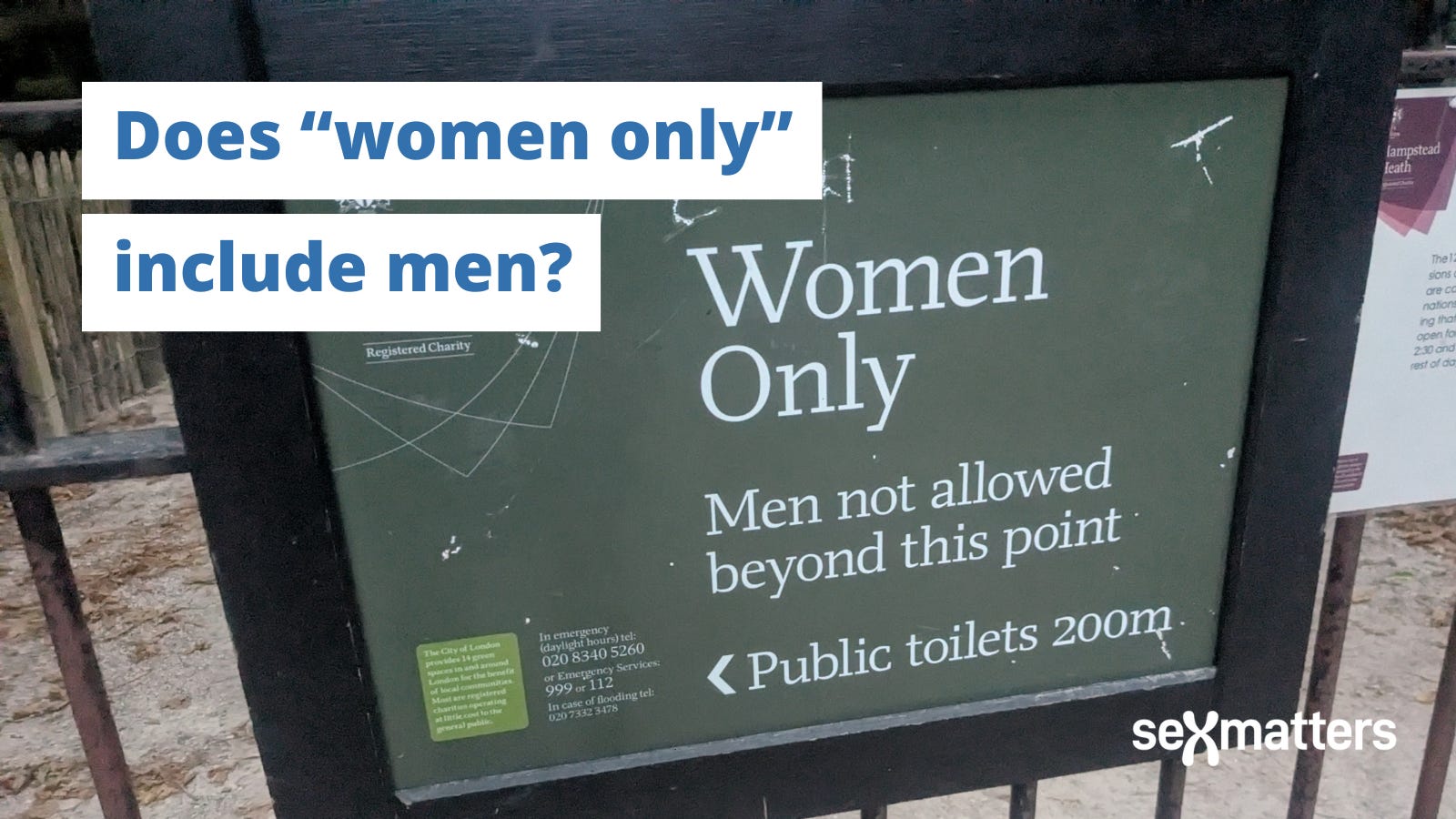
The City of London has launched a public consultation on the access arrangements to the men’s and women’s bathing ponds on Hampstead Heath. This is separate-sex service where Sex Matters is bringing a legal challenge (we are waiting to hear back from the court on our application for permission for judicial review).
Read our post about the consultation, and why we think that the only lawful option for operating the men’s and women’s ponds is by using clear sex-based rules.
Combatting exposure and voyeurism
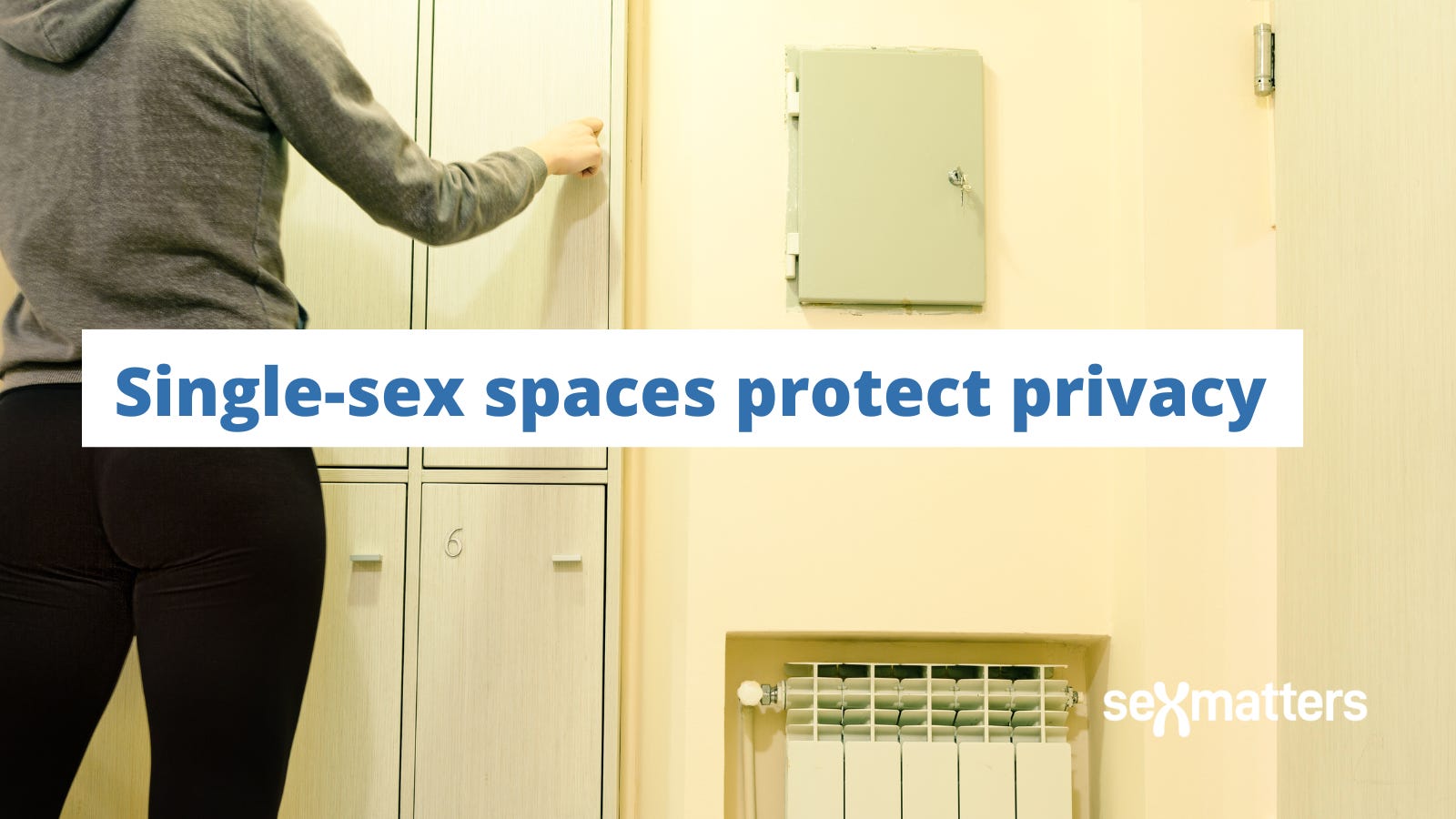
The Crime and Policing Bill which is currently going through Parliament will strengthen protections against indecent exposure. We provided a briefing on the link between single-sex facilities and protection against voyeurism and exposure and Lord Farmer asked a question about this in the House of Lords:
“The Supreme Court disallowing biological males from using women’s changing rooms and spaces, this still happens in many contexts. Not all are motivated by voyeurism—which is already a crime—or because someone wishes to expose themselves for sexual gratification or humiliation, but we should not turn a blind eye to these possible motivations; consideration should be given to them. Can the Minister confirm that the new law will protect women and girls while everyone catches up with the Supreme Court ruling?”
We welcome the clause in the government’s bill which brings humiliation of the victim or sexual gratification of the perpetrator into the definition of exposure.
The Equality Act already provides that reasonable accommodation for disability does not extend to people with a tendency to exhibitionism and voyeurism People with gender-related mental-health issues ought to be just as capable as others of following rules intended to protect others from humiliation, alarm and distress, by respecting single-sex rules.
In the news
A letter to MPs from Michael O’Flaherty, the Council of Europe’s Commissioner for Human Rights, suggested that the Supreme Court’s decision in FWS v Scottish Ministers could “severely infringe on [transgender people’s] ability to participate fully and equally in society”, Aaron Newbury reported in the Daily Express. Maya Forstater is quoted as saying that it is not for O’Flaherty or anyone else to insist that some men should count as women in the UK.
Geraldine Scott revealed in The Times that Bridget Phillipson has been accused of delaying guidance from the Equality and Human Rights Commission (EHRC) on single-sex spaces until after Labour’s deputy leadership race over concerns that she could lose support from some MPs. Helen Joyce said that politicians should pay more attention to voters’ opinions, pointing out that in a recent YouGov poll, 50 per cent of Labour voters think the Supreme Court made the right decision. Greg Heffer covered the story for the Daily Mail, and Sam Merriman followed up with a story of a row between the government and the EHRC over the delay. Maya commented: “The law has been clear for six months. The reluctance to comply with the law is shameful, and it harms everyone, particularly women who find themselves sharing female-only spaces and services with men claiming to be women.”
Alex West reported in The Sun that a trans-identifying man who assaulted three police officers avoided community service after claiming that he would feel “unsafe” in a mixed-sex group, a claim Fiona McAnena described as ridiculous, and another example of how cowed and indoctrinated our institutions have become.
Sam Merriman in the Daily Mail broke the story that Labour’s digital ID card “may let people choose their own gender”. Maya was quoted as saying that the government’s plans were doomed to fail unless it accurately records sex rather than gender identity; she flagged the risks of false identities and the need for immediate action. Fiona was interviewed by Miriam Cates and Alex Armstrong on GB News and reminded them: “People like the passport office will let you change the sex marker on your ID just by sending them a letter.”
Gabriella Swerling wrote in The Telegraph about criticism of the National Trust for putting vegan tampons in men’s lavatories. Maya was quoted, saying: “It can never be appropriate to place a tampon dispenser and urinals in the same room. Allowing people of one sex into a space reserved for the other sets the scene for unlawful harassment of the people who are meant to be there.” The story was also picked up by Shannon McGuigan in the Daily Mail, Ciaran McGrath in the Daily Express and Dan McDonald on GB News.
Helen made headlines in The Australian for accusing Australian officials of enabling human rights abuse through gender policies, and warning that the nation is making dangerous mistakes, as part of a wide-ranging interview with journalist Rachel Baxendale.
Battle of Ideas
The Battle of Ideas festival is on THIS WEEKEND in central London. Maya will be in a session on Saturday at 12.15pm on the rise of the workplace speech police, and on Sunday at 10am Fiona will be talking about her book TERF Island – how the UK resisted trans Ideology in the Battle Book Club. Sex Matters also has a stand, so if you’re attending, do come and say hello! Use this link or the discount code BOIF-SEXM to get a 20% discount on your ticket.
Want to get our weekly email update? Sign up now!