

Update from Maya
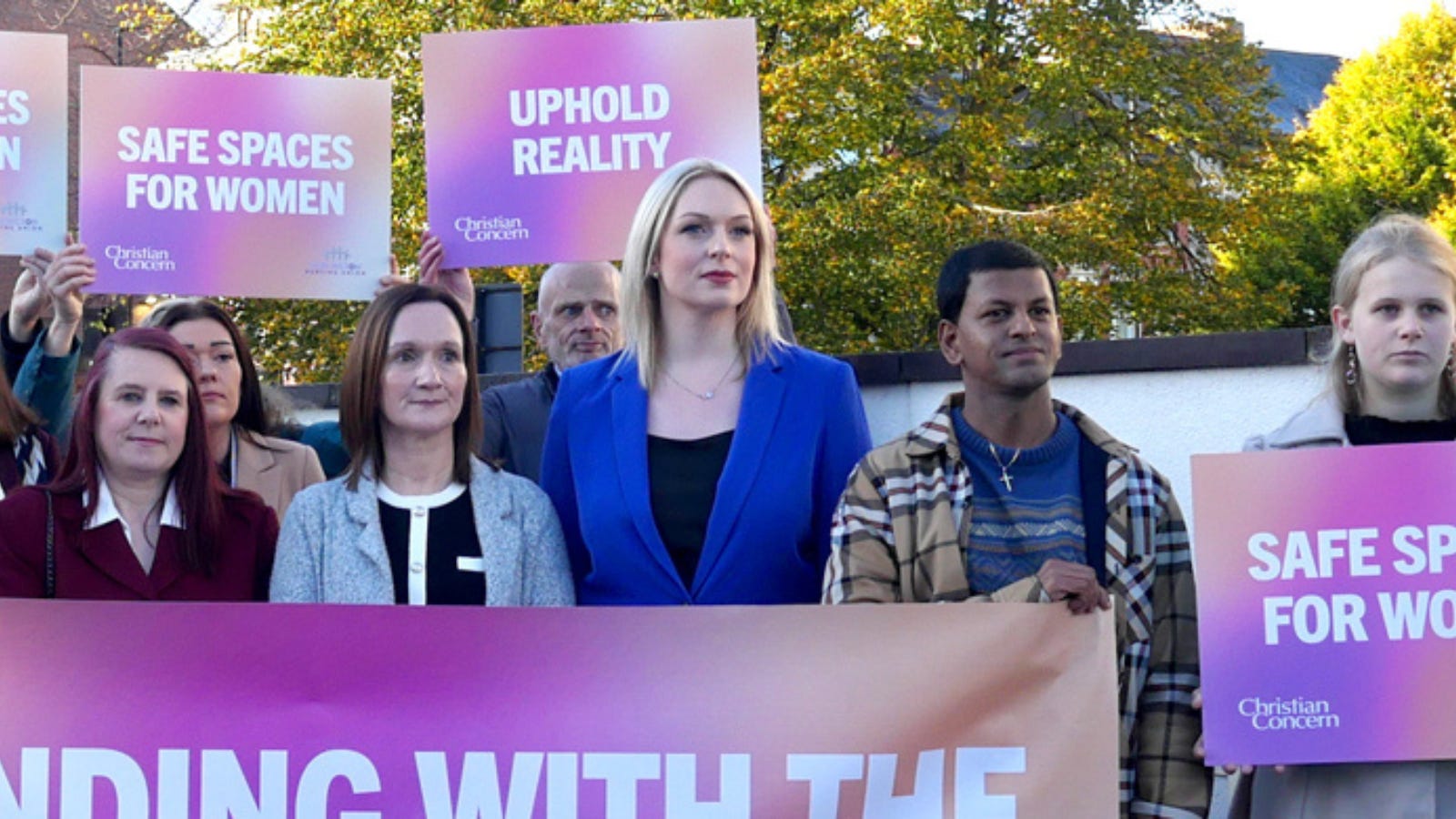
Today we got good news! The Darlington nurses have won their employment-tribunal claim against County Durham and Darlington NHS Foundation Trust.
These were eight brave nurses who complained when faced with a trans-identifying man in their changing room, and then brought a legal claim with the help of Christian Concern when their complaints got nowhere.
In contrast to the judgments in the cases ofSandie Peggie v NHS Fife and Maria Kelly v Leonardo (which are both being appealed), this ruling, produced by a panel led by Employment Judge Seamus Sweeney, is a model of common sense and straightforward legal reasoning. Finding that the hospital had engaged in unlawful indirect discrimination and harassment, it concludes that Darlington Memorial Hospital’s Transition in the Workplace policy, which allows transgender staff to use the changing room of their choice, is unlawful.
“Having considered the Equality Act we can see nothing there that would render ‘lawful’ a policy that gave biological males the choice to use a female changing room, effectively overriding the objection of female colleagues.”
The hospital trust withdrew the policy after the Supreme Court judgment in the case of For Women Scotland (and a visit from a senior manager from NHS England). But similar policies are in place in workplaces across the country. They have been promoted by the government and by the civil service, which to date has refused to withdraw its own version of the policy.
The judgment is in line with the Supreme Court, and makes clear that although the Equality Act 2010 protects those with the protected characteristic of gender reassignment from discrimination, harassment and victimisation, “that does not translate into a positive ‘right’ on the part of a trans woman to use the female changing room (or for that matter of a trans man to use the male changing room).”
The tribunal accepted the expert evidence of Professor Jo Phoenix (who is a member of Sex Matters’ advisory group) that women are more likely to experience fear, distress or humiliation by having to change in front of a member of the opposite sex than men are.
As the tribunal said, this should come as no surprise to anyone. It agreed that women’s fearful, defensive, and precautionary reaction to the risks posed by men are not irrational. This opened the door to a successful claim for indirect discrimination and harassment because of the policy.
The tribunal also concluded that the hospital was in breach of the 1992 Workplace Regulations, which require employers to provide adequate and suitable facilities for men and women. It said these should be interpreted consistently with the Equality Act (as clarified by the Supreme Court). It noted that, shockingly, the staff responsible for drawing up the policy were unaware of the content of the 1992 Regulations. They had, however, consulted the LGBT+ Staff Network and looked at guidance from the NHS Confederation.
We have written a rapid analysis of the judgment with more to come next week!
Have a good weekend.
Maya Forstater
“What is a woman?” from across the pond
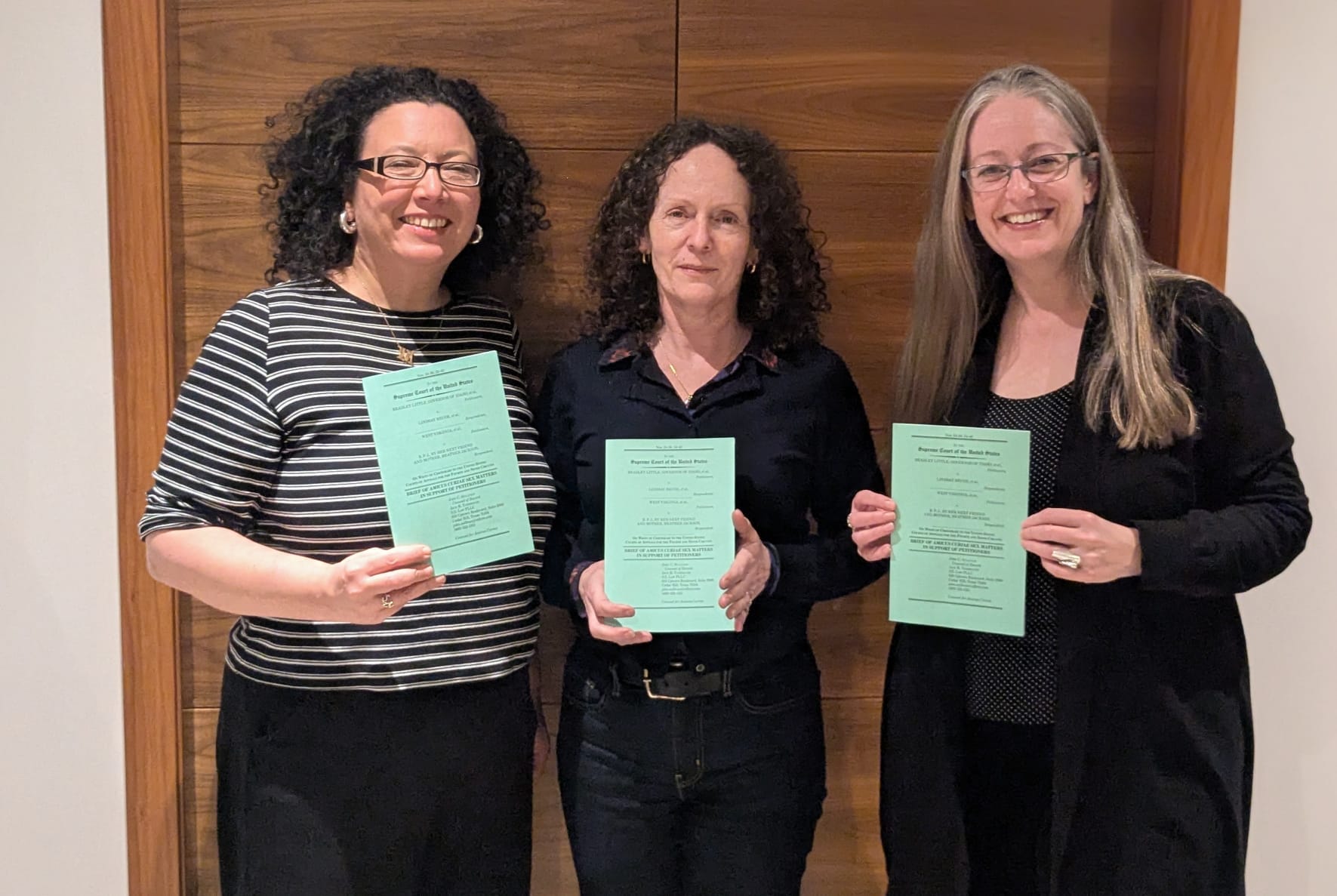
This week, two American states were in the US Supreme Court defending laws that bar trans-identifying boys and men from female athletics against a challenge from two male athletes who are supported by the American Civil Liberties Union. As in the For Women Scotland case, the highest court in the land must decide what “sex” means in a law intended to uphold women’s rights.
“Title IX”, dating from 1972, prohibits discrimination based on sex in education programmes and activities that receive funding from the federal government, and has driven the provision of facilities, funding and scholarships for girls. Specific provisions within it require funding recipients to fund sports for girls and women, and set aside general prohibitions on sex discrimination both for those sports and for facilities such as changing rooms and sleeping accommodation.
Sex Matters wrote an “amicus brief” – roughly equivalent to an intervention in a UK legal case, except that permission is not required from the court. These briefs are intended to help the court to come to a reasoned conclusion by providing specific viewpoints or expertise. Our chair, Dr Emma Hilton, was co-author on a separate brief, explaining that sex testing is feasible and neither unduly intrusive nor a breach of athletes’ human rights. Professor Jon Pike, a member of our advisory group, co-authored a third brief with other philosophers, which argued that sporting categories based on sex (as in biology) are intellectually and philosophically coherent while those based on other purported concepts of “sex”, such as gender self-identification, are not. All three amicus briefs are available on our website.
Government hold-up puts women and girls in danger
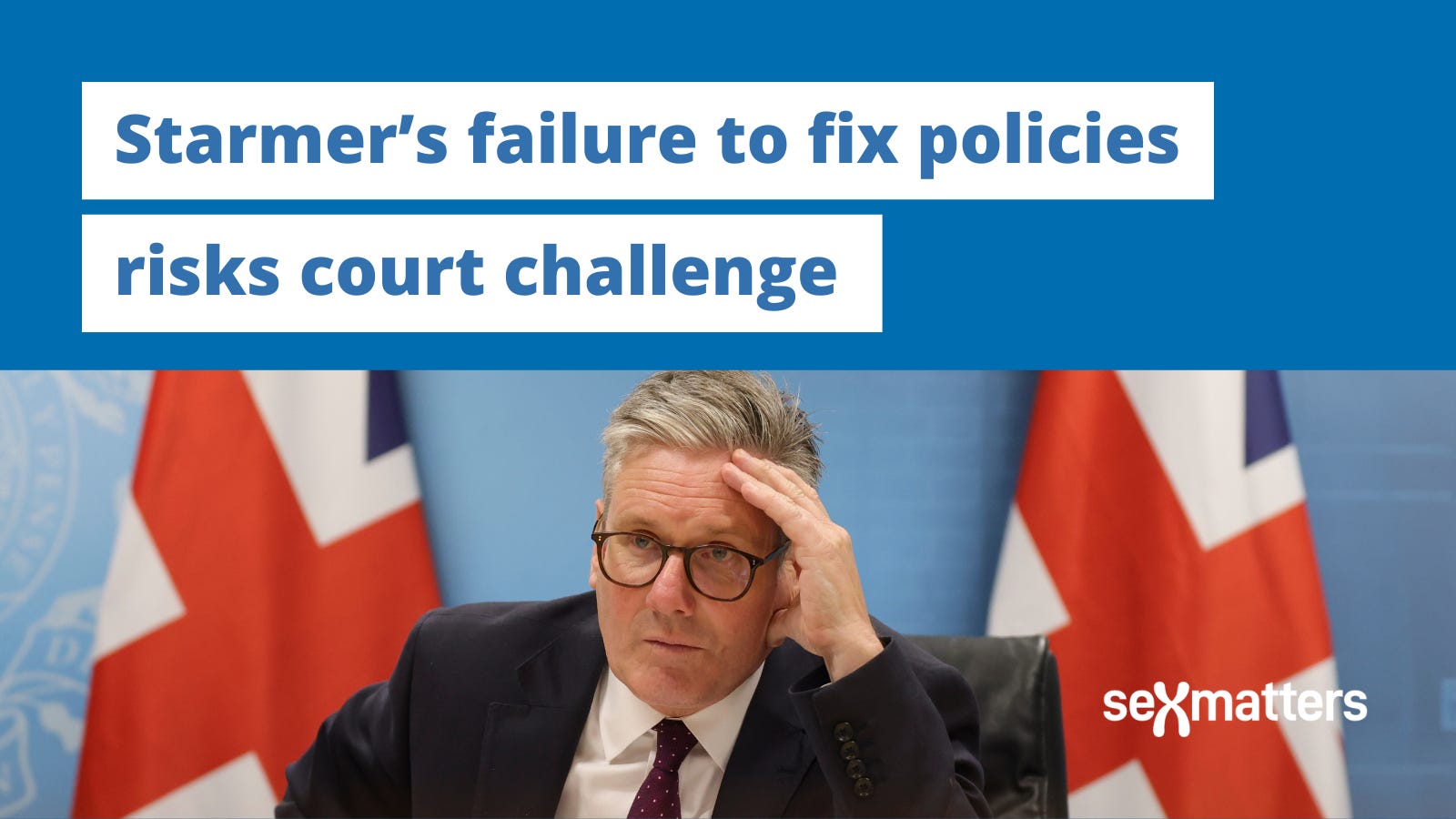
The prime minister claims to be leading a major campaign to tackle violence against women and girls. But the civil servants who will implement it have an office policy that allows employees to access opposite-sex workplace facilities and tells them it’s “transphobia” to question this. This unlawful policy embeds gender ideology at the heart of government.
We have written several letters calling for urgent action to withdraw it, and have now received an extraordinary answer.
Treasurer wanted
Could you be our next treasurer, or do you know someone who might fit the job? We’re looking for someone who shares Sex Matters’ vision and has strong accounting and financial experience, preferably in charity finance. The closing date is just a week away – 23rd January.
In the news
Katie Harris for The Express covered the news that a petition calling on health secretary Wes Streeting to halt the puberty-blocker trial hit 100,000 signatures at the weekend. Helen was quoted as saying that the government needs to take note as people loathe the idea of this trial and won’t forgive anyone who is involved.
Ben Chapman for GB News broke the news that the Cabinet Office confirmed in a letter to Sex Matters that it will not withdraw the 2019 model policy which allows civil-service employees to access opposite-sex workplace facilities and tells colleagues that questioning this is “transphobia”. Maya also appeared on GB News for an interview on the story.
The Telegraph revealed that Wandsworth Council is encouraging staff to announce pronouns at the start of meetings and to add pronouns to their email signatures and social-media profiles. Fiona called it ludicrous to encourage staff to support the fantasy that people can be the opposite sex or no sex at all, and said the example pronoun zi/zir/zem is so silly it feels like satire. The news was also covered by Amelia Stout at The Times (print only) and Marcus Donaldson for GB News.
Two broadcast appearances over the Christmas period missed in last week’s round-up were Fiona’s interview with TalkTV’s Tom Dave on Girlguiding’s decision to restore female-only membership, and Maya’s interview with Miriam Cates and Charlie Peters on GB News about Sex Matters’ letter to the prime minister urging him to withdraw the unlawful civil-service model policy mentioned above.
Would you like this memo in your inbox every Friday at teatime? Join our mailing list now.
Sex Matters survives on your support.
Without it, we simply wouldn’t exist.
Sex Matters can deliver essential research and analysis, help shape the debate, and empower people with clear, published guidance on their rights – but only with your support. Please contribute what you can to keep us going.
Wonderful news! Brava to the women for standing up to Mr Bully in a Dress.