

Update from Maya
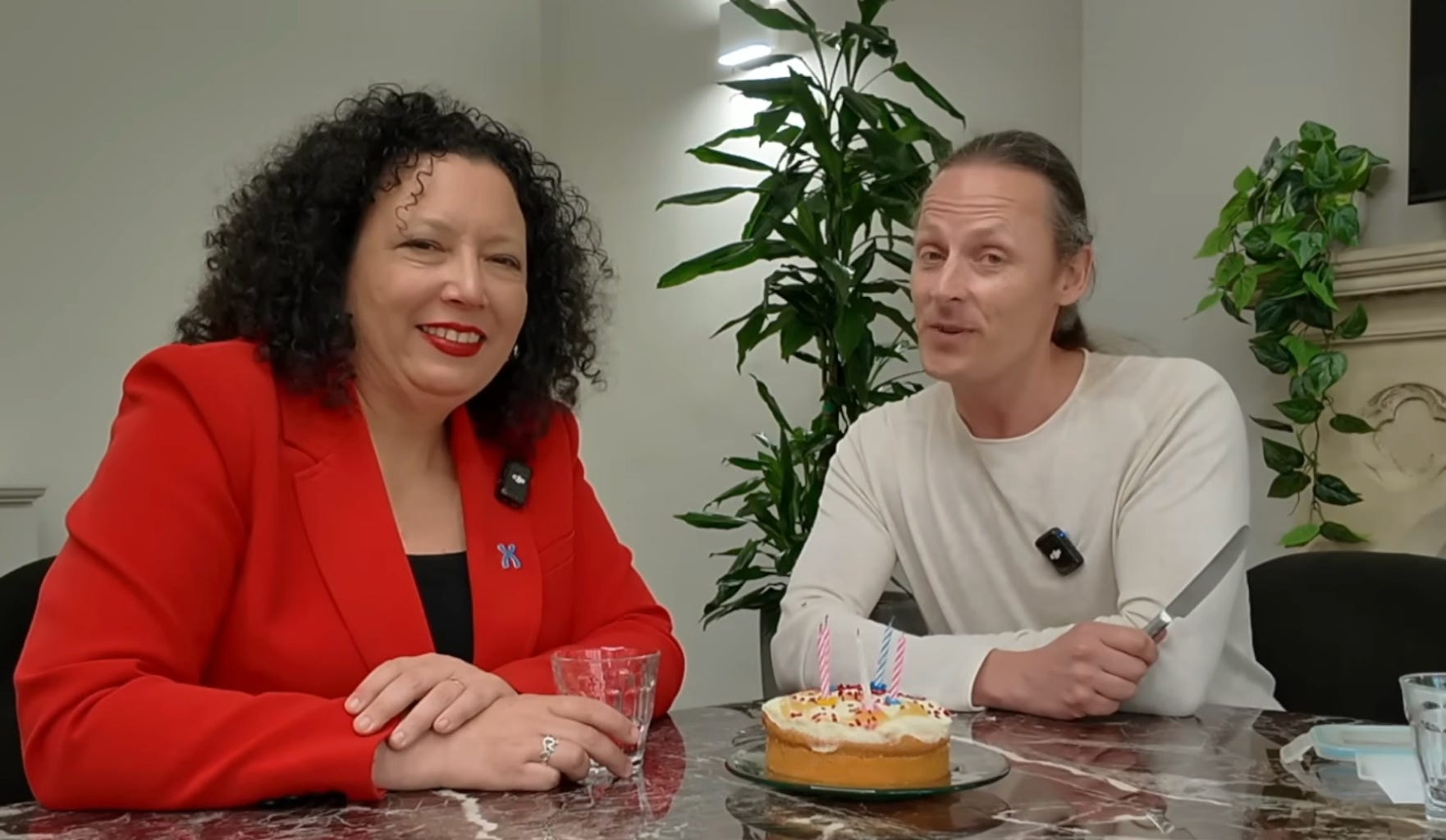
On Wednesday 10th June, it was five years since I won my employment appeal tribunal, with a judgment that gender-critical beliefs are “worthy of respect in a democratic society”. It was also five years since we launched the Sex Matters memo to update people who helped our fledgling organisation get off the ground. Thank you to everyone who has supported us.
I marked the anniversary with an interview (and cake!) with Mr Menno. We talked about why a belief-discrimination case was the right test case to bring, the change it created, how Sex Matters started and how the Gender Wars might end. So much has happened during those five years, in part because of the legal precedent but much more because of the public and political actions enabled by the growing freedom to speak. But at the top of institutions, wilful inertia remains the rule.
Menno and I talked about the phone call in which the boss of the Center for Global Development, Masood Ahmed, told me I had lost my job. “We recognise sex-slash-gender,” he told me. “That’s not the law,” I replied. “In the UK, sex is a protected characteristic.” Losing my job simply for stating a personal characteristic that is supposed to attract legal protection was bewildering at first – and then maddening.
It’s now beyond doubt that sex means sex in the Equality Act. But it remains bewildering and maddening that leaders of powerful institutions have failed even to acknowledge that their legal misunderstandings were a serious mistake. More than that, many are still trying to find ways around the law, meaning that we are still having to keep saying: “That’s not the law.”
The latest victory was the excellent news that For Women Scotland has won its challenge against the Scottish Government’s cruel policy of placing trans-identifying male prisoners alongside female prisoners in women’s jails. The court said this policy was never lawful, and that the Scottish Government could not simply keep going in the hope that individual prisoners won’t bring discrimination claims.
To quote from the ruling: “service-providers and those who exercise public functions must make sure that the ways in which they carry out those responsibilities are lawful.” This applies whether you’re a private company like Marks & Spencer, which claims to have single-sex changing rooms but in reality doesn’t, or whether you’re a public body or indeed a national government.
But even as we were celebrating this win, we also heard that the MHRA is pushing ahead for a dangerous, unnecessary medical trial of puberty blockers for gender-confused children. James Esses, Keira Bell and the Bayswater Group of parents will be seeking an emergency injunction.
On 16th June Sex Matters was back in court for our own judicial review, which is against the National Police Chiefs’ Council and British Transport Police. Like For Women Scotland in the Scottish prisons case, we were arguing against a public authority that seeks to operate outside the law. Our case is against official guidance for police forces that they can sidestep the Police and Criminal Evidence Act (PACE), the law that governs how they detain suspects and collect evidence. PACE is absolutely clear that strip-searching must be carried out by an officer of the same sex as the detainee. And yet the NPCC and BTP claim that in certain circumstances that essential legal safeguard can be ignored.
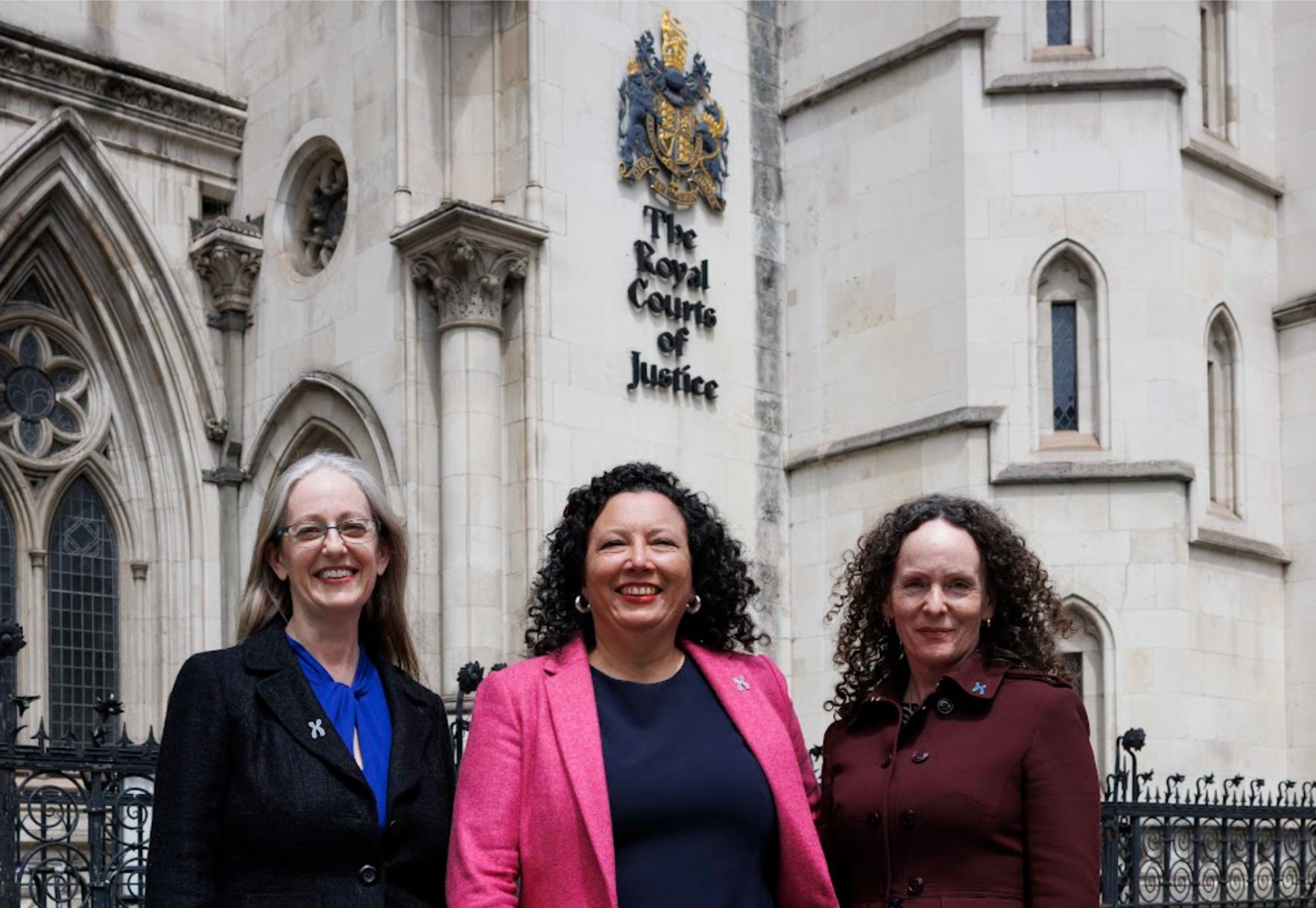
Left to right: Helen Joyce, Maya Forstater and Fiona McAnena outside the Royal Courts of Justice on 16th June 2026 (Picture: Belinda Jiao)
It is an essential characteristic of democracies that they do not operate shadow regimes outside what the law specifies. The power to search individuals and collect evidence that might be used to deprive them of their liberty is among the state’s most coercive, and should be especially carefully controlled. As the judge said in the case of campaigner Harry Miller, who successfully fought against the recording of a non-crime hate incident against his name because of some rather banal tweets: “In this country we have never had a Cheka, a Gestapo or a Stasi. We have never lived in an Orwellian society.”
The policy we are challenging was put in place after the Supreme Court judgment in For Women Scotland. It tries to find a way around the law by saying opposite-sex searches can be carried out “consensually”. We were in court with Cathy Larkman, who is a retired police superintendent and the policing lead for the Women’s Rights Network, and with Rachel Fletcher, the chair of the Police SEEN network of serving officers who have bravely spoken up.
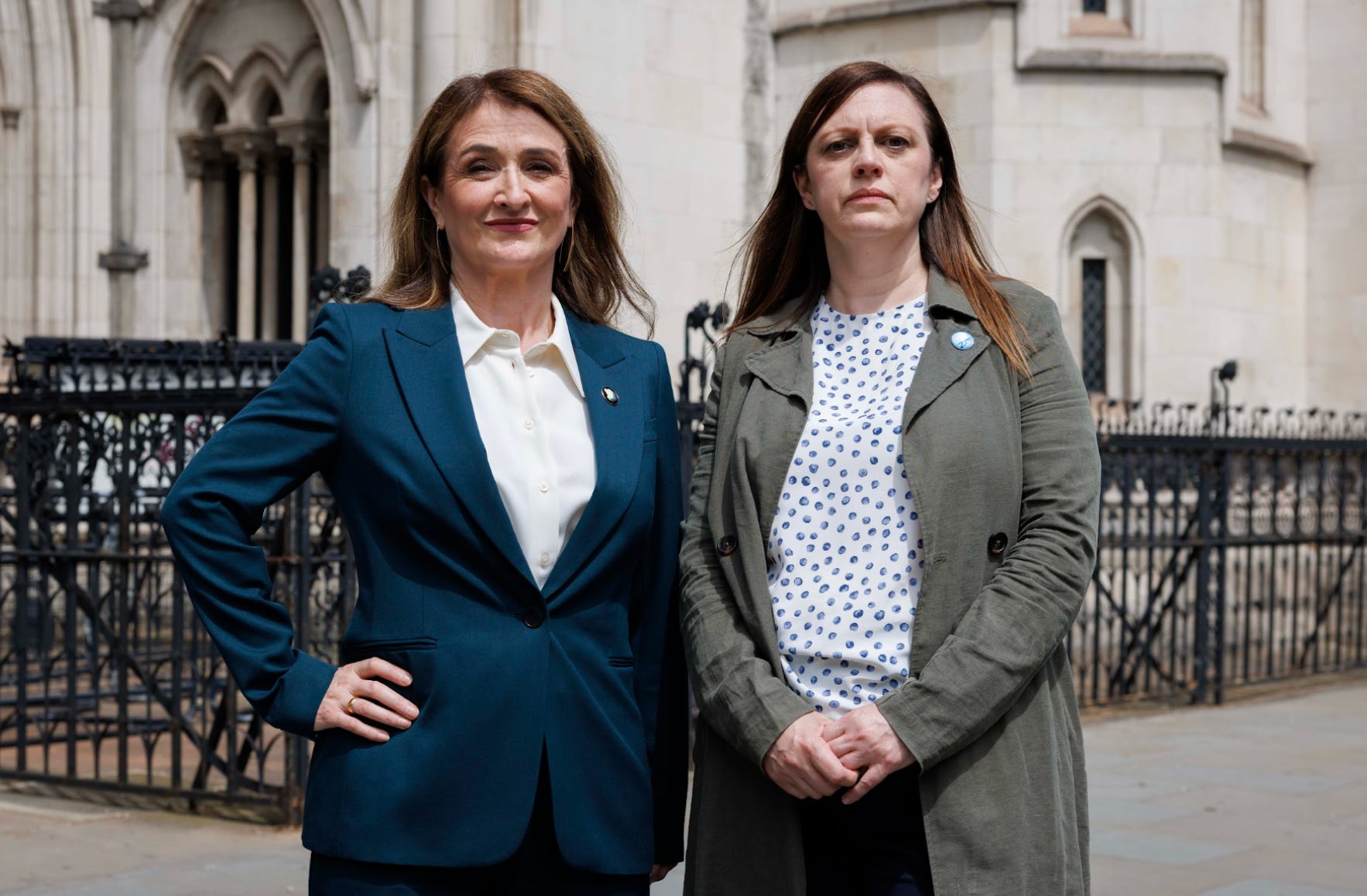
Cathy Larkman of WRN (left) and Rachel Fletcher of Police SEEN
Cathy and I had provided witness statements. Cathy’s drew on her more than 30 years of experience as a police officer. Mine included material from interviews with serving officers. Some were women who told us how humiliating it would be for them to search male detainees – including men who have committed violent and sexual crimes against women. Some were men who told us how wrong it would be for them to strip-search confused teenage girls on the basis that they “identify” as boys.
It is bewildering and maddening that we are still having to bring cases like this against public bodies, fighting policies and guidance produced by public servants and allowed to stand by ministers, all of them too cowardly to do their job of following the law and protecting our democracy, but still willing to draw their salaries from it. But as long as they continue to flout the law, we will keep going.
Thank you to everyone who supported me in my case and all these other important cases. Thank you too to everyone who has supported Sex Matters in our work, and who has found a way to use their voice. You changed everything!
Find out more
Maya’s employment appeal tribunal
Media coverage
Our judicial review against NPCC and BTP was covered in the news by Police Oracle, Policing Insight and Danny Halpin for PA Media, whose story was published by regional news outlets across the UK including Nation Cymru. Counsel for Sex Matters, Tim Owen KC, was quoted as saying that the law governing police searching expressly stated that all searches beyond outer clothing must be carried out by someone of the same sex as the detainee, and a shadow “consensual” searching regime was simply unlawful.
Abusive strip-searching rules: our legal challenge
Why we’ve taken police chiefs to court, with guest Cathy Larkman
In this week’s podcast Helen Joyce talks to Cathy Larkman, policing lead at Women’s Rights Network, about our judicial review against the National Police Chiefs’ Council over its abusive strip-searching policy.
Cathy, who served as a police officer for more than 30 years, finishing her career as a superintendent, speaks from experience about how female police officers will come under pressure to search male detainees, including rapists, cross-dressing fetishists and men who simply enjoy threatening and humiliating women.
Read State sanctioned sexual assault, Cathy’s report for the Women’s Rights Network.
Can you spare two minutes to email your MP?

Nearly 150 MPs have signed Labour MP Stella Creasy’s motion calling for Parliament to reject the Equality and Human Rights Commission’s draft code of practice. But they seem not to understand that the code doesn’t make law; it just explains how to follow the law.
More than 1,200 Sex Matters supporters have already written to their MPs. Could you spare a couple of minutes to do this? Use our simple online tool to challenge them if they signed or offer your support if they didn’t.
In other news
The Association of Green Councillors has issued guidance to the Green Party’s councillors which wrongly states that trans-identifying men do not have to be excluded from single-sex spaces, as reported by The Telegraph (Genevieve Holl-Allen). Fiona was quoted as saying that Green Party councillors who act on this disinformation could put their local authority at risk of legal action, and will also be letting down all those who want single-sex spaces and services.
Outrage over Lush’s decision to launch a Pride Month window display featuring a cartoon tiger with mastectomy scars was covered by The Telegraph (Gabriella Swerling). Helen said that the campaign was deeply disturbing and offensive, and that the grim fact that thousands of girls and young women have had healthy breasts cut off in an effort to look like men is a tragedy.
If you’d like this memo in your inbox every Friday at teatime, join our mailing list now.
Sex Matters survives on your support.
Without it, we simply wouldn’t exist.
Sex Matters can deliver essential research and analysis, help shape the debate, and empower people with clear, published guidance on their rights – but only with your support. Please contribute what you can to keep us going.