

In 2021, in the case of FDJ v Secretary of State for Justice, a female prisoner challenged the Ministry of Justice’s policy of housing some men who identify as women in women’s prisons. In particular, she challenged the lawfulness of allocating male prisoners who have been convicted of sexual or violent offences against women to the women’s estate.
The government of the day defended its policy of “case by case” decision-making and the High Court agreed it was lawful, on the basis that to exclude all males from women’s prisons “would be to ignore, impermissibly, the rights of transgender women to live in their chosen gender”.
Now a legal opinion published by the Centre for Crime and Justice Studies concludes that in light of the 2025 For Women Scotland ruling, the FDJ judgment does not hold up.
In FDJ the judges proceeded on the premise that the exceptions in the Equality Act 2010 which allow single-sex services can be applied on a case-by-case basis, whereas it is clear from the reasoning of the Supreme Court in For Women Scotland that the exceptions are concerned with the differential treatment of men and women as groups, which is what allows men and women to be separated in the first place.
For Women Scotland confirmed that when it comes to single-sex services, a service provider cannot rely on the exceptions if it opens a service up to both sexes.
On this basis, equality-law specialist Ben Cooper KC and public-law specialist Myles Grandison explain that the current prisons policy is not just logically incoherent (not to mention inconsiderate of female prisoners). It’s also unlawful and opens His Majesty’s Prison and Probation Service (HMPPS) to discrimination claims not only from women, but from men too.
The exception cannot have exceptions
The most recent policy on the placement of transgender prisoners concerns both transgender men and transgender women. But it’s clear from the context that the real-world risk only goes one way and it’s based on sex, not identity.
Male prisoners placed in the female estate put female prisoners at risk. And female prisoners held in the male estate (or in approved premises for men outside prison) are themselves being put at risk.
The decision about where to place a trans-identifying male prisoner under the current policy involves three criteria: whether the prisoner has a gender-recognition certificate, whether the prisoner retains male genitalia and what kind of crime or crimes the prisoner has committed. It is only since 2019 that men with histories of violent or sexual crimes have been excluded from consideration for transfer to the female estate. That policy change came after it was revealed that at least six transgender-identifying men had committed assaults in women’s prisons between 2016 and 2019.
The Prison Rules 1999 state: “Women prisoners shall normally be kept separate from male prisoners.” This formulation allows for some discretion that might permit exceptional males to be housed with women or women with men.
But as the legal opinion explains, whether that is lawful is determined by the Equality Act, and as the Supreme Court made clear once a biological male is housed in a women’s prison, something has shifted legally.
In FDJ the government’s lawyer argued, and the court accepted, that “the minister was under no obligation to apply [the single-sex exception] either generally or in any particular case”. But For Women Scotland shows that this was wrong.
The Equality Act makes it unlawful for a person concerned with the provision of a service to the public to discriminate as to the terms on which the service is provided. It is not clear whether prisoners constitute a “section of the public”, but this is irrelevant because the Equality Act also makes it unlawful for a person to discriminate in the exercise of a public function.
By allowing some men to be housed in the female estate (and to be held in female approved premises while on probation), the prison and probation service has left itself vulnerable to discrimination claims from gay men, child sex offenders, former police officers and non-trans males – any or all of whom could reasonably claim to be disadvantaged by being housed only with men. Other prisoners (of either sex) might simply prefer the company of members of the opposite sex, whether for social, romantic or sexual reasons.
And then there is the unlawful discrimination against women forced to share with men, who are exposed as a group to disproportionate disadvantage and sexual harassment.
The new legal opinion points to research by Professor Jo Phoenix noting that the mere presence of male offenders may have a re-traumatising effect on women prisoners who have experienced male violence, including sexual violence:
“There is a growing evidence base that takes the form of testimonials, but to date there has been no large-scale attempt to understand the effect of placing anatomical males who identify as women in women’s prisons from the perspective of the women, or the prison officers. A former governor of a female prison (Rhona Hotchkiss) attests to the retraumatizing effect of placing transgender prisoners in female prisons. In a personal communication with this author, and in written evidence in a judicial review, Hotchkiss states that the mere presence of male offenders amongst a population that has disproportionately suffered male violence causes retraumatization, particularly if these individuals are also present in any prison programs designed for the women to address the male violence they have experienced.”
How many, and where?
It’s difficult to ascertain how many female prisoners are currently housed in facilities that also house trans-identifying males. In March 2025 there were, however, known to be 339 transgender prisoners, of whom 276 (about 80%) were biological men who identify as women. Most of these male prisoners are held in the male estate. There are no figures for how many men are living in women’s probation hostels or taking part in diversion programmes for female offenders.
In May 2026, the Daily Mail reported that seven male prisoners were being held at Downview, a women’s prison and young offender institution. All were accommodated on E Wing, a dedicated unit for male transgender prisoners. The government argues that E Wing is not part of the general women’s estate because prisoners on E Wing are held separately from other prisoners “and can only access the wider prison’s regime where this is supervised by staff and has been risk-assessed to ensure safety”. But this still means that women are forced to associate with trans-identifying men, and punished if they refuse to refer to them as women and “she/her”.
This year another prisoner, Aurin Makepeace, was allocated to a women’s prison, HMP Styal, while on remand. He was found guilty of killing his ex-partner, whom he met when they were both serving time in a men’s jail.
There is no reason to think that professing a gender identity makes a person less likely to correspond to the offending patterns usual for their sex. Indeed, prison data seems to suggest that trans-identifying males may be more likely to commit sex offences than other men, who are in turn far more likely to commit such offences than women are. Of male offenders detained in the UK who are known to identify as trans, 62% had been convicted of sexual violence, compared with 17% of male prisoners in general.
Evidence of trans-identifying men, male crossdressers and other men with various gender identities committing vile sexual crimes is piling up. Philip Tarver, a habitual cross-dresser, wore a negligee while stabbing his 86-year-old disabled mother in the heart before decapitating her and putting the head in the freezer. Scarlet Blake (birth name unknown), a man with an erotic fixation on strangulation, murdered a stranger and dumped his body in a river, and had previously livestreamed himself torturing a cat to death and putting the body parts in a food blender. David Challenor dressed up as a little girl in adult-sized baby dresses and nappies while torturing a ten-year-old girl he held captive in his attic and photographing her sexual abuse.
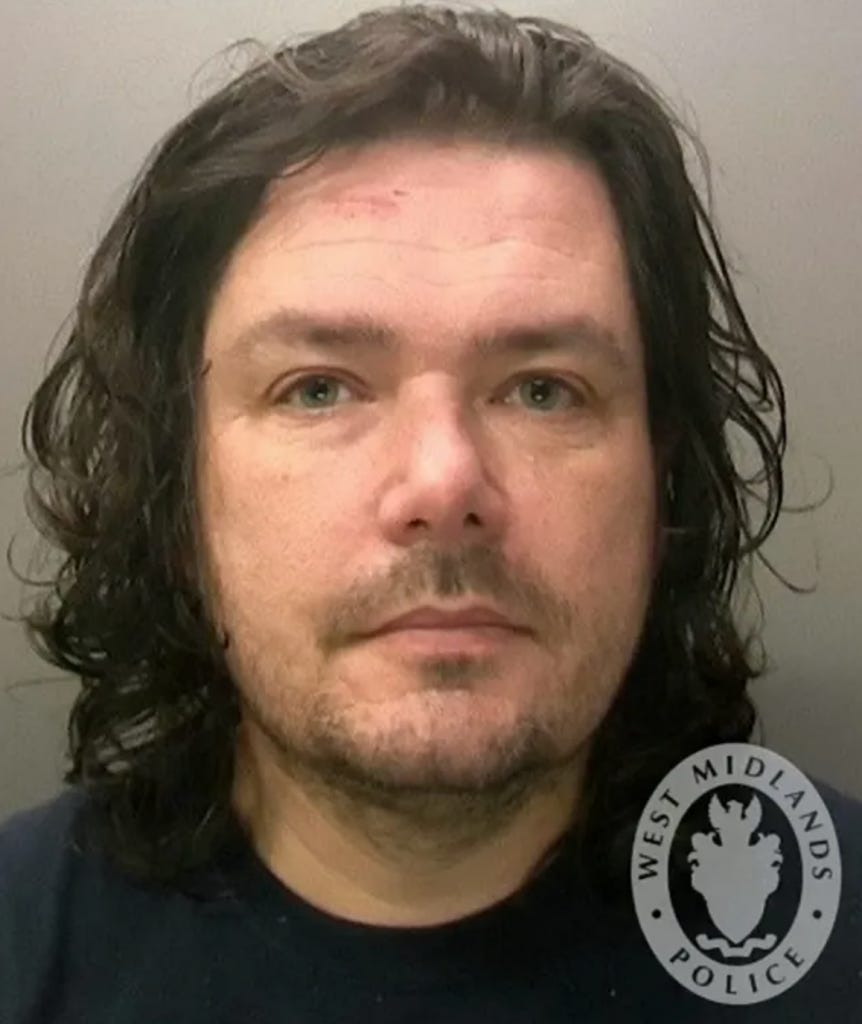
These crimes do not match female-pattern offending. The data and the anecdotes refute the presumption that there is something about claiming to be transgender that makes a male more like a woman in terms of criminal risk.
The HMPPS policy suggests the authorities have not given adequate weight to the welfare and dignity of women forced to serve their sentences locked up with male criminals. Indeed, Cooper and Grandison write that placement decisions focus on the personal profile of the individual male inmate, while considering women’s concerns only as a broad collective. No real care is taken to avoid traumatising any female inmate based on her individual profile.
Before the For Women Scotland judgment the courts, government and equality regulator all got the law wrong. They were, in effect, viewing women’s prisons as places that exist because women have specific needs, and the women held in them as resources for men rather than full human beings with full human rights.
Arguments based on protecting the dignity of female prisoners may go nowhere. But the now-clear legal risk might spur the responsible minister to act to restore the single-sex status of facilities that were only ever intended for women. The exception that allows single-sex services that keep women safe from male violence must allow no exceptions.
Why is everyone so surprised that self ID invites predators, violent criminals, paedophiles and rapists to suddenly discover their 'female self'?
It was practically an open invitation to a feast of helpless victims in an environment where they couldn't remove or protect themselves, as soon as those men were caught and put to prison. It was always absolutely nonsensical to assume that the most vile and despicable men wouldn't take the chance as soon as they could.
And before anyone claims that certificates mean anything, there's absolutely nothing tangible to discern a trans woman from a pervert man. There's no reliable testing, no possible way to find out if they're honest or that trans even exists. There are no physical indicators, no reliable testing, and the question was a trans woman is has neither ever been asked, nor ever clearly been defined or answered. Therefore, since there's no proper, scientific way to measure trans, any certificate is as worthless as a personal horoscope.
The world created an option for men to bypass all safeguards in existence, and of course the most dangerous and depraved individuals jumped at the chance.
No one thinking about this for longer than two minutes could be surprised by that. And it is high time to stop calling these men trans women.
They're all, every single one of them, violent, male sex offenders who merely accepted the invitation to get access to fresh victims. Therefore, of course, the likelihood that they'll do what they've always done is far higher than the norm in other male criminals.
The only people still clinging to the idea that those are trans people are those who are far too selfish and stubborn to give a damn about women at all. They only want to keep their illusions about trans ideology and their own options for self ID, which makes them despicable, even if they're really just believing they're trans.
Surely the judgement on the Scottish prisons case must be due soon?