

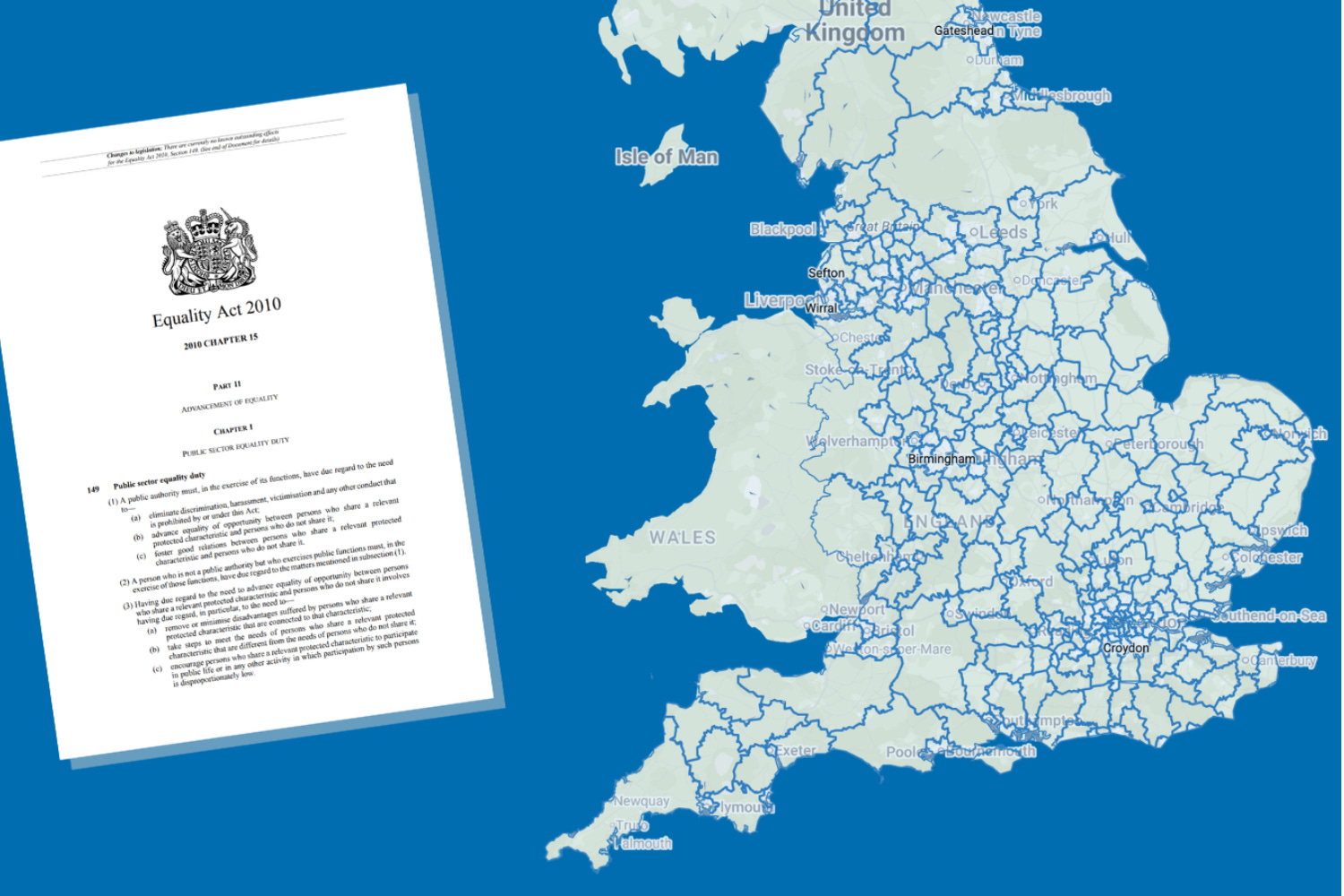
On Thursday 7th May 2026, voters across Scotland, Wales and England will head to the polls in a major set of local and devolved elections. This includes 5,014 council seats across 136 English local authorities, six directly elected mayors in England, and the Scottish and Welsh parliamentary elections.
The work of local authorities touches us all. They run and commission services that usually include social care, leisure centres, education, libraries, community healthcare and public health. Most people will use a local-authority service at some time.
Local authorities are major employers. The Local Government Association reports that local authorities in England alone employ close to 600,000 people, not counting police or fire services (with which local authorities work closely). The total local authorities headcount in Wales is 140,000 and in Scotland it’s 260,000. That’s more than a million people directly affected by local-authority workplace policies. Other sources report up to two million employees across the UK.
Yet many local authorities have failed to amend their policies in line with the law. Council-run buildings generally offer toilets marked Male and Female, but most also have some form of “transitioning at work” policy that tells men who identify as women that they are entitled to use the women’s facilities, and vice versa. This affects both employees and visitors, who may be confronted by a male in the women’s toilets. Female employees may know this, and face the prospect every day; female visitors probably will not know until it happens.
The same is happening in swimming pools and leisure centres. The shocking case of Miranda Newsom, barred from Southwark Council’s leisure centres when she objected to a trans-identifying man in the women’s changing room of her local gym, shows how councils are still pandering to the men’s demands instead of complying with the law.
Traumatised women who flee male violence still face the prospect of a man being given a place in a refuge alongside them, because local authorities are claiming that the law is not clear and that trans-identifying men have to be treated as if they are women.
Many men are also uncomfortable with trans-identifying women being allowed into male spaces.
Local authorities are still “waiting for guidance”
In July 2025, Sex Matters wrote to every local authority in England, Scotland and Wales asking for assurance that they were complying with the law. We asked for assurances in four areas:
Use of toilets and changing rooms at work. Every staff member needs to know that facilities are provided based on biological sex, as specified by the 1992 Workplace Regulations. Policing the facilities is not necessary. Disseminating a clear policy is.
Toilets and changing rooms in buildings operated by the council which are used by the public, such as leisure centres, libraries and day centres. Staff and service users need to know the council policy, which cannot allow mixed-sex usage if a toilet or changing room is marked as Male/Female, Men/Women, or any other signage indicating sex.
Transitioning at work. A statement to the effect that transitioning employees may use the facilities they feel comfortable with, or which match their gender identity, is likely to be unlawful, since it results in single-sex facilities becoming mixed-sex.
Education. Schools and colleges should follow school premises regulations, and the Supreme Court has made clear that single-sex provision must be on the basis of biological sex.
The most common response was that they were “waiting for guidance”. Some said they were compliant with the law, but did not confirm what this meant – this gives no confidence. A few said they were reviewing, but refused to disclose any outcomes; one of these later said there was no policy update to share.
What must happen now
“Waiting for guidance” is a poor excuse, but it is about to disappear, now that the Minister for Women and Equalities has announced she will shortly present the updated Equality and Human Rights Commission’s code of practice for service providers to Parliament.
More broadly, councillors should be demanding that the officers of the council amend policies and ensure they are communicated and implemented in line with the law. No one should have been waiting to comply with the law. For the past year it has been perfectly clear.
What to ask on the doorstep
If there are local or devolved authority elections in your area, this gives you a chance to ask candidates on the doorstep and at hustings whether they will stand up for women’s rights and ensure that your local authority understands and respects the law. Ask them:
Do they know about, understand and support the Supreme Court’s judgement that “man” and “woman” in the Equality Act mean biological sex?
Will they ensure that all local-authority policies about facilities and services are clear that where services are provided separately for men and women this means biological sex?
Will they withdraw unlawful “transitioning at work” policies and replace them with policies that make clear to trans-identifying council staff that they do not have the right to use opposite-sex facilities?
Will they make sure that schools and colleges under local authority control follow the law and do not promote gender-identity ideology to vulnerable children?
Science does not say anything of the sort. Have you any idea what reproduction requires? Men are men. Women are women. If a man wants to wear stereotype ‘female” clothing, he is perpetuating stereotypes & living out his fetish. A man in a dress with a ‘certificate’ is just as much a man as any other and as such he falls within the general percentage of males who may or may not be a threat to women. In a toilet or changing room, a woman has no idea what his intentions are. He is a man. He may be safe, he may not. If he is trying to pass himself off as a woman, his intentions are far more likely to appear - to a woman - to be dishonest and therefore suspect.
Men, clearly, do not understand this. How do we know that this man in the changing room or toilet with us is safe? Is it just because he calls himself a ‘transwoman’? Anyone can call themselves anything. But women know instinctively when a man is present, no matter how pretty his dress or how long his hair. That’s why we don’t challenge. We are on the back foot. And these men’s lack of understanding of this subtle fact is how we know that they have no idea of what it is to ‘be’ a woman. It looks as if they actually think that wearing a dress, growing their hair & taking cross-sex hormones is what does it... WTAF?? This, apparently, is ‘living as a woman’. I’m a woman and I have no idea what they’re talking about. Please do explain what this ‘living as a woman’ is. Is it a dress? Or lipstick? Pouting into a camera lens? Maybe it’s filtered photos on TikTok? Or getting a thrill (or maybe a stiffy 🍆) when a woman walks into the ladies toilets? Please do tell. Because women are fed up with the petulant, selfish, self-absorbed narcissism of these resentful little fetishist tyrants.
People who will not accept reality are fools; people who cannot accept reality are delusionist. Take your pick.
Women won’t be confronted by a man in the women’s toilets … they will be seeing a trans woman going about their own business, whom wants to be a seen and treated as a woman and doesn’t want to harm women. The only ‘men’ they shouldn’t see are trans men or cis men … but apparently seeing a trans man in there is perfectly fine.
This law just deals with biological sex which numb nuts like you believe is binary, but science says not.